
Mold in HVAC Systems in Merritt Island: What Merritt Island Property Owners Should Know
Mold in HVAC systems is one of the most common—and most disruptive—mold problems homeowners face in Merritt Island. Because the HVAC system moves air throughout the entire home, mold growth inside it doesn’t stay contained. It can affect multiple rooms, create persistent odors, and make moisture problems feel impossible to solve.
For property owners in Merritt Island, HVAC mold is rarely about poor housekeeping. It’s usually the result of condensation, humidity, and airflow issues that are common in Brevard County’s coastal climate. Understanding why mold develops in HVAC systems, where it hides, and how it should be handled is critical to protecting both the home and indoor comfort.
Why HVAC Systems Are Prone to Mold in Merritt Island
Air conditioning systems in Florida work very differently than those in drier climates.
Constant Condensation
HVAC systems remove heat and moisture from indoor air. That moisture has to go somewhere. Condensate forms on:
- Evaporator coils
- Drain pans
- Drain lines
- Nearby insulation
When any part of that system doesn’t drain or dry properly, mold can develop.
High Indoor and Outdoor Humidity
Even when AC systems are running, indoor humidity can remain elevated if:
- The system is oversized
- Airflow is unbalanced
- The unit cycles on and off too quickly
High humidity plus condensation is one of the most common mold triggers in Merritt Island homes.
Year-Round AC Use
Because air conditioning runs most of the year, moisture exposure is constant. Small issues that might not matter elsewhere become ongoing problems here.
Common Places Mold Develops in HVAC Systems
HVAC mold is often hidden and spreads quietly.
Air Handlers
Air handlers are one of the most common locations for mold due to:
- Standing water in drain pans
- Condensation on internal components
- Dust buildup combined with moisture
Mold inside an air handler can easily spread through the duct system.
Evaporator Coils
Coils stay wet during operation. If airflow is restricted or maintenance is lacking, moisture lingers and mold can grow on nearby surfaces.
Drain Pans and Drain Lines
Clogged or slow drain lines allow water to back up into pans, creating a constant wet environment.
Ductwork and Duct Insulation
Flexible ducts and lined duct interiors can trap moisture. Once mold develops inside duct insulation, it’s difficult to clean effectively.
Supply and Return Vents
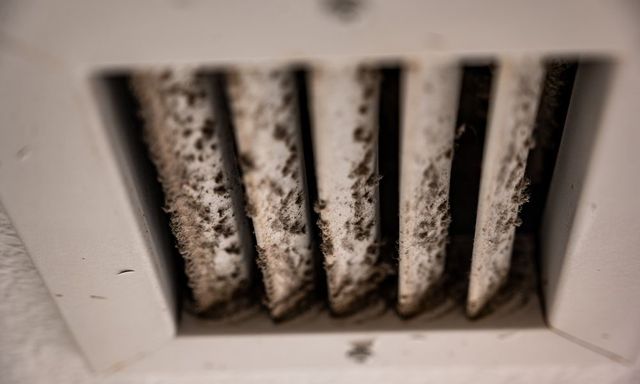
While mold on vents is often a symptom, not the source, it usually indicates moisture and contamination somewhere deeper in the system.
Why HVAC Mold Is So Common in Merritt Island Homes
Local conditions make HVAC mold especially likely.
Slab Foundations
Moisture migrating upward from slabs increases indoor humidity, adding to HVAC condensation issues.
Attic Installations
Many air handlers are installed in hot, humid attics. Temperature differences between attic air and cooled components create heavy condensation.
Storms and Power Outages
After storms, power outages can shut systems down while humidity remains high. When systems restart, condensation problems are often worse.
Aging Equipment
Older systems may have:
- Rusted drain pans
- Inadequate drainage
- Poor insulation
These issues increase mold risk.
Signs Homeowners Notice First
HVAC mold often announces itself indirectly.
Persistent Odors
- Musty smells when the AC turns on
- Odors strongest near vents
- Smells that come and go with system cycles
Uneven Indoor Comfort
- Rooms that feel damp
- Air that feels heavy or stale
- Increased humidity despite AC running
Visible Clues
- Mold on supply or return vents
- Condensation around vents
- Water staining near air handler locations
These signs usually indicate mold somewhere within the system.
Why HVAC Mold Keeps Coming Back
HVAC mold often returns because the root cause isn’t addressed.
Common reasons include:
- Cleaning vents without treating the air handler
- Replacing filters without fixing moisture
- Ignoring drain line problems
- Failing to address humidity levels
Without moisture control, mold simply regrows inside the system.
Why DIY HVAC Mold Cleanup Is Risky
Homeowners sometimes try to handle HVAC mold themselves.
Common DIY approaches include:
- Spraying cleaners into vents
- Wiping visible mold on registers
- Replacing filters repeatedly
- Using air fresheners to mask odors
These actions often:
- Spread mold spores through the system
- Miss contamination inside ducts or air handlers
- Fail to address condensation issues
HVAC mold requires a controlled, system-wide approach.
How Professional Mold Inspections Address HVAC Systems
A professional inspection looks at the entire system, not just what’s visible.
Moisture and Condensation Assessment
Inspectors identify:
- Standing water
- Drainage failures
- Condensation patterns
- Insulation issues
Component Inspection
Professionals evaluate:
- Air handlers
- Drain pans and lines
- Duct connections
- Vent locations
This helps determine where mold is growing and why.
Attic and Surrounding Area Evaluation
Attic humidity, insulation, and airflow are assessed because they directly affect HVAC condensation.
Testing When Appropriate
Mold testing may be recommended when:
- Mold is suspected inside ducts
- Documentation is needed
- Post-remediation verification is required
Testing supports findings but does not replace moisture correction.
Proper Mold Remediation for HVAC Systems
When mold is confirmed, remediation must be thorough and coordinated.
- Correct moisture and drainage issues
Drain lines, pans, insulation, or system sizing issues must be addressed first. - Containment and air control
Prevents spores from spreading during cleaning or removal. - Cleaning or removal of affected components
Some duct materials can be cleaned; others may need replacement. - HEPA filtration and system cleaning
Professional equipment protects indoor air during remediation. - Drying and verification
Moisture levels and system operation are confirmed before restart.
Skipping steps is why HVAC mold frequently returns.
Does HVAC Mold Affect the Whole Home?
Potentially, yes.
Because HVAC systems circulate air:
- Mold spores can travel throughout the home
- Odors can appear in multiple rooms
- Moisture problems can feel widespread
That’s why HVAC-related mold should be addressed promptly and correctly.
Preventing HVAC Mold in Merritt Island Homes
Prevention focuses on moisture management and system maintenance.
Effective steps include:
- Keeping indoor humidity between 30–50%
- Maintaining condensate drain lines
- Replacing filters regularly
- Ensuring proper airflow and system sizing
- Inspecting air handlers annually
- Checking attic humidity and insulation
- Addressing water issues immediately after storms
Routine attention prevents most HVAC mold problems.
Why Local Experience Matters
HVAC mold behaves differently in Florida than in dry climates. Coastal humidity, slab foundations, and attic installations all affect system performance.
A local company like Brevard Mold Inspections & Removal understands:
- How Merritt Island HVAC systems commonly fail
- Where mold typically develops locally
- How to correct issues without unnecessary system replacement
Local experience leads to smarter, longer-lasting solutions.
A Calm, Practical Takeaway
Mold in HVAC systems is common in Merritt Island—but it’s never random. It almost always points to moisture, condensation, or airflow issues that can be identified and corrected.
If your home has musty odors, recurring vent mold, or humidity that won’t come down, a professional inspection can clarify what’s happening inside the system and guide the right solution.
Brevard Mold Inspections & Removal works with homeowners throughout Merritt Island and Brevard County to evaluate HVAC mold issues responsibly and prevent repeat problems.
In Florida’s climate, keeping the HVAC system dry and balanced is one of the most important steps in protecting your home.
