
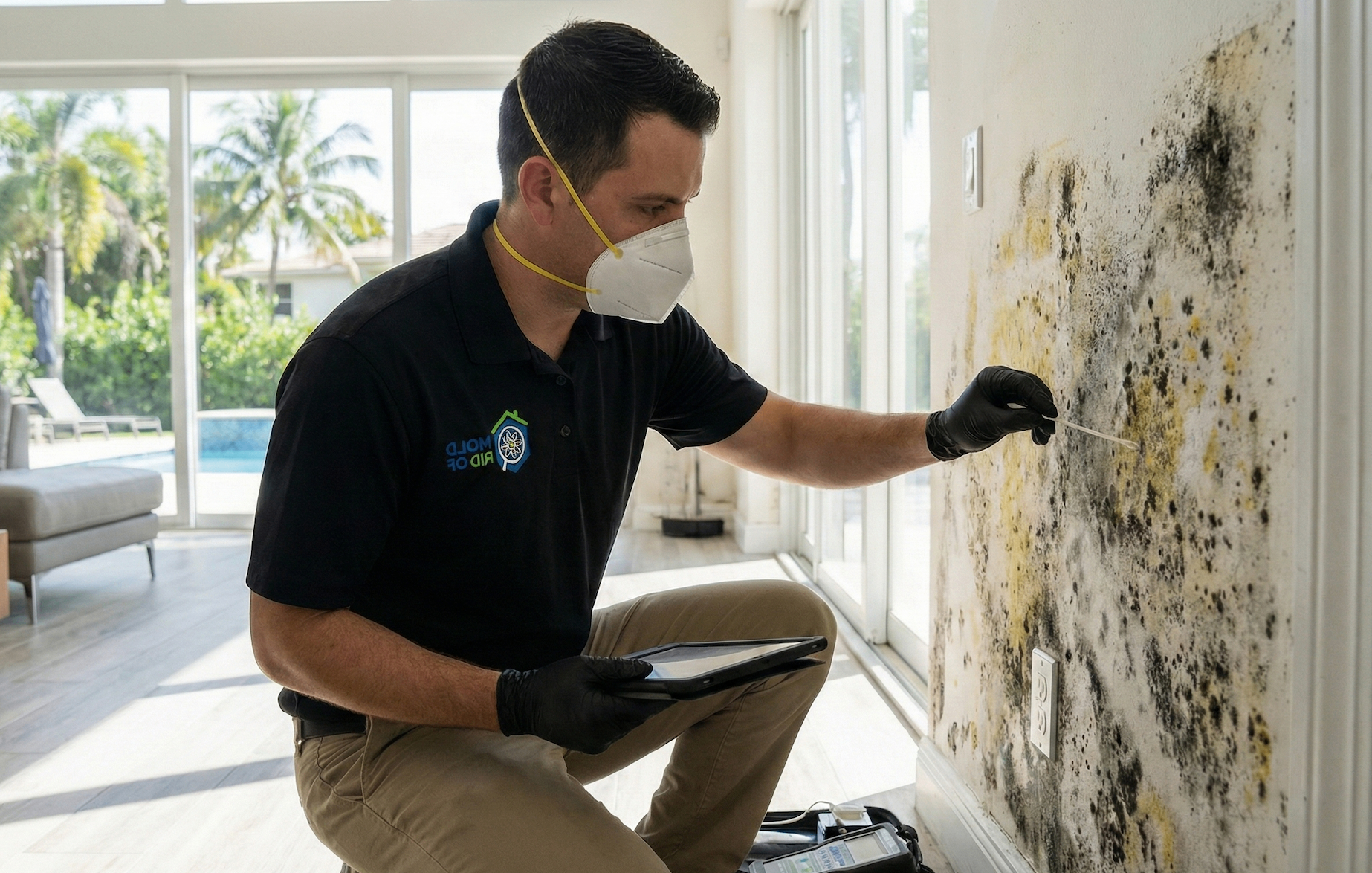
Mold Inspection in Brevard County: What Merritt Island Property Owners Should Know
In Brevard County, mold inspections aren’t just for homes with visible mold on the walls. In fact, many serious mold problems here start without any obvious signs at all. High humidity, frequent storms, slab foundations, and constant air conditioning create conditions where moisture can sit quietly inside a home long before mold is ever seen.
For property owners in and around Merritt Island, a professional mold inspection is often the most practical way to understand what’s really happening inside the structure—before odors worsen, materials deteriorate, or remediation becomes unavoidable.
This article explains what a mold inspection actually involves in Brevard County, when one is worth scheduling, what inspectors look for, and why local Florida experience makes a real difference.
What a Mold Inspection Really Is (and Isn’t)
A mold inspection is not just someone looking around for black spots. In Florida, visible mold is often the last stage of a moisture problem, not the first.
A proper mold inspection focuses on:
- Moisture presence and patterns
- Building materials that retain moisture
- Airflow and humidity behavior
- Areas where mold typically starts but stays hidden
The goal is to answer practical questions:
- Is moisture currently present?
- Where is it coming from?
- Is mold likely growing where it can’t be seen?
- Does the situation require remediation, or just correction and drying?
Many inspections in Brevard County identify moisture problems before mold becomes widespread, which saves homeowners significant time and cost.
Why Mold Inspections Matter So Much in Brevard County
Brevard County homes deal with conditions that naturally work against drying.
Key factors include:
- High humidity most of the year
- Heavy rain and wind-driven storms
- Slab-on-grade construction
- Long AC run times and condensation
- Attics exposed to extreme heat and moisture
Unlike drier climates, materials here don’t “air out” easily. Once drywall, insulation, or wood becomes damp, it often stays that way unless actively addressed.
Common Reasons Homeowners Request a Mold Inspection
Most homeowners don’t schedule inspections at the first sign of trouble. Inspections are typically requested when:
- Musty or earthy odors appear
- Mold keeps coming back after cleaning
- A roof, plumbing, or AC issue recently occurred
- Water damage seemed minor but didn’t fully dry
- A home is being bought or sold
- Staining appears on ceilings or baseboards
- Family members feel uncomfortable in certain rooms
In many cases, inspections confirm hidden moisture, not a full-blown mold outbreak.
What Inspectors Look for During a Mold Inspection
A professional inspection always starts with moisture, not mold testing.
Moisture Detection and Mapping
Inspectors use professional meters and tools to identify:
- Damp drywall and ceilings
- Moisture migration from slab foundations
- Wet areas behind walls or cabinets
- Condensation-prone surfaces
This step often reveals problems homeowners didn’t know existed.
Visual Inspection of High-Risk Areas
Certain areas are inspected closely because mold commonly starts there in Brevard County homes:
- AC closets and air handlers
- Condensate drain lines and pans
- Attics and roof decking
- Closets on exterior walls
- Bathrooms and laundry rooms
- Baseboards and flooring edges
These locations often show early warning signs before mold spreads.
Attic Evaluation
Attics are one of the most overlooked mold sources.
Inspectors check for:
- Condensation on roof decking
- Wet or compressed insulation
- Poor ventilation
- Signs of past moisture intrusion
Many homeowners are surprised to learn mold is present in the attic even when the living space looks fine.
Odor Investigation
Persistent musty odors usually indicate hidden moisture or growth. Inspectors track odors to their source instead of masking them.
Does a Mold Inspection Always Include Mold Testing?
No—and that’s intentional.
Mold testing may be recommended when:
- Mold is suspected but not visible
- Documentation is needed for real estate transactions
- Insurance or legal records are required
- Post-remediation verification is necessary
Testing supports decisions, but it does not replace moisture investigation. Without fixing moisture, test results alone don’t solve anything.
Common Places Mold Is Found in Brevard County Homes
Inspections frequently uncover mold or moisture in:
- Behind drywall near AC systems
- Closets on exterior walls
- Attics with condensation issues
- Under sinks and inside cabinets
- Around windows after storms
- Lower walls near slab foundations
Visible mold is often just a small part of a larger issue.
Why Waiting on an Inspection Makes Problems Worse
Delaying an inspection often leads to:
- Mold spreading behind walls
- Insulation becoming contaminated
- Odors circulating through HVAC systems
- Larger remediation areas later
- Higher repair costs
In Florida, 24–48 hours of dampness can be enough for mold to begin developing.
Why DIY Checks and Cleaning Miss the Real Issue
Homeowners often try:
- Bleach or spray cleaners
- Painting over stains
- Running fans without dehumidifiers
- Replacing small drywall sections
These steps may hide symptoms but don’t identify why moisture is present, which is why mold often returns.
How Inspection Results Guide the Right Solution
Not every inspection leads to remediation.
Depending on findings, recommendations may include:
- Improving ventilation or airflow
- Fixing AC condensation issues
- Drying affected materials
- Monitoring humidity levels
- Targeted remediation if contamination is confirmed
A good inspection prevents unnecessary work and focuses on the actual cause.
Preventing Mold After an Inspection
Homeowners can reduce future risk by:
- Keeping indoor humidity between 30–50%
- Running AC systems consistently
- Maintaining condensate drain lines
- Using exhaust fans properly
- Inspecting attics and closets seasonally
- Addressing any water intrusion within 24–48 hours
Small adjustments often make a big difference.
Why Local Brevard County Experience Matters
Mold behaves differently in Florida than in dry climates. Slab construction, coastal humidity, and storm patterns all affect how moisture moves through a home.
A local company like Brevard Mold Inspections & Removal understands:
- How Brevard County homes trap moisture
- Where mold typically starts in local construction
- How to distinguish real problems from cosmetic concerns
Local experience leads to more accurate conclusions and better outcomes.
A Calm, Practical Next Step for Property Owners
A mold inspection isn’t a sign that something is wrong—it’s a way to confirm conditions and make informed decisions.
If your Brevard County property has odors, moisture concerns, or recurring mold issues, a professional inspection can provide clarity without pressure or alarm.
Brevard Mold Inspections & Removal works with homeowners throughout Merritt Island and the surrounding Brevard County communities to evaluate mold risk accurately and responsibly.
In a climate like this, early information is often the most cost-effective protection you can get.
