
Residential Mold Remediation in Merritt Island: What Merritt Island Property Owners Should Know
Living in Merritt Island offers many advantages — waterfront views, warm weather, and easy access to communities along Sykes Creek, Banana River, and the Indian River. But longtime residents also understand that coastal living brings one ongoing challenge: moisture.
Humidity, heavy rainfall, and storm activity create conditions where mold problems can develop quickly inside homes. When mold growth becomes widespread or hidden behind walls and ceilings, simple cleaning is no longer enough. At that point, professional mold remediation becomes necessary.
What Mold Remediation Actually Means
Many homeowners assume mold remediation simply means cleaning mold from surfaces. In reality, professional remediation is a structured process designed to safely remove mold contamination while correcting the moisture problems that allowed it to grow.
Mold remediation focuses on:
• Identifying the moisture source
• Containing affected areas
• Removing contaminated materials safely
• Cleaning surrounding areas
• Drying affected spaces
• Preventing mold from returning
Simply wiping mold away without correcting moisture conditions usually leads to recurring problems.
Proper remediation addresses both mold and the underlying cause.
Why Mold Problems Are Common in Merritt Island Homes
Homes throughout Merritt Island face environmental conditions that make mold growth common if moisture is not carefully managed.
Contributing local conditions include:
• High year-round coastal humidity
• Frequent summer rainstorms
• Hurricane and tropical storm exposure
• Waterfront air increasing indoor moisture levels
• High water tables in some neighborhoods
• Continuous air conditioning use producing condensation
Moisture sometimes enters homes through roof leaks, plumbing issues, or condensation problems. When water remains trapped in materials, mold colonies begin forming.
Because mold often grows behind walls or under flooring, contamination may spread before homeowners realize a problem exists.
Signs Mold Remediation May Be Needed
Small mold spots in bathrooms or kitchens can sometimes be handled with simple cleaning, but larger or recurring problems often require professional remediation.
Common warning signs include:
• Musty odors that do not go away
• Visible mold spreading across surfaces
• Water damage from storms or leaks
• Persistent humidity problems indoors
• Staining on ceilings or walls
• Warped flooring or drywall damage
• Mold returning after cleaning
If mold keeps coming back, moisture issues likely remain unresolved.
Professional inspection helps determine whether remediation is necessary.
Areas Mold Commonly Affects in Merritt Island Homes
Because moisture often accumulates in hidden areas, mold contamination sometimes spreads far beyond what homeowners can see.
Common problem areas include:
• Attics with roof leaks or poor ventilation
• Crawl spaces absorbing ground moisture
• Behind drywall after plumbing leaks
• Under flooring following water damage
• HVAC systems and ductwork
• Closets along exterior walls
• Laundry rooms and utility areas
Homes near waterways may experience elevated humidity, increasing risks in these spaces.
Mold hidden in these areas may spread quietly for months.
What Happens During Residential Mold Remediation
Professional remediation follows a step-by-step process designed to safely remove contamination while protecting the rest of the home.
Inspection and Damage Assessment
The process begins with determining how widespread contamination is and identifying moisture sources causing mold growth.
Inspectors examine affected rooms as well as nearby hidden spaces.
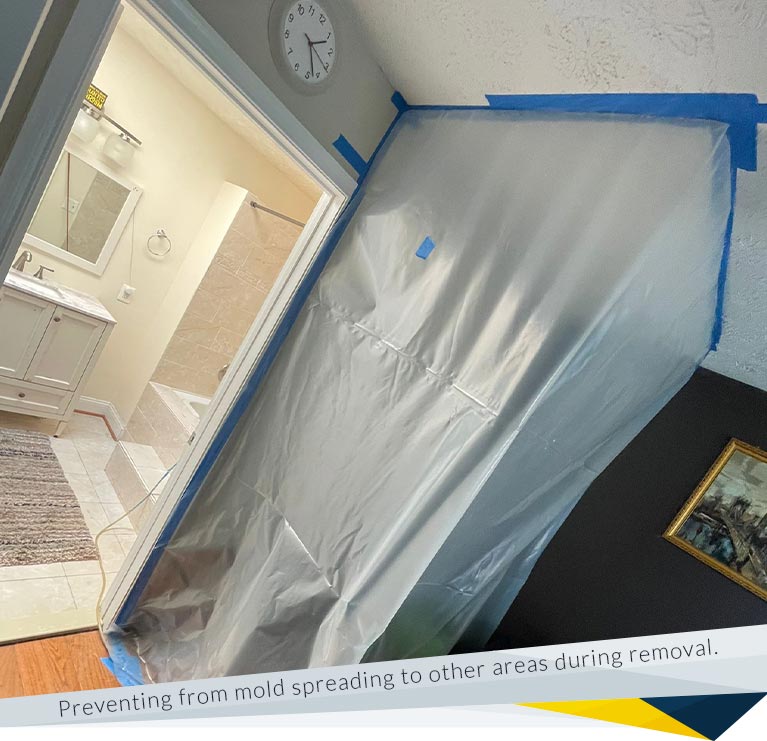
Containment of Affected Areas
Containment barriers are installed around contaminated areas to prevent spores from spreading during removal.
Negative air pressure systems may be used to control airflow.
This step protects unaffected parts of the home.
HEPA Air Filtration
High-efficiency air scrubbers capture airborne mold spores during remediation.
This improves indoor air quality while work is underway.
Removal of Mold-Damaged Materials
Porous materials that cannot be safely cleaned — such as drywall, insulation, or carpeting — are carefully removed and disposed of.
Non-porous surfaces may be cleaned and restored when possible.
Cleaning Surrounding Surfaces
Areas surrounding contamination are cleaned to remove settled spores and prevent future growth.
Cleaning methods vary depending on materials involved.
Moisture Source Correction
Correcting moisture problems is essential. This may involve:
• Roof repairs
• Plumbing fixes
• Improved ventilation
• HVAC adjustments
• Crawl space moisture control
Without moisture correction, mold usually returns.
Drying and Final Inspection
After removal and cleaning, affected areas are thoroughly dried and inspected to confirm remediation success.
Some homeowners request post-remediation testing for confirmation.
How Remediation Works in Occupied Homes
Many homeowners worry remediation will require leaving their home. In many cases, work can be completed while residents remain in unaffected areas.
Remediation may be:
• Completed room by room
• Scheduled in phases
• Contained to limit disruption
Professionals work to minimize inconvenience while maintaining safety.
Large contamination areas may require temporary relocation, but many projects are completed with minimal disruption.
Why DIY Mold Removal Often Fails
Homeowners sometimes attempt to handle mold problems themselves using household cleaners or bleach. While small areas may improve temporarily, mold often returns.
DIY cleanup often fails because:
• Mold roots remain inside porous materials
• Hidden contamination remains untreated
• Moisture problems are not corrected
• Cleaning spreads spores to new areas
Professional remediation addresses both contamination and moisture safely.
Proper containment prevents spread.
Preventing Mold After Remediation
Once remediation is completed, preventing mold from returning becomes the priority.
Helpful prevention steps include:
• Maintaining indoor humidity below 60%
• Servicing HVAC systems regularly
• Cleaning AC drain lines routinely
• Repairing leaks immediately
• Improving attic and crawl space ventilation
• Inspecting homes after storms
• Using dehumidifiers when needed
Routine home inspections help catch moisture problems early.
Homes near waterways benefit from regular humidity monitoring.
Why Local Experience Matters for Mold Remediation
Homes across Merritt Island vary in age, design, and exposure to coastal weather.
Professionals familiar with local conditions understand:
• Waterfront humidity patterns
• Storm-related moisture risks
• Ventilation challenges in island homes
• Slab versus elevated construction differences
Local knowledge allows faster identification of moisture sources and solutions suited to coastal environments.
Experienced local companies such as Mold Removal Merritt Island tailor remediation plans to Merritt Island homes rather than using generic solutions.
This helps prevent mold from returning.
Protecting Home Value Through Proper Remediation
Homes represent one of the largest investments families make. Mold problems left untreated can damage structures and complicate future home sales.
Addressing mold concerns early helps:
• Prevent structural damage
• Maintain indoor comfort
• Reduce long-term repair costs
• Avoid surprises during home sales
• Protect property value
Proactive action protects both homes and investments.
A Practical Next Step for Homeowners
If your home has experienced roof leaks, plumbing problems, storm damage, or persistent musty odors, scheduling a professional mold inspection can determine whether remediation is needed.
Early action usually keeps remediation manageable and prevents mold from spreading into hidden structural areas. Correcting moisture problems protects both property value and indoor comfort.
With proper remediation and moisture management, Merritt Island homeowners can continue enjoying coastal living without recurring mold concerns.
Taking preventive action today helps keep homes safe and comfortable in Florida’s humid coastal climate.
Image Generation Prompts
- Mold remediation containment barrier setup inside Florida coastal home living space, clean residential interior, no people, logos, or text.
- HEPA air scrubber operating during mold remediation in Merritt Island home, uncluttered interior, realistic lighting, no branding or people.
