
Mold in Garages in North Merritt Island: What Merritt Island Property Owners Should Know
Mold in Garages in North Merritt Island: What Merritt Island Property Owners Should Know
Garages in North Merritt Island don’t get much attention—until mold shows up. And when it does, most property owners assume it’s “just the garage.” That assumption is expensive. In Florida’s humidity-heavy climate, garage mold doesn’t stay put. It spreads, affects indoor air quality, and can quietly work its way into the rest of the home.
If your garage smells musty, shows dark spotting, or feels damp more often than it should, here’s what you need to know—and what to do before it becomes a bigger problem.
Why Garages Are Mold Magnets in North Merritt Island
Garages are almost perfectly designed for mold growth.
Here’s why garages in North Merritt Island are especially vulnerable:
- High outdoor humidity enters through doors, vents, and gaps
- No climate control in most garages
- Frequent temperature swings cause condensation
- Poor ventilation traps moisture
- Concrete slabs that wick moisture from the ground
Add rain-soaked vehicles, lawn equipment, or storage boxes, and you’ve got constant moisture with nowhere to escape.
Mold doesn’t need a leak. It just needs damp air that sticks around.
How Mold Forms in Garages
Mold needs three things:
- Moisture
- Organic material
- Time
Garages provide all three.
Moisture comes from humid air, wet cars, and concrete slabs. Organic material comes from drywall, wood framing, cardboard boxes, insulation, and dust. Time comes from garages being ignored for weeks or months at a time.
Once humidity stays elevated—especially above 60 percent—mold can begin growing within 24–48 hours.
Most Common Mold Sources in Garages
Condensation on Walls and Ceilings
Warm, humid air hitting cooler garage surfaces creates condensation. That moisture soaks into drywall and wood, feeding mold growth behind the scenes.
Concrete Slab Moisture
Concrete isn’t waterproof. Moisture rises through slabs, especially after heavy rain or high groundwater levels common in North Merritt Island.
Attached Garage Air Transfer
In attached garages, air moves freely through:
- Shared walls
- Door gaps
- HVAC leaks
Mold spores don’t respect boundaries. What starts in the garage can end up inside the house.
Roof or Door Leaks
Small roof leaks or poorly sealed garage doors let rainwater inside. These leaks often go unnoticed because garages aren’t checked as closely as living spaces.
Storage Materials
Cardboard boxes, wood shelving, and fabric items absorb moisture quickly and hold it long enough for mold to grow.
Where Mold Commonly Appears in Garages
Garage mold often hides in predictable places:
- Lower portions of drywall
- Behind stored items against walls
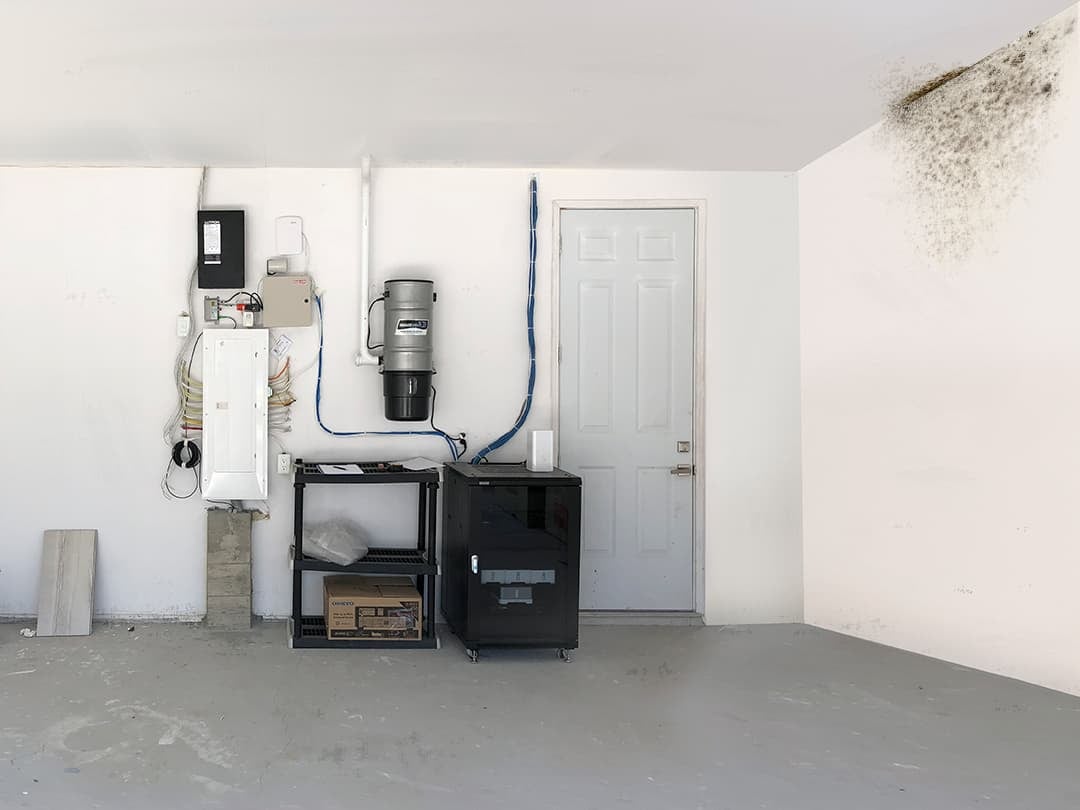
- Ceiling corners and trusses
- Around garage doors and framing
- On stored boxes, furniture, or tools
- Behind insulation on shared walls
Mold doesn’t need to be visible to affect air quality. Hidden growth still releases spores.
Health and Indoor Air Quality Concerns
Garage mold isn’t isolated.
Air movement pulls spores from the garage into the house—especially in attached garages. Once inside, spores circulate through living spaces.
Common symptoms include:
- Coughing or throat irritation
- Nasal congestion or sneezing
- Sinus pressure
- Worsening asthma or allergies
If symptoms improve when you leave the house, garage mold is a real suspect—especially if the garage smells musty.
Warning Signs Property Owners Shouldn’t Ignore
Garage mold usually gives clues before it becomes obvious.
Visual Clues
- Dark spots or streaks on walls or ceilings
- Bubbling or peeling paint
- White or green fuzzy growth on surfaces
Odors
- Musty or damp smell
- Odors stronger after rain or humid days
- Smell transferring into the home
Moisture Indicators
- Damp walls or concrete
- Condensation on metal tools
- Items feeling clammy to the touch
If you notice any of these, mold inspection is worth considering.
Why Garage Mold Is Often Underestimated
Many property owners delay action because:
- “It’s not a living space”
- “It’s just surface mold”
- “We’ll clean it later”
Here’s the reality:
- Garage mold often spreads behind walls
- It affects indoor air quality in attached homes
- Moisture problems don’t resolve on their own
- Small problems turn into full remediation jobs
Ignoring garage mold doesn’t save money—it delays the bill.
What Property Owners Should Do
Step 1: Reduce Moisture
- Seal garage doors properly
- Fix roof or wall leaks immediately
- Improve drainage around the foundation
- Avoid storing wet items inside
Step 2: Improve Ventilation
- Use passive vents if allowed
- Open doors periodically during dry weather
- Keep airflow around stored items
Step 3: Remove Mold-Friendly Storage
- Replace cardboard boxes with plastic bins
- Keep items off the floor
- Avoid pressing storage against walls
Step 4: Dry the Space
- Use a dehumidifier if moisture persists
- Dry walls and floors thoroughly
- Don’t rely on fans alone
Step 5: Address Mold Growth
Small, surface-level mold may be cleaned carefully. Larger areas or recurring growth require professional assessment.
When to Call Mold Professionals
Call professionals if:
- Mold covers more than a few square feet
- Growth is recurring
- You smell mold but can’t see it
- The garage is attached to the home
- Anyone in the household has respiratory issues
Professional remediation may include:
- Containment
- Removal of contaminated materials
- HEPA air filtration
- Moisture correction
Cutting corners usually means the mold comes back.
Insurance Considerations
Garage mold coverage depends on the cause:
- Sudden water damage may be covered
- Long-term humidity issues often aren’t
- Mold coverage may be limited
Document damage early and notify your insurance provider promptly if water intrusion occurred.
Preventing Garage Mold Long-Term
Prevention is simpler than remediation:
- Keep garage humidity below 50 percent
- Inspect walls and ceilings quarterly
- Address musty smells immediately
- Maintain roof and door seals
- Keep storage organized and elevated
Garages don’t have to smell damp—or grow mold.
Final Takeaways for North Merritt Island Property Owners
Garage mold is common in North Merritt Island, but it’s not harmless.
Key points to remember:
- Garages are high-risk mold zones
- Mold can spread from garages into living spaces
- Moisture control is the real solution
- Early action prevents expensive remediation
- Professional help is often the smartest move
If your garage smells musty, looks discolored, or feels damp more often than it should, that’s your warning sign. Catching garage mold early protects your home’s air quality, structure, and value.
If you want help figuring out where mold is most likely hiding, whether cleanup is enough, or when inspection makes sense, just let me know.
