
Mold in Closets in Brevard County: What Merritt Island Property Owners Should Know
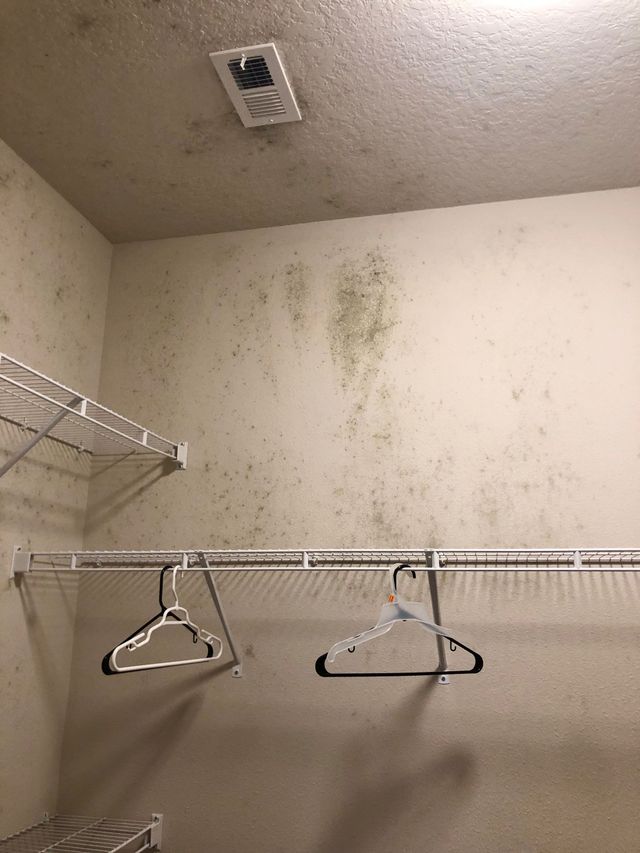
Closets are one of the most common—and most overlooked—places mold shows up in Brevard County homes. In Merritt Island especially, property owners are often surprised to find mold growing behind clothing, inside corners, or along closet walls, even when the rest of the house looks clean and dry.
That’s because closets create the perfect storm for mold: limited airflow, coastal humidity, cooler wall surfaces, and materials that trap moisture. Understanding why mold loves closets, what early signs to watch for, and how these issues develop locally can help property owners stop small problems before they spread.
Why Closets Are a Mold Hotspot in Brevard County
Closets behave very differently from open living spaces.
Key factors include:
- Poor airflow – closet doors stay closed most of the time
- High coastal humidity – moist air gets trapped easily
- Exterior-facing walls – cooler surfaces attract condensation
- Crowded storage – clothing and boxes block air movement
- Slab-on-grade construction – moisture can migrate upward into walls
In Merritt Island homes near waterways, these conditions are present year-round.
How Mold Typically Starts in Closets
Closet mold usually begins quietly and out of sight.
Common starting points include:
- Behind hanging clothes pressed against walls
- In corners near the ceiling or baseboards
- Behind shelving or built-in organizers
- On the backside of drywall facing exterior walls
- Inside closets that share walls with bathrooms or laundry rooms
Because airflow is limited, moisture doesn’t evaporate the way it does in open rooms.
Early Signs Mold May Be Developing
Closet mold rarely starts with obvious black patches.
Watch for:
- Musty or sour smells when opening the closet door
- Clothes that smell damp even after washing
- Light gray, green, or dark spotting on walls or ceilings
- Peeling paint or bubbling drywall
- Warped baseboards or trim
- Fabric items that feel clammy
In Brevard County, odors are often the first and strongest warning sign.
Why Closets Near Exterior Walls Are Highest Risk
Closets built along exterior walls are especially vulnerable.
Here’s why:
- Outdoor humidity cools exterior walls at night
- Warm indoor air condenses on cooler wall surfaces
- Moisture gets trapped behind clothes and shelving
- Drying is slow due to poor airflow
In Merritt Island homes near the Banana River, Indian River, or Sykes Creek, this effect is amplified.
Hidden Mold Problems Closets Can Mask
Closet mold is often a symptom of a larger moisture issue.
Hidden sources may include:
- Moisture inside wall cavities
- Roof or flashing leaks above closets
- Plumbing leaks in shared walls
- AC duct condensation nearby
- Slab moisture wicking into lower walls
That’s why simply cleaning visible mold often doesn’t solve the problem.
Why DIY Closet Mold Cleanup Often Fails
Closet mold is commonly underestimated.
DIY efforts fail because:
- Mold is growing behind drywall or shelving
- Bleach doesn’t penetrate porous materials
- Painting traps moisture inside walls
- Clothes and contents stay damp
- Moisture sources aren’t corrected
As a result, mold frequently returns within weeks or months.
How Closet Mold Can Affect the Rest of the Home
Closets don’t exist in isolation.
Mold can spread:
- Through wall cavities
- Into bedrooms and living areas
- Via HVAC air movement
- From stored items moved elsewhere
In Brevard County homes, closet mold often becomes a whole-house issue if ignored.
Professional Mold Inspection for Closets Explained
A professional inspection focuses on why the closet stays damp, not just what’s visible.
A proper evaluation may include:
- Visual inspection of walls, ceilings, and shelving
- Moisture readings behind drywall
- Infrared imaging to locate hidden damp areas
- Inspection of adjacent rooms and exterior walls
- HVAC and airflow assessment
- Targeted sampling when appropriate
- Clear explanation of findings
This approach identifies whether the issue is isolated or structural.
Proper Mold Removal and Remediation in Closets
Effective remediation addresses both mold and moisture.
Containment
Affected closet areas are isolated to prevent spread.
Selective material removal
Damaged drywall, shelving, or baseboards are removed if needed.
Thorough cleaning
Surfaces are cleaned using appropriate methods.
Moisture correction
Humidity, airflow, and intrusion issues are addressed.
Prevention planning
Steps are recommended to keep closets dry long-term.
Mold Removal Merritt Island approaches closet mold with solutions tailored to Brevard County humidity and coastal construction.
How to Reduce Mold Risk in Closets
Simple habits can make a big difference.
- Avoid overpacking closets
- Leave space between clothes and walls
- Use ventilation or airflow where possible
- Monitor indoor humidity
- Inspect closets along exterior walls regularly
- Address musty odors early
- Keep stored items dry and elevated
Consistency is key in Florida’s climate.
Why Local Brevard County Experience Matters
Closet mold in Brevard County behaves differently than in inland areas. Local experience means understanding:
- Coastal humidity patterns
- Exterior wall condensation behavior
- Slab moisture migration
- Storm-driven moisture intrusion
- Common Merritt Island construction styles
This insight leads to faster diagnosis and longer-lasting solutions.
A Practical Next Step for Property Owners
If your closets smell musty, clothing stays damp, or you notice staining or peeling paint, it’s worth investigating early. Closet mold problems rarely resolve on their own in Brevard County and often spread quietly behind walls.
A professional inspection can identify whether mold is present, explain why moisture is building up, and outline practical next steps—without pressure or alarm. For Merritt Island property owners, catching closet mold early is one of the simplest ways to protect indoor air quality, personal belongings, and the long-term condition of the home.
