
Mold in Attics in Indian River: What Merritt Island Property Owners Should Know
Attic mold is one of the most common—and most overlooked—mold problems in Indian River homes. Because attics aren’t living spaces, mold can grow for months or even years before anyone realizes it’s there. By the time it’s discovered, the issue often feels sudden, even though it’s been developing quietly above the ceiling the entire time.
For property owners in and around Merritt Island, attic mold isn’t usually caused by one big leak. It’s far more often the result of humidity, poor ventilation, condensation, and storm-related moisture, all of which are common in Brevard County’s coastal climate.
This article explains why attic mold is so common in Indian River, where it typically forms, how homeowners first notice it, and what proper inspection and remediation actually involve.
Why Attics Are High-Risk Areas for Mold
Attics in Florida are exposed to extreme conditions.
Heat and Humidity
Attics trap heat, and in Indian River, they’re surrounded by humid outdoor air most of the year. Warm, moist air rising from the living space below often enters the attic through small gaps and penetrations.
Condensation on Roof Decking
When warm, moist air meets cooler roof decking—especially overnight—condensation forms. Repeated condensation is one of the leading causes of attic mold in this area.
Limited Airflow
Many attics lack proper ventilation or have blocked soffits and inadequate ridge or roof vents. Without consistent airflow, moisture has nowhere to go.
Storm-Driven Moisture
Wind-driven rain during storms can enter through:
- Roof seams and flashing
- Ridge vents
- Minor roof damage
This moisture may never drip into the living space but can soak decking and insulation.
Why Attic Mold Is Common in Indian River Homes
Local construction and climate both play a role.
High Outdoor Humidity Year-Round
Even when it’s not raining, outdoor humidity remains high. Attics absorb this moisture through ventilation openings and small air leaks.
Slab Homes with Stack Effect
Most homes are built on slabs. Warm air from the house rises into the attic, carrying moisture with it. This “stack effect” feeds attic mold growth over time.
AC Usage and Pressure Differences
Air conditioning creates pressure differences that can push moist indoor air into attic spaces through recessed lights, attic hatches, and duct penetrations.
Hurricanes and Tropical Storms
Indian River homes frequently experience storms that wet attic materials without causing obvious interior damage.
Where Mold Typically Forms in Attics
Attic mold isn’t usually evenly spread. It develops where conditions are just right.
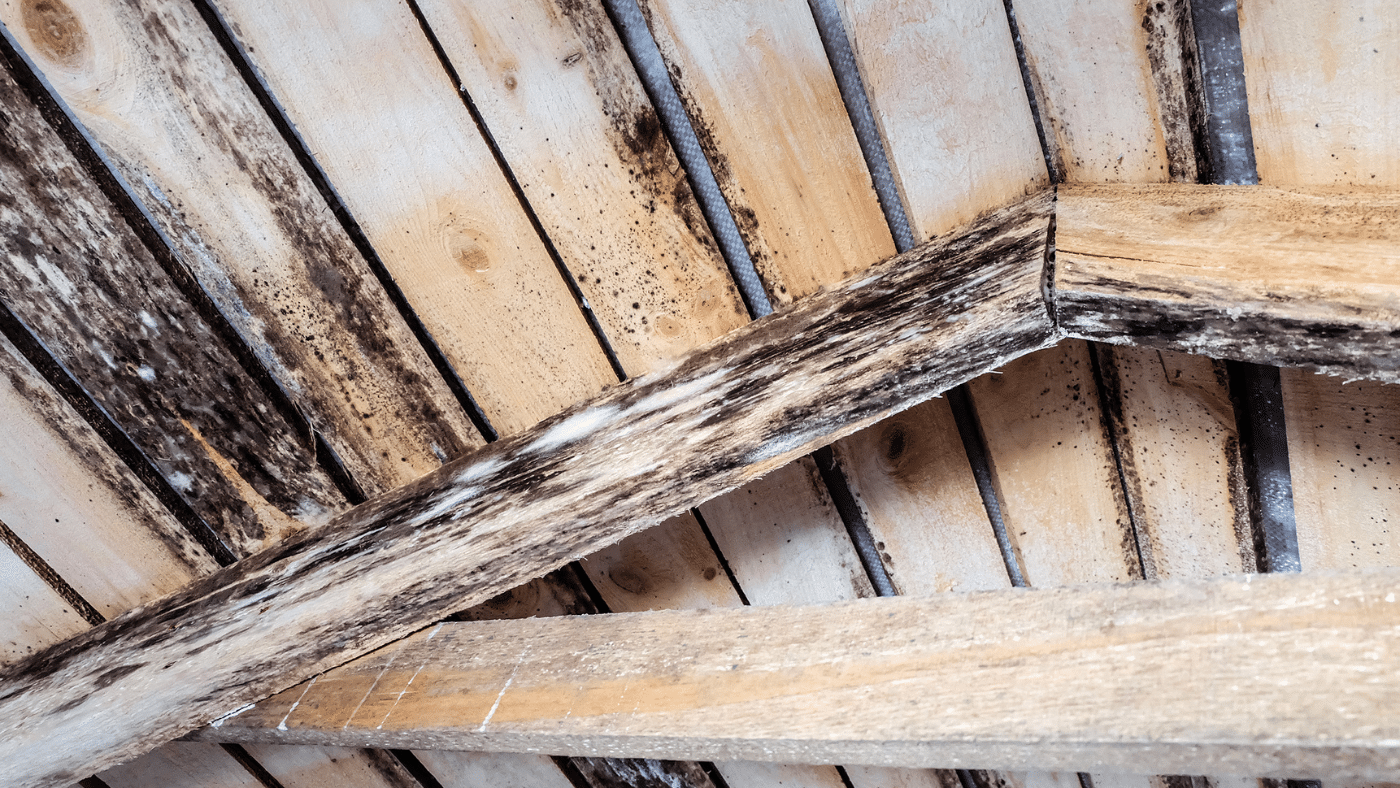
Roof Decking
The underside of roof decking is the most common location, especially near:
- Ridge lines
- North-facing slopes
- Areas above bathrooms or kitchens
Dark spotting or staining on decking is a common first sign.
Trusses and Framing
Wood framing absorbs moisture easily and can support mold growth if humidity remains elevated.
Insulation
Wet or compressed insulation:
- Traps moisture
- Reduces airflow
- Allows mold to grow unnoticed
Around Vent Penetrations
Bathroom and kitchen exhaust vents that terminate improperly can dump warm, moist air directly into the attic.
How Homeowners Usually Discover Attic Mold
Attic mold is rarely discovered during routine living.
Common discovery points include:
- Home inspections during a sale or refinance
- Roof replacement or repair
- HVAC or ductwork service
- Investigating musty odors in the home
- Checking after storm damage
Many homeowners are surprised because the living space below looks completely normal.
Early Warning Signs That Point to Attic Mold
Even though mold is hidden, attics often leave clues.
Odors
- Musty smells that seem stronger upstairs
- Odors noticeable near attic access points
- Smells that worsen after rain or high humidity
Indoor Comfort Issues
- Rooms that feel stuffy or damp
- Odors coming from ceiling vents
- Air that feels heavy despite AC running
Visual Clues Inside the Home
- Minor ceiling staining
- Discoloration around attic hatches
- Condensation around ceiling penetrations
These signs often trace back to attic moisture.
Why Attic Mold Is Often Missed
Attic mold goes undetected because:
- Attics aren’t inspected regularly
- Mold grows on the back side of visible surfaces
- There may be no ceiling leaks
- Odors can be subtle at first
By the time mold is visible from below, growth is usually advanced.
Why DIY Attic Mold Cleanup Is Risky
Some homeowners try to address attic mold themselves.
Common DIY mistakes include:
- Spraying cleaners on roof decking
- Scrubbing without containment
- Walking on contaminated insulation
- Ignoring ventilation and moisture sources
These actions can:
- Spread mold spores into the home
- Damage roofing materials
- Miss the root cause of moisture
Attic mold requires a controlled approach.
How Professional Attic Mold Inspections Work
A professional inspection focuses on moisture behavior, not just visible growth.
Moisture and Ventilation Evaluation
Inspectors assess:
- Condensation patterns
- Ventilation effectiveness
- Air leakage from the living space
Roof and Storm Damage Review
Inspectors look for:
- Past or active roof leaks
- Storm-related intrusion
- Wet decking or insulation
Source Identification
Professionals determine whether mold is being fed by:
- Indoor humidity
- Bathroom or kitchen venting
- Roof leaks
- Poor attic airflow
Fixing the source is critical.
Testing When Appropriate
Mold testing may be recommended when:
- Growth is suspected but unclear
- Documentation is needed
- Post-remediation verification is required
Testing supports findings but does not replace moisture correction.
Proper Attic Mold Remediation
Effective attic mold remediation follows a clear process.
- Correct moisture and ventilation issues
This may involve ventilation improvements, air sealing, or roof repairs. - Contain affected areas
Prevents spores from entering living spaces. - Treat or remove affected materials
Depending on severity, wood surfaces may be treated and insulation replaced. - HEPA cleaning and air control
Professional filtration protects indoor air quality. - Verification
Moisture conditions are confirmed stable before closing the attic.
Skipping steps often leads to mold returning.
Does Attic Mold Mean the Home Is Unsafe?
Not automatically.
Attic mold means:
- Moisture has been present too long
- Ventilation or sealing needs improvement
- The issue should be addressed
It does not automatically mean:
- The home is uninhabitable
- Major demolition is required
- Panic is warranted
Proper evaluation determines the correct response.
Preventing Attic Mold in Indian River Homes
Prevention focuses on airflow and moisture control.
Effective steps include:
- Ensuring bathroom and kitchen vents exhaust outdoors
- Sealing attic penetrations from the living space
- Maintaining proper attic ventilation
- Monitoring indoor humidity levels
- Inspecting the attic after storms
- Addressing roof issues promptly
Regular attic checks catch problems early.
Why Local Experience Matters
Attic mold behaves differently in Florida than in dry climates. Coastal humidity, storm patterns, and local construction all affect attic conditions.
A local company like Brevard Mold Inspections & Removal understands:
- How Indian River attics trap moisture
- Where mold typically forms locally
- How to correct issues without unnecessary roof work
Local knowledge leads to better, longer-lasting solutions.
A Calm, Practical Takeaway
Mold in attics is common in Indian River—but it’s never random. It’s almost always tied to moisture, airflow, and ventilation issues that can be corrected when identified early.
If your home has musty odors, recent storm exposure, or an attic that hasn’t been inspected in years, a professional evaluation can reveal what’s happening above the ceiling before it becomes a larger problem.
Brevard Mold Inspections & Removal works with homeowners throughout Merritt Island and Brevard County to identify attic mold issues accurately and prevent repeat growth.
In Florida’s climate, what happens in the attic matters more than most homeowners realize—and addressing it early is one of the smartest steps you can take.
