
Mold in Air Ducts in North Merritt Island: What Merritt Island Property Owners Should Know
Mold in air ducts is one of the most frustrating mold problems homeowners deal with in North Merritt Island. The reason is simple: you can’t see most of it, but you feel the effects throughout the entire home. Odors move from room to room, humidity feels harder to control, and mold seems to keep coming back no matter how much you clean vents or replace filters.
For property owners in and around Merritt Island, duct mold is rarely just a cleaning issue. In Brevard County’s humid, coastal climate, mold in air ducts almost always points to condensation, moisture imbalance, or HVAC system problems that allow mold to grow inside the duct system itself.
This article explains how mold gets into air ducts, why it’s common in North Merritt Island homes, what signs homeowners notice first, and how professional inspection and remediation prevent repeat issues.
Why Air Ducts Are Prone to Mold in North Merritt Island
Air ducts operate in a challenging environment in Florida.
Constant Temperature Differences
Cold, conditioned air moves through ducts surrounded by warm, humid air—especially in attics. That temperature difference creates condensation on and inside duct materials.
High Humidity Year-Round
Even when AC systems are running, indoor humidity can remain elevated if:
- The system is oversized
- Airflow is restricted
- The unit cycles too quickly
High humidity plus condensation is the perfect recipe for duct mold.
Year-Round AC Use
In North Merritt Island, AC systems rarely get a long break. Continuous operation means ducts are constantly exposed to moisture.
Why Mold in Air Ducts Is Common Locally
Several local factors increase the risk.
Attic-Installed Ductwork
Many homes have ductwork running through hot, humid attics. Poor insulation or damaged duct jackets allow moisture to collect inside ducts.
Slab Foundations
Moisture migrating upward from concrete slabs raises indoor humidity, which increases condensation inside ducts.
Storms and Power Outages
After storms, AC systems may be off while humidity remains high. When systems restart, condensation problems often spike.
Aging or Damaged Ducts
Older duct systems may have:
- Cracked insulation
- Loose connections
- Compressed or torn duct jackets
These conditions allow moisture intrusion and mold growth.
Where Mold Commonly Develops Inside Duct Systems
Duct mold doesn’t grow evenly throughout the system.
Flexible Duct Insulation
Flexible ducts are especially vulnerable. Moisture can soak into the insulation layer and remain trapped, allowing mold to grow out of sight.
Duct Liners
Some systems have lined duct interiors. Once mold grows in liner material, it’s very difficult to clean effectively.
Supply and Return Plenums
Plenums near the air handler often experience heavy condensation and dust buildup, creating ideal mold conditions.
Near Vents
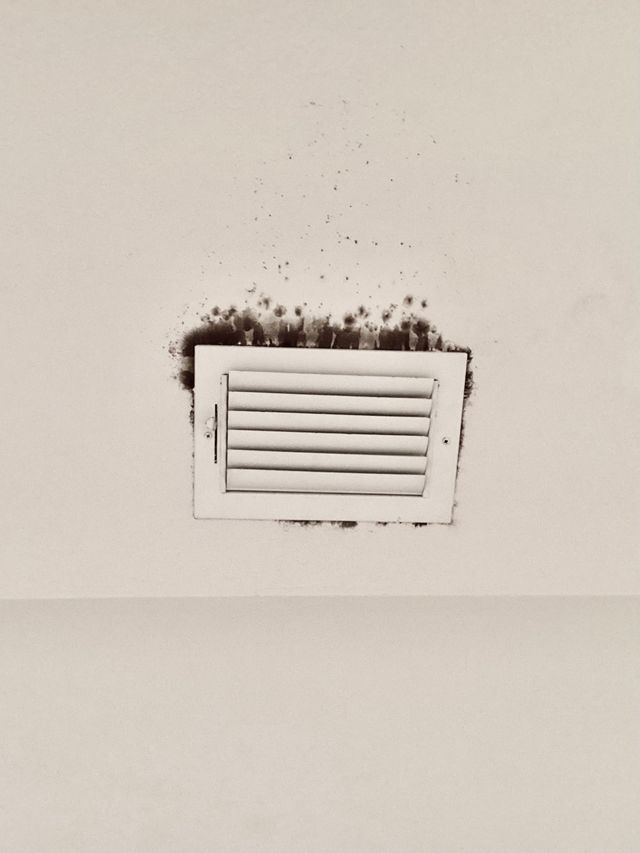
Visible mold around vents is usually a symptom, not the source. It often means mold is present deeper inside the duct system.
Signs Homeowners Usually Notice First
Air duct mold often makes itself known indirectly.
Persistent Odors
- Musty smells when the AC turns on
- Odors strongest near vents
- Smells that come and go with system cycles
Humidity and Comfort Issues
- Rooms that feel damp or sticky
- Difficulty keeping humidity down
- Air that feels stale despite AC running
Visual Clues
- Mold on supply or return vents
- Condensation around vent covers
- Dust that reappears quickly after cleaning
These signs usually point to moisture and contamination inside the duct system.
Why Duct Mold Keeps Coming Back
Duct mold almost always returns when the underlying moisture problem isn’t corrected.
Common reasons include:
- Cleaning vents without addressing condensation
- Replacing filters without inspecting ducts
- Ignoring attic humidity
- Not repairing damaged duct insulation
Without moisture control, mold will continue to regrow inside ducts.
Why DIY Duct Cleaning Often Fails
Many homeowners try to handle duct mold themselves.
Common DIY approaches include:
- Spraying cleaners into vents
- Fogging treatments without containment
- Wiping visible mold on registers
These methods often:
- Miss mold deep inside ducts
- Spread spores through the system
- Leave wet surfaces behind
DIY efforts frequently make the problem worse, not better.
How Professional Mold Inspections Evaluate Air Ducts
A proper inspection looks beyond visible vents.
Moisture and Condensation Assessment
Inspectors identify:
- Condensation patterns
- Insulation failures
- Drainage or airflow issues
- Attic humidity conditions
Duct Material Evaluation
Professionals determine:
- Whether ducts can be safely cleaned
- Whether insulation or liners are contaminated
- If replacement is necessary
Not all duct materials can be salvaged once mold is present.
HVAC System Review
Air handlers, drain pans, and coils are evaluated because duct mold often starts at or near the equipment.
Testing When Appropriate
Mold testing may be recommended when:
- Mold is suspected inside ducts but not visible
- Documentation is needed
- Post-remediation verification is required
Testing supports decisions but never replaces moisture correction.
Proper Mold Remediation for Air Ducts
Effective duct mold remediation requires a system-wide approach.
- Correct moisture and condensation issues
Drainage, insulation, airflow, or system sizing problems must be addressed first. - Containment and air control
Prevents spores from spreading into living spaces. - Cleaning or replacement of duct materials
Some ducts can be cleaned; others must be removed and replaced if insulation is contaminated. - HEPA filtration and negative air
Protects indoor air during remediation. - Drying and verification
Moisture levels and system performance are confirmed before restart.
Skipping steps is why duct mold frequently returns.
Does Mold in Air Ducts Affect the Whole Home?
Yes, it can.
Because ducts distribute air:
- Mold spores can circulate throughout the home
- Odors can appear in multiple rooms
- Indoor comfort can decline noticeably
That’s why duct mold should never be ignored or treated as a surface issue.
Preventing Mold in Air Ducts Long-Term
Prevention focuses on moisture control and system health.
Effective steps include:
- Keeping indoor humidity between 30–50%
- Maintaining condensate drain lines
- Sealing and insulating ductwork properly
- Inspecting attic humidity and ventilation
- Replacing damaged duct insulation
- Scheduling regular HVAC inspections
Preventive maintenance saves far more than reactive cleanup.
Why Local Experience Matters in North Merritt Island
Air duct mold behaves differently in Florida than in dry climates. Attic installations, coastal humidity, slab foundations, and storm patterns all affect duct systems here.
A local company like Brevard Mold Inspections & Removal understands:
- How North Merritt Island duct systems commonly fail
- Where mold typically forms locally
- When cleaning is enough and when replacement is necessary
Local experience helps homeowners avoid wasted money and repeat problems.
A Calm, Practical Takeaway
Mold in air ducts in North Merritt Island isn’t random—it’s a sign that moisture and condensation need to be addressed properly. Cleaning vents alone won’t solve it, and ignoring it usually allows the problem to spread.
If your home has persistent odors, recurring vent mold, or humidity that won’t come down, a professional inspection can clarify what’s happening inside the duct system and guide the right solution.
Brevard Mold Inspections & Removal works with homeowners throughout Merritt Island and Brevard County to evaluate duct mold accurately and prevent it from returning.
In Florida’s climate, keeping air ducts dry and properly insulated is one of the most important steps in protecting your home’s air quality and long-term condition.
