
 Mold Cleanup vs. Mold Remediation in Sykes Creek: What Merritt Island Property Owners Should Know
If you live near Sykes Creek and you’ve dealt with mold before, you’ve probably heard both terms—mold cleanup and mold remediation—used interchangeably. In reality, they are not the same thing. Confusing the two is one of the main reasons mold keeps coming back in Merritt Island homes.
Understanding the difference matters, especially in a moisture-heavy, waterfront environment like Sykes Creek, where humidity, high water tables, and frequent storms make mold problems harder to fully resolve.
Why This Distinction Matters in Sykes Creek Homes
Homes near Sykes Creek are constantly exposed to moisture from the surrounding lagoon system. Even when there’s no obvious leak, materials often stay damp longer than expected.
Because of that, surface-level fixes rarely hold up. What looks like a simple mold issue often has a deeper moisture source driving it. Knowing whether cleanup is enough—or remediation is required—can save time, money, and repeat frustration.
What Mold Cleanup Really Means
Mold cleanup focuses on removing visible mold from surfaces. It’s typically limited in scope and appearance-driven.
Cleanup usually involves:
- Wiping or scrubbing visible mold
- Using cleaners or disinfectants
- Improving appearance of affected surfaces
Cleanup can be appropriate when:
- Mold is very small and isolated
- The moisture source was brief and fully corrected
- The affected material is non-porous
- There’s no sign of spread or hidden moisture
In Sykes Creek homes, this scenario is less common than many homeowners assume.
The Limits of Mold Cleanup
Cleanup does not address:
- Moisture inside walls or ceilings
- Damp insulation or framing
- Mold roots embedded in porous materials
- Spores already spread through airflow
Because humidity stays high near Sykes Creek, moisture often remains even after visible mold is cleaned. When that happens, mold almost always returns—sometimes in the same spot, sometimes somewhere new.
What Mold Remediation Actually Involves
Mold remediation is a process, not just a cleaning step. Its goal is to correct the conditions that allowed mold to grow and prevent it from coming back.
Remediation typically includes:
- Identifying and correcting moisture sources
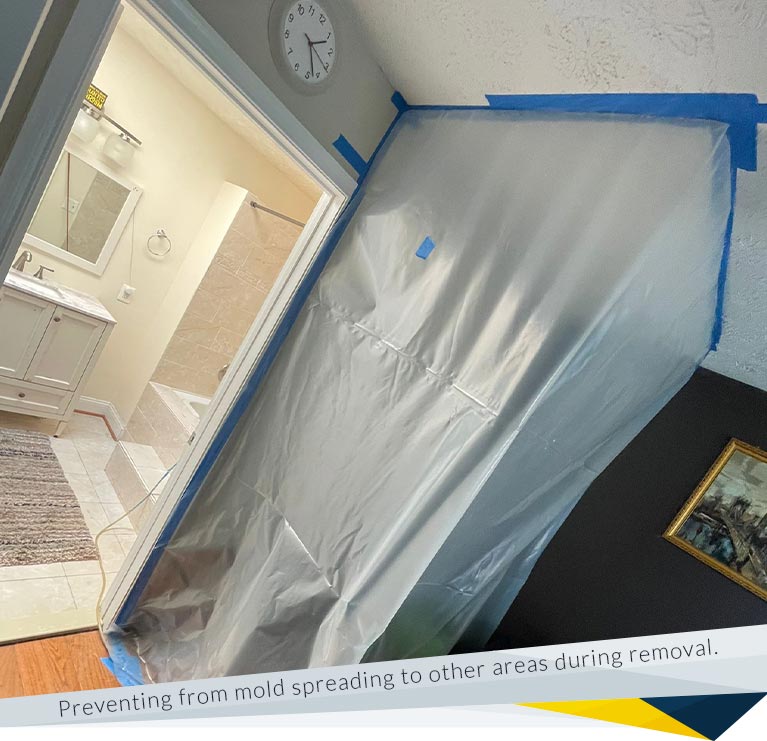
- Containing affected areas to prevent spore spread
- Removing contaminated porous materials when needed
- Cleaning remaining surfaces properly
- Drying and dehumidifying affected spaces
- Verifying that moisture levels are back to normal
In humid coastal areas like Sykes Creek, remediation is often the more realistic solution.
Why Sykes Creek Homes Often Need Remediation, Not Cleanup
Several local factors push mold problems beyond simple cleanup:
- Persistent humidity that slows drying
- High water tables beneath slab foundations
- Wind-driven rain during storms
- Salt air that degrades seals, roofs, and HVAC components
- AC condensation in attics and wall cavities
These conditions mean mold is usually tied to ongoing moisture, not a one-time spill.
Common Situations Where Cleanup Fails in Sykes Creek
Cleanup alone often fails when:
- Mold keeps returning after cleaning
- Musty odors persist
- Multiple rooms are affected
- Mold appears near vents or returns
- Growth is found in attics, closets, or garages
- There was past roof, plumbing, or AC leakage
These are signs that mold is being fed, not just sitting on the surface.
Why Mold Can Spread During Improper Cleanup
Another risk with simple cleanup is unintended spread. Scrubbing mold without containment can release spores into the air.
In homes where the AC runs frequently—as it does in Merritt Island—those spores can circulate through the HVAC system and settle in new, damp areas. This often gives the impression that mold is “moving” around the house.
How Professionals Decide Between Cleanup and Remediation
A proper evaluation focuses on moisture first. Professionals look at:
- Moisture levels inside walls and ceilings
- Indoor humidity patterns
- Attic and HVAC conditions
- Signs of repeated wetting
- Extent of visible and hidden growth
Local specialists such as Mold Removal Merritt Island understand how Sykes Creek’s environment affects moisture behavior and can determine whether cleanup is sufficient or remediation is needed.
Cost vs. Outcome: The Real Comparison
Cleanup may seem cheaper upfront, but when it doesn’t last, costs add up through:
- Repeat cleaning
- Repainting or cosmetic repairs
- Ongoing odors
- Spread into new areas
Remediation, when done correctly, focuses on long-term resolution, not repeated short-term fixes.
Practical Guidance for Sykes Creek Property Owners
Cleanup may be enough if:
- The mold is very small
- The surface is non-porous
- The moisture source is clearly fixed
- No odors or recurrence exist
Remediation is usually needed if:
- Mold keeps coming back
- Moisture source isn’t obvious
- Growth affects porous materials
- Odors persist
- Multiple areas are involved
When in doubt, moisture evaluation—not cleaning—should come first.
Why Acting Early Makes a Big Difference
In Sykes Creek’s humid environment, mold problems rarely improve on their own. Early remediation often means:
- Smaller affected areas
- Less disruption
- Lower overall cost
- Better long-term results
Waiting usually allows moisture and mold to spread deeper into the home.
A Clear Takeaway for Merritt Island Homeowners
Mold cleanup and mold remediation are not interchangeable. Cleanup addresses what you see. Remediation addresses why it’s there.
In Sykes Creek homes, where moisture is persistent and hidden issues are common, remediation is often the step that finally breaks the cycle. Understanding that difference helps property owners make decisions that actually solve the problem—not just cover it up.
