
Landlord Mold Responsibilities in Brevard County: What Merritt Island Property Owners Should Know
Owning rental property in Brevard County comes with clear responsibilities, and mold is one of the most misunderstood. For landlords in Merritt Island and nearby areas, mold issues can quickly become stressful—not because they’re rare, but because they sit at the intersection of property maintenance, tenant use, and Florida’s challenging coastal climate.
Many landlords assume mold problems automatically mean fault or liability. In reality, mold responsibility is usually tied to maintenance, response time, and moisture control, not blame. Understanding how mold develops in Brevard County rentals—and what landlords are reasonably expected to manage—helps property owners protect both their investment and their relationships with tenants.
This article breaks down landlord mold responsibilities in clear, practical terms, with a focus on Merritt Island conditions.
What the Mold Issue Is for Landlords
Mold in rental properties almost always starts with moisture. In Brevard County, that moisture can come from many sources—humidity, plumbing issues, storms, HVAC systems, or slab foundations.
For landlords, the real issue isn’t whether mold exists somewhere in the home. It’s whether:
- The property was maintained properly
- Moisture sources were addressed promptly
- Reasonable steps were taken to keep the home habitable
Most mold disputes stem from delayed repairs, missed moisture sources, or unclear communication, not from mold itself.
Why Mold Issues Are So Common in Brevard County Rentals
Brevard County creates a perfect environment for mold, especially in rental properties.
Persistent Coastal Humidity
Homes in Merritt Island, Sykes Creek, Banana River, and Indian River experience elevated humidity year-round. Even well-built homes can retain moisture if ventilation or AC performance slips.
High Water Tables and Slab Foundations
Many rental homes sit on concrete slabs over high water tables. Ground moisture can migrate upward and affect flooring, baseboards, and lower walls—often without visible leaks.
Frequent Storms and Heavy Rain
Storms and hurricanes can introduce moisture into roofs, walls, and attics. Water doesn’t always show up as a drip; it often stays hidden in building materials.
Tenant Turnover and Vacancy Periods
When rentals sit vacant—even briefly—humidity can rise quickly if AC systems aren’t running consistently. Mold can develop before a new tenant ever moves in.
Common Mold-Related Complaints Landlords Hear
Landlords across Brevard County tend to hear similar concerns.
- Musty or stale odors
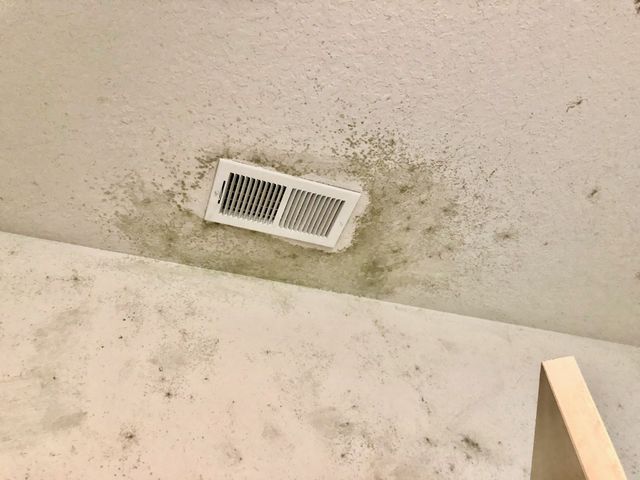
- Visible mold near baseboards or vents
- Bubbling paint or peeling drywall
- Condensation on windows or AC vents
- Damp-feeling indoor air
These complaints often surface after storms, during humid months, or shortly after move-in or move-out.
Hidden or Overlooked Mold Sources in Rentals
Many mold issues landlords deal with aren’t obvious during routine walkthroughs.
Behind Walls
Plumbing lines, exterior wall penetrations, and old leak areas can allow moisture into wall cavities, feeding mold unseen.
Under Flooring
Laminate, vinyl plank, tile underlayment, and carpet padding can trap moisture from slabs or leaks, allowing mold to grow beneath finished floors.
Attics
Attic mold is common in coastal rentals due to warm, humid air condensing on roof decking, especially when ventilation is limited.
HVAC Systems
Air handlers, drain pans, duct insulation, and vents are frequent mold sources in Brevard County rentals, particularly when drain lines clog or systems short-cycle.
Bathrooms and Closets
Small spaces with limited airflow are common trouble spots when humidity is high.
Why DIY Mold Cleanup Often Creates Bigger Problems
Some landlords try to resolve mold issues quickly with surface cleaning or cosmetic repairs. While understandable, these approaches often backfire.
Common DIY mistakes include:
- Cleaning visible mold without correcting moisture
- Painting over damp drywall
- Using bleach on porous materials
- Replacing small sections without inspecting surrounding areas
These actions may improve appearance temporarily but usually allow mold to return—sometimes worse than before.
Professional Mold Inspection & Testing Explained
A professional inspection helps landlords understand what’s actually happening, not just what’s visible.
Visual Inspection
Inspectors examine baseboards, flooring transitions, HVAC components, bathrooms, kitchens, closets, attics, and exterior-facing walls.
Moisture Detection
Professional tools are used to locate:
- Damp drywall or insulation
- Moisture beneath flooring
- Condensation-prone areas
- Elevated humidity zones
This step is critical in Brevard County rentals, where moisture is often hidden.
Mold Testing When Appropriate
Testing may be recommended when mold is suspected but not visible, documentation is needed, or post-remediation verification is required. Results are explained clearly and used to support findings.
Proper Mold Removal & Remediation in Rental Properties
Effective mold remediation protects both the property and future occupancy.
Containment
Affected areas are isolated to prevent mold spores from spreading during removal.
Safe Removal of Contaminated Materials
Porous materials such as drywall, insulation, or flooring are removed when they can’t be dried safely.
Moisture Source Correction
This is the most important step and may include:
- Plumbing repairs
- HVAC drainage or performance adjustments
- Improved ventilation
- Addressing slab moisture migration
- Sealing exterior intrusion points
Drying and Verification
Materials are dried thoroughly, and moisture levels are confirmed stable before repairs or re-occupancy.
Skipping moisture correction almost guarantees repeat mold issues.
How Landlords Can Prevent Mold in Brevard County Rentals
Prevention is far less expensive than repeated remediation.
- Keep HVAC systems maintained and drain lines clear
- Run AC systems consistently, even during vacancies
- Inspect properties after storms or heavy rain
- Address leaks immediately, even minor ones
- Ensure bathrooms and kitchens have working exhaust fans
- Monitor indoor humidity during turnover periods
- Avoid sealing moisture behind new flooring or drywall
Routine inspections and maintenance reduce disputes and downtime.
Why Local Merritt Island Experience Matters
Mold behavior in Brevard County is different from inland or northern markets. Coastal humidity, salt air exposure, high water tables, and storm patterns all affect how moisture moves through rental properties.
A local company like Mold Removal Merritt Island understands:
- Where mold typically develops in Merritt Island rentals
- How slab foundations and coastal humidity interact
- How to assess rental properties efficiently between tenants
Local experience leads to faster answers and fewer repeat problems.
A Calm, Practical Takeaway for Property Owners
Mold issues in Brevard County rentals are common—but they’re also manageable. Most problems come down to moisture control, timely maintenance, and clear response when concerns arise.
For landlords, the goal isn’t perfection. It’s demonstrating reasonable care of the property and addressing moisture issues before they escalate.
If you’re dealing with recurring mold complaints, musty odors between tenants, or uncertainty about where moisture is coming from, a professional evaluation can clarify the situation and guide the next steps.
Mold Removal Merritt Island works with landlords and property managers throughout Merritt Island and surrounding Brevard County communities to assess mold concerns responsibly and help prevent repeat issues.
In a coastal rental market, proactive moisture management is one of the most valuable tools a property owner can have.
