
How Mold Testing Works in North Merritt Island: What Merritt Island Property Owners Should Know
In North Merritt Island, mold testing is often misunderstood. Many property owners assume it’s a one-size-fits-all procedure or something only needed when visible mold is present. In reality, mold testing is a targeted tool—used at the right time, for the right reason—to provide clarity about indoor conditions in a coastal, high-humidity environment.
Homes near waterways like Sykes Creek and the Banana River face constant moisture pressure. Because mold often grows out of sight, testing can help answer important questions: Is mold present? Where is it coming from? Is it affecting indoor air? Understanding how mold testing actually works helps property owners decide when it’s useful and what the results really mean.
What Mold Testing Is Designed to Do
Mold testing is not a hunt for a specific “type” of mold or a pass/fail score for a home. Its purpose is to gather data that supports decisions about moisture and mold conditions.
In North Merritt Island homes, mold testing is typically used to:
- Confirm whether mold is present when it’s not visible
- Compare indoor air conditions to outdoor air
- Identify areas with elevated spore levels
- Support decisions about remediation or further investigation
- Verify conditions after cleanup or drying
Testing works best when it’s part of a broader inspection, not a standalone shortcut.
Why Mold Testing Is Often Needed in North Merritt Island
North Merritt Island homes experience year-round humidity, high water tables, and frequent storms. Mold can develop from condensation, HVAC issues, or past moisture events without leaving obvious surface growth.
Testing is often considered when:
- Musty odors persist without visible mold
- A home feels damp despite air conditioning
- There’s a history of leaks or storm exposure
- Mold was previously cleaned and returned
- Indoor air quality concerns don’t have a clear source
Because moisture dries slowly in this coastal environment, testing can reveal problems early.
Step One: Deciding Whether Testing Is Appropriate
Not every situation requires mold testing. A professional first determines whether testing will add useful information beyond visual and moisture findings.
Testing is most helpful when:
- Mold is suspected but hidden
- Documentation is needed for a transaction or records
- Post-remediation verification is required
- Air quality concerns persist without explanation
In cases where visible mold and moisture sources are obvious, testing may not be necessary to move forward.
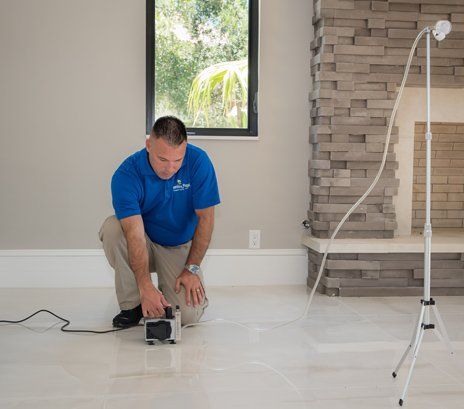
Air Sampling: How Indoor Mold Levels Are Measured
Air sampling is one of the most common mold testing methods used in North Merritt Island homes. It measures the concentration of airborne mold spores in a specific area.
The process involves:
- Collecting air samples from one or more indoor locations
- Taking an outdoor control sample for comparison
- Sending samples to a laboratory for analysis
Results are interpreted by comparing indoor spore levels and types to outdoor conditions. In coastal areas, outdoor mold is always present, so context matters.
Why Outdoor Samples Matter
Outdoor air in North Merritt Island naturally contains mold spores due to vegetation, humidity, and nearby water. That’s why outdoor samples are critical.
They help determine:
- What “normal” looks like for that day and location
- Whether indoor levels are elevated or unusual
- If indoor mold growth is likely contributing to air conditions
Without an outdoor comparison, indoor results can be misleading.
Surface Sampling: When Visible Growth Is Present
Surface sampling is used when there is visible staining or suspected mold growth on a specific material.
This method may involve:
- Swab samples from walls, ceilings, or fixtures
- Tape lift samples from surfaces
- Targeted collection from suspect areas
Surface samples help confirm whether growth is mold and can guide decisions about material removal or cleaning.
When Surface Sampling Is Useful
Surface sampling is typically used to:
- Confirm suspected mold on a surface
- Distinguish mold from dirt or staining
- Document conditions before or after remediation
It’s not meant to measure air quality and is usually combined with other inspection data.
HVAC-Related Testing in North Merritt Island Homes
HVAC systems are common mold contributors in North Merritt Island due to condensation and constant use. Testing may focus on areas near air handlers, returns, or ductwork.
This can help identify:
- Mold growth affecting circulated air
- Moisture problems inside the system
- Reasons for odors when the AC runs
Because HVAC systems move air throughout the home, issues here often affect multiple rooms.
What Mold Test Results Actually Mean
Lab results list types and concentrations of mold spores found in samples. These results are not diagnoses—they’re data points.
Proper interpretation focuses on:
- Comparing indoor and outdoor levels
- Identifying unusual or elevated indoor spores
- Correlating results with moisture findings
- Understanding where mold may be originating
In North Merritt Island, interpretation must account for coastal outdoor conditions to avoid false conclusions.
Common Misconceptions About Mold Testing
Mold testing is often misunderstood, leading to unrealistic expectations.
Common myths include:
- Testing can “prove” a home is mold-free
- Any mold detected means remediation is required
- Results alone determine next steps
- Testing replaces a full inspection
In reality, testing supports decisions—it doesn’t replace investigation or moisture control.
Why Moisture Data Matters More Than Numbers
Mold follows moisture. Testing without understanding moisture patterns can miss the real issue.
That’s why testing is usually paired with:
- Moisture meter readings in walls and floors
- Attic and insulation evaluation
- HVAC condensation checks
- Identification of past or current leaks
In many North Merritt Island homes, moisture findings explain test results more clearly than numbers alone.
Testing After Storms or Water Events
After storms, testing may be used to assess whether moisture has led to mold development—especially when odors or air quality changes appear.
Testing is often considered when:
- Storm moisture was suspected but not visible
- Drying occurred but conditions are uncertain
- Odors developed weeks after the event
Timing matters. Testing too early or too late can affect results.
Post-Remediation Testing Explained
After mold removal, testing may be used to confirm that conditions have improved.
Post-remediation testing focuses on:
- Comparing indoor air to outdoor air
- Ensuring spore levels have returned to normal ranges
- Verifying that moisture sources were corrected
This step provides reassurance that cleanup was effective.
Why Local Experience in North Merritt Island Matters
Mold testing in coastal Florida is different from inland areas. Local experience matters because professionals familiar with North Merritt Island understand:
- How lagoon humidity affects outdoor baselines
- How slab foundations influence moisture movement
- How AC systems impact indoor air
- How seasonal changes affect test interpretation
That local knowledge ensures results are read accurately and used correctly.
A Practical Takeaway for Property Owners
Mold testing is a tool—not a trigger for alarm. In North Merritt Island, it’s most valuable when used to answer specific questions about hidden mold, air quality, or post-remediation conditions.
If a home has persistent odors, unexplained humidity, or a history of moisture issues, testing can provide clarity when paired with a proper inspection. Used thoughtfully, mold testing helps property owners make informed decisions, address moisture early, and protect the long-term condition of their home.
