
High Water Table Mold Issues in North Merritt Island: What Merritt Island Property Owners Should Know
High water tables are a quiet but powerful influence on homes in North Merritt Island. While many property owners think of mold as something caused by roof leaks or plumbing failures, ground moisture plays an equally important role here. In neighborhoods close to waterways and low-lying areas, moisture from below the home can create ongoing conditions that support mold growth without any obvious water intrusion.
For homeowners, landlords, and property managers, understanding how a high water table affects mold risk is critical. These issues tend to be subtle, persistent, and recurring when misunderstood. Recognizing the connection between groundwater and mold helps property owners address the real problem instead of repeatedly treating symptoms.
Why High Water Tables Are Common in North Merritt Island
North Merritt Island sits in a coastal environment surrounded by rivers, lagoons, and wetlands. The Banana River, Sykes Creek, and nearby waterways keep groundwater levels high throughout much of the year. Heavy rainfall, storm surges, and seasonal weather patterns can raise water tables even further.
Because many neighborhoods are only slightly above sea level, groundwater does not need to rise far to influence homes. Even when there is no standing water on the surface, moisture pressure below the ground can still affect building materials.
This makes high water table conditions a normal part of life in North Merritt Island rather than an unusual event.
How Ground Moisture Enters the Home
Most homes in North Merritt Island are built on concrete slab foundations. While concrete feels solid and waterproof, it is actually porous. Moisture in the soil can slowly migrate upward through the slab in the form of vapor.
This process does not look like a leak. There may be no puddles or dripping water. Instead, moisture gradually raises humidity levels at the lowest parts of the home. Flooring, baseboards, and lower wall sections are affected first.
Over time, this steady moisture exposure creates ideal conditions for mold growth.
Why Mold Often Appears Near Floors and Baseboards
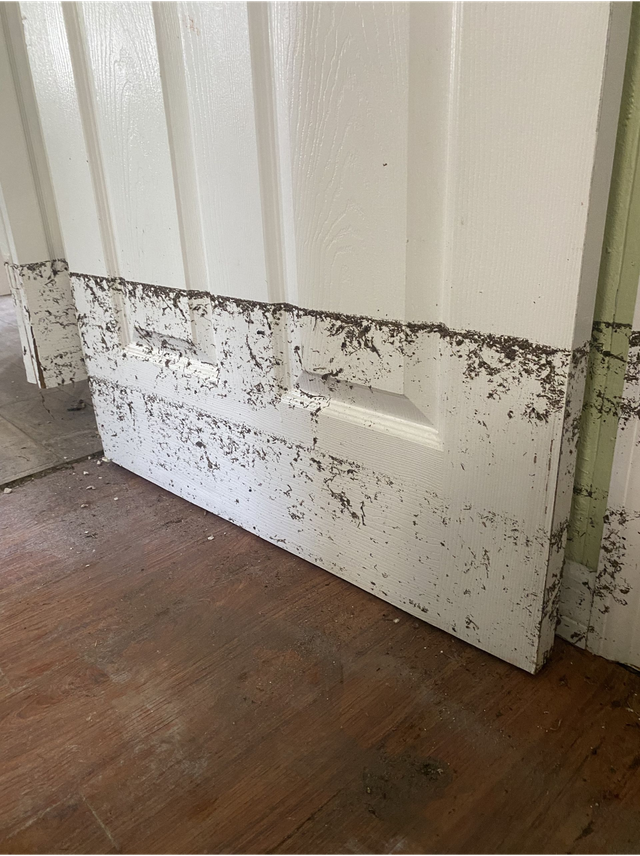
One of the most common signs of high water table mold issues is mold growth near the floor. Baseboards, flooring edges, closets, and lower drywall sections are frequent problem areas.
These locations are closest to the slab, where moisture pressure is strongest. Even small increases in moisture can be enough to support mold, especially when combined with North Merritt Island’s naturally high humidity.
Because the moisture source is below the surface, cleaning these areas without addressing ground moisture usually leads to recurrence.
Flooring Materials and Hidden Mold
Flooring systems can trap moisture coming up from the slab. Vinyl plank, laminate, carpet, and even tile can limit evaporation, allowing moisture to accumulate underneath.
Mold may grow beneath flooring long before any surface signs appear. By the time baseboards warp, odors develop, or discoloration appears, mold may already be established below.
This hidden growth is common in homes affected by high water tables and often surprises property owners during inspections or renovations.
Seasonal Changes and Mold Flare-Ups
High water table mold issues often worsen seasonally. After prolonged rain, tropical weather, or storms, groundwater levels rise and increase moisture pressure beneath homes.
Property owners may notice mold returning during rainy seasons even if the home seemed fine during drier months. This cycle leads many people to believe mold is random or uncontrollable.
In reality, the mold is responding to predictable changes in groundwater and soil moisture.
Why There May Be No Visible Leak
One of the most confusing aspects of high water table mold is the absence of visible leaks. There may be no roof damage, plumbing failure, or flood history.
Because moisture enters as vapor through the slab, the problem can go unnoticed for years. The home may look dry while materials slowly absorb moisture from below.
This leads to delayed diagnosis and repeated surface-level fixes that do not resolve the underlying issue.
Closets and Low-Airflow Areas Are Vulnerable
Closets located along exterior or lower walls are especially prone to mold in high water table conditions. Limited airflow allows moisture to linger, and stored items restrict evaporation.
Mold often appears on lower walls, shoes, boxes, or furniture placed directly on the floor. These areas are early warning signs of slab-related moisture issues.
Ignoring them usually allows the problem to spread.
HVAC Systems and Ground Moisture
HVAC systems can unintentionally worsen high water table mold problems. Cool indoor air combined with moisture migrating upward increases condensation near floors and vents.
If indoor humidity is not well controlled, moisture from the slab has nowhere to go. This creates a feedback loop where ground moisture and indoor humidity reinforce each other.
Proper humidity control is essential, but it must be paired with an understanding of slab moisture behavior.
Why DIY Mold Cleanup Usually Fails
DIY mold cleanup focuses on visible growth, not moisture movement. Scrubbing baseboards or lower walls may remove mold temporarily, but it does nothing to stop moisture rising from the ground.
Using water-based cleaners can actually add more moisture to the area, worsening conditions. Paint and sealants may hide stains but trap moisture behind surfaces.
When high water table conditions are involved, mold almost always returns after DIY efforts.
Professional Evaluation Looks Below the Surface
Effective mold evaluation in North Merritt Island requires looking beyond visible damage. Moisture meters, slab-edge inspections, and humidity measurements help identify ground moisture influence.
Professionals evaluate patterns rather than isolated spots. Mold limited to lower walls, recurring floor-level odors, or seasonal flare-ups often point to high water table conditions.
Mold Removal Merritt Island works with local property owners to assess mold issues based on real groundwater behavior rather than assuming leaks are the cause.
Long-Term Impact on the Structure
If left unaddressed, high water table mold issues can affect more than surfaces. Prolonged moisture exposure can deteriorate drywall, weaken adhesives under flooring, and reduce insulation effectiveness.
Over time, repair costs increase as mold spreads into additional areas. Early recognition and proper moisture management help limit long-term damage.
This is especially important for rental properties and homes near waterways.
Managing Mold Risk in High Water Table Areas
Preventing mold in high water table environments focuses on moisture control rather than one-time fixes. Effective strategies may include:
- Monitoring indoor humidity consistently
- Using dehumidification when needed
- Avoiding flooring materials that trap moisture
- Improving airflow near floor-level areas
- Inspecting after prolonged rain or storms
These steps help reduce mold-friendly conditions even when groundwater remains high.
Why Local Knowledge Matters
High water table mold issues are common in North Merritt Island, but they behave differently than mold caused by leaks or floods. Local experience helps identify these patterns quickly.
Generic advice often overlooks ground moisture entirely, leading to repeat problems. Understanding local soil, elevation, and climate conditions makes a significant difference.
A Practical Takeaway for Property Owners
High water table mold issues in North Merritt Island are not unusual, but they are often misunderstood. Mold near floors and baseboards is frequently a sign of ground moisture rather than a surface problem.
Addressing these issues requires recognizing how groundwater affects slab foundations and indoor humidity. When moisture from below is managed properly, mold becomes far more controllable.
For property owners dealing with recurring mold at lower wall levels or unexplained moisture, professional evaluation provides clarity. Mold Removal Merritt Island understands how high water tables influence mold behavior in North Merritt Island and helps property owners move from repeated cleanup to lasting solutions grounded in local conditions.
