
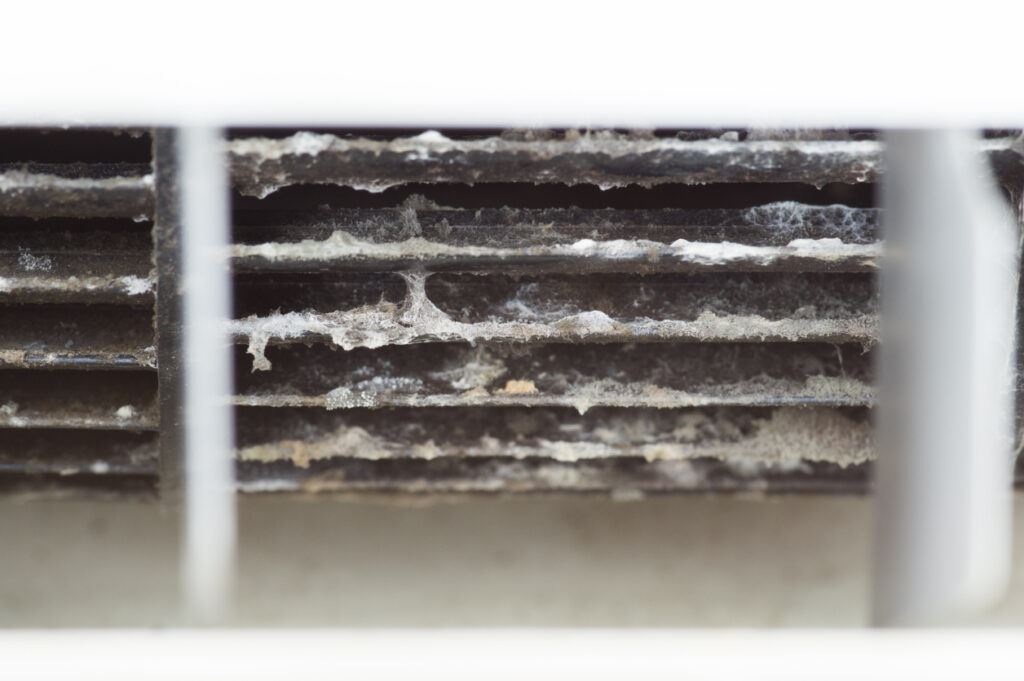
⚠️ Black Mold in Indian River: What Merritt Island Property Owners Should Know
The words “black mold” make most homeowners nervous—and for good reason. Along the Indian River, homes face persistent humidity, salt air, and long cooling seasons that allow certain dark-colored molds to grow quietly and aggressively when moisture isn’t controlled. While not every dark mold is the same, any mold growth indoors is a sign of a moisture problem that needs attention.
This guide explains what black mold really is, why Indian River homes are more vulnerable, where it hides, and what Merritt Island property owners should do next.
🌴 Why Indian River Homes Face Higher Black Mold Risk
Coastal conditions stack the odds:
- High year-round humidity
- Salt air that slows drying
- Slab-on-grade construction that releases moisture upward
- High water tables after rain and storms
- Long AC seasons with constant condensation
- Wind-driven rain around windows and roofs
In this environment, moisture can linger inside walls, floors, and HVAC systems—creating ideal conditions for dark, moisture-loving molds.
🦠 What People Mean by “Black Mold”
“Black mold” is a visual description, not a diagnosis. Many molds appear dark or black depending on age and conditions. The key takeaway:
- Color alone doesn’t determine risk
- Any mold indoors indicates excess moisture
- Health effects vary by person and exposure level
The solution is the same regardless of color: find the moisture, fix it, and remove the mold properly.
⚠️ When Black Mold Becomes a Serious Concern
Black or dark mold should be treated as urgent when:
- It keeps returning after cleaning
- It’s growing on porous materials (drywall, insulation, carpet)
- Musty odors persist
- HVAC systems are involved
- Multiple rooms show growth
- Health symptoms worsen indoors
- Moisture lasted longer than 48 hours
In these cases, cleaning alone is not enough—remediation is required.
🧱 Common Places Black Mold Hides in Indian River Homes
Black mold often grows out of sight first. High-risk areas include:
- HVAC air handlers, drain pans, and duct insulation
- Bathrooms and laundry rooms
- Under sinks and behind vanities
- Closets on exterior walls
- Behind drywall near windows and doors
- Under flooring in slab homes
- Attics with roof seepage
- Garages and rooms above garages
If odors intensify when the AC runs, HVAC involvement is likely.
👃 Early Warning Signs Homeowners Miss
Black mold rarely starts with obvious patches. Watch for:
- Persistent musty or earthy odors
- Odors stronger in the morning or after weekends
- Bubbling paint or warped baseboards
- Condensation that never fully dries
- Allergy or respiratory symptoms indoors
- Mold that fades and returns with humidity changes
Odors are often the earliest reliable clue.
🌬️ The HVAC–Black Mold Connection
In Indian River homes, HVAC systems are a major factor:
- Constant condensation during cooling seasons
- Clogged drain lines that overflow intermittently
- Damp duct insulation in attics
- Mold odors spreading when the system runs
If HVAC moisture isn’t corrected, black mold can spread house-wide.
🧪 Why Testing Can Be Helpful (and When It Isn’t)
Mold testing can help when:
- Mold is suspected but not visible
- Odors persist without a clear source
- Documentation is needed for insurance or resale
- You need to confirm whether growth is indoor-origin
Testing is not a substitute for fixing moisture—and it’s not always necessary when visible mold and moisture are obvious.
🧽 Why DIY Black Mold Cleanup Often Fails
DIY efforts commonly fail because:
- Moisture sources remain active
- Mold roots stay inside porous materials
- Scrubbing spreads spores
- HVAC redistributes contamination
- Indoor humidity stays above safe levels
If mold keeps coming back, the environment wasn’t fixed.
🛠️ What Professional Black Mold Remediation Includes
Proper remediation focuses on removal and prevention, not masking.
- Containment & air control (HEPA filtration, negative pressure)
- Removal of contaminated materials (drywall, insulation, flooring if needed)
- Detailed cleaning of remaining structures
- Moisture & humidity correction (HVAC, drainage, dehumidification)
- Post-remediation verification when appropriate
Without moisture control, remediation won’t last.
📄 Health, Insurance & Documentation Considerations
Professional remediation helps:
- Reduce health risks
- Support insurance claims tied to sudden water damage
- Provide documentation for buyers and inspectors
- Avoid last-minute repairs during sales
Records matter as much as results.
📉 How Black Mold Affects Property Value
Unresolved black mold can:
- Fail inspections
- Delay or derail sales
- Reduce offers
- Increase insurance scrutiny
Early, documented remediation lets homeowners control timing and cost.
🌊 Why Indian River Homes Need Extra Vigilance
Compared to inland homes, Indian River properties:
- Dry more slowly
- Face higher humidity pressure
- Experience longer mold growth seasons
What works inland often isn’t enough here.
🛑 When to Call a Professional Immediately
Call for professional evaluation if:
- Mold returns after cleaning
- Musty odors persist
- HVAC systems are involved
- Multiple rooms are affected
- Moisture lasted over 48 hours
- Health symptoms appear indoors
Waiting usually makes the problem larger and more expensive.
✅ Final Takeaway for Merritt Island Property Owners
In Indian River homes, black mold is a moisture problem first—and a cleanup problem second.
Remember:
✔ Color doesn’t change the solution
✔ Mold can grow in 24–48 hours
✔ HVAC systems often spread contamination
✔ DIY fixes frequently fail
✔ Proper remediation protects health and value
With early detection, professional remediation, and consistent moisture control, black mold in Merritt Island homes is manageable—and preventable.
If you’d like, I can provide a black mold warning-sign checklist, HVAC moisture inspection guide, or a post-remediation prevention plan tailored specifically for Indian River and Merritt Island homes.
