
Mold in Slab Homes in North Merritt Island: What Merritt Island Property Owners Should Know
Slab-on-grade homes are extremely common throughout North Merritt Island. These homes are durable and practical for Florida’s coastal environment, but they also come with unique moisture challenges that many property owners don’t fully realize until mold problems appear.
Unlike homes built with crawl spaces or raised foundations, slab homes sit directly on concrete poured at ground level. While this design reduces some risks, it also places living spaces closer to moisture coming from the ground, storms, and humid coastal air.
Because mold problems in slab homes often develop out of sight, many Merritt Island homeowners only notice issues after odors, floor damage, or wall staining appear. Understanding how mold forms in slab homes helps property owners prevent hidden damage and maintain healthy indoor conditions.
What Mold Problems in Slab Homes Really Mean
In slab construction, the home rests directly on a concrete foundation poured over soil. Flooring materials, walls, and insulation are installed directly on top of that slab.
Concrete may seem solid and waterproof, but it is actually porous. Moisture from the soil beneath the home can slowly move upward through the slab, especially in humid regions like Merritt Island.
When moisture becomes trapped beneath flooring or inside walls, mold spores naturally present in the air settle and begin growing on organic materials such as:
• Wood framing
• Drywall backing
• Flooring adhesives
• Dust and debris under flooring
• Baseboards and trim
Because slab homes lack airflow beneath floors, moisture often remains trapped, allowing mold to spread unnoticed.
In North Merritt Island, where humidity and groundwater levels remain high year-round, this risk increases.
Why Mold Happens So Often in North Merritt Island Slab Homes
Several local conditions make slab homes vulnerable to moisture problems.
Homes near Sykes Creek, Banana River, and the Indian River Lagoon commonly face:
• High coastal humidity throughout the year
• Heavy seasonal rainfall
• Hurricanes and tropical storms
• Elevated groundwater tables
• Soil moisture surrounding foundations
• Continuous air conditioning use
During storms, water can collect around foundations. If drainage isn’t ideal, moisture may seep beneath slabs or enter wall areas.
Air conditioning can also contribute. When cool indoor air meets warm, humid surfaces, condensation may form near slab edges, flooring, or inside walls.
Older homes in North Merritt Island may also have outdated moisture barriers or slab construction methods that allow more moisture transfer than modern building practices.
Even newer homes can experience problems if landscaping or drainage directs water toward the foundation.
Signs Property Owners Often Notice
Because mold problems in slab homes often remain hidden, warning signs can be subtle at first.
Common symptoms include:
• Musty smells that linger indoors
• Flooring that feels damp or soft
• Warped or buckling floors
• Stains or discoloration near baseboards
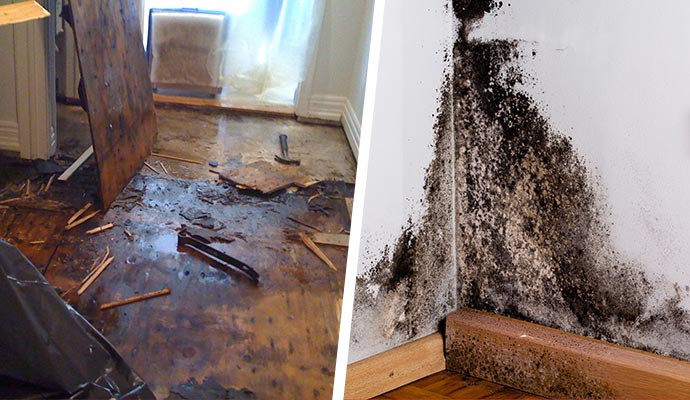
• Mold appearing along wall bottoms
• Peeling paint or bubbling drywall
• Increased indoor humidity
Some homeowners notice recurring mold growth in the same areas after cleaning or repainting.
Others discover problems when replacing flooring and finding damp or moldy subfloor materials underneath.
Hidden Moisture Sources in Slab Homes
Moisture problems in slab homes don’t always come from obvious leaks. Often, hidden conditions slowly create mold risks.
Common hidden sources include:
• Ground moisture rising through slabs
• Plumbing leaks beneath concrete
• Stormwater entering through foundation cracks
• Improper exterior drainage
• AC condensation problems
• Past flood or hurricane water intrusion
• Moisture trapped under flooring materials
Homes near waterways in North Merritt Island frequently experience higher soil moisture levels, increasing slab moisture transfer.
After heavy storms, water may remain beneath floors long after surfaces appear dry.
Past repairs that replaced flooring without correcting moisture sources often allow mold to return later.
Why DIY Fixes Usually Don’t Work
When mold appears near floors or walls, homeowners often try surface cleaning or quick repairs. Unfortunately, this rarely fixes underlying problems.
Common DIY mistakes include:
• Cleaning visible mold without removing flooring
• Painting over stained areas
• Ignoring moisture sources
• Installing new floors over damp slabs
• Using cleaners that don’t reach contaminated materials
Because mold roots grow beneath surfaces, problems usually return if moisture isn’t corrected.
Professional remediation focuses on removing contamination while solving moisture conditions that allow mold growth.
How Professional Mold Inspection and Testing Works
When mold is suspected in slab homes, professionals start by identifying moisture sources and contamination areas.
Inspection steps may include:
• Evaluating flooring and wall damage
• Checking moisture levels in slabs and walls
• Inspecting plumbing systems
• Assessing drainage around the home
• Examining HVAC systems and humidity levels
Moisture meters and thermal imaging help detect hidden dampness beneath flooring or inside walls.
If needed, air or surface samples may be collected to determine mold spore levels. Lab analysis helps clarify whether contamination is localized or affecting the entire home.
This process allows property owners to understand the scope of the issue before repairs begin.
Proper Mold Removal and Remediation Process
Remediation in slab homes requires careful steps to prevent mold from spreading.
A proper process often includes:
• Removing contaminated flooring or wall materials
• Safely disposing of affected materials
• Cleaning and treating contaminated surfaces
• Drying slabs and wall cavities thoroughly
• Repairing leaks or drainage issues
• Installing moisture-resistant materials
After remediation, technicians verify moisture levels are safe before rebuilding or replacing flooring.
Professionals familiar with Merritt Island construction styles often recognize moisture patterns quickly, helping prevent recurring problems.
Mold Removal Merritt Island teams frequently address slab-home mold problems related to coastal humidity and storm-related moisture throughout Brevard County.
Preventing Mold in Slab Homes in Merritt Island
Prevention largely depends on managing moisture both inside and outside the home.
Helpful prevention strategies include:
• Ensuring proper drainage away from foundations
• Fixing plumbing leaks immediately
• Monitoring indoor humidity levels
• Inspecting homes after storms or flooding
• Maintaining HVAC systems regularly
• Checking flooring for damp spots or warping
• Installing vapor barriers or moisture-resistant flooring where needed
Homes located near waterways often benefit from periodic inspections due to higher moisture exposure.
Routine maintenance helps catch problems early before mold spreads beneath floors or walls.
Why Local Experience Matters
Slab-home mold problems in Merritt Island differ from inland areas due to constant coastal moisture exposure.
Professionals experienced in North Merritt Island understand:
• How coastal humidity affects slab foundations
• Which neighborhoods experience higher moisture levels
• How storms impact local homes
• Where hidden mold typically develops
Local knowledge leads to faster diagnosis and better long-term solutions.
Professionals serving Merritt Island communities tailor solutions based on environmental conditions unique to island living.
Mold Removal Merritt Island specialists frequently encounter slab moisture patterns specific to waterfront communities and address them accordingly.
A Practical Next Step for Property Owners
If your slab home develops musty odors, flooring issues, or unexplained moisture problems, an inspection can help prevent costly repairs later.
Most mold problems begin with manageable moisture issues that grow only when left unchecked.
In coastal communities like Merritt Island, moisture management simply becomes part of responsible home ownership.
A professional evaluation provides clarity and helps property owners make informed decisions about maintaining safe and comfortable indoor environments.
