
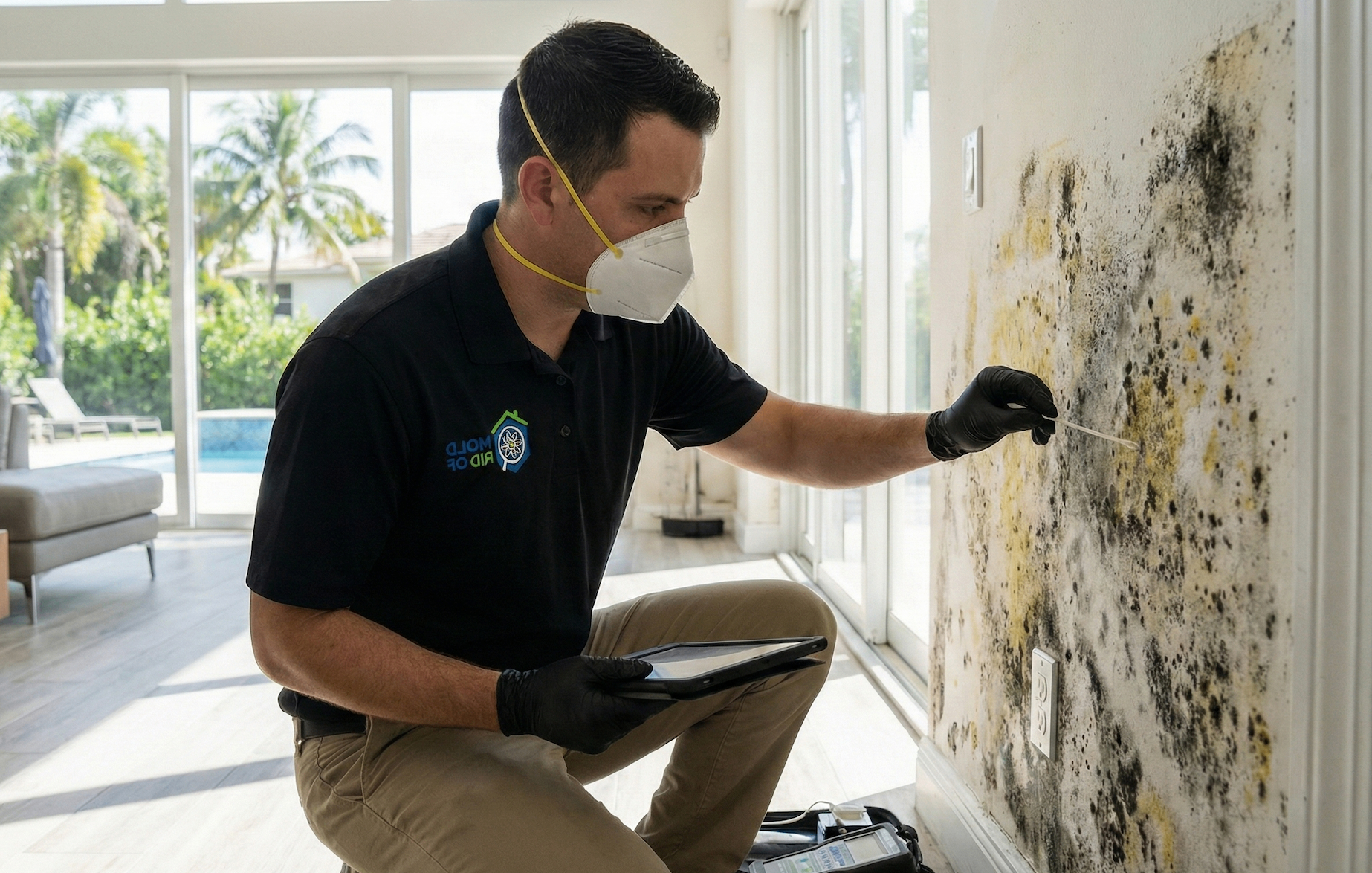
Mold Testing in Merritt Island: What Merritt Island Property Owners Should Know
Mold testing is one of the most misunderstood services in Merritt Island. Some homeowners assume testing will “prove” a home is safe. Others think it’s the first step anytime mold is suspected. In Brevard County’s humid, coastal climate, neither assumption is quite right.
For property owners in Merritt Island, mold testing is a tool, not a cure. When used correctly, it provides clarity, documentation, and direction. When used incorrectly, it creates confusion, wasted money, and false reassurance. Understanding when mold testing helps—and when it doesn’t—is the key to making smart decisions.
This article explains what mold testing really involves in Merritt Island, when it’s appropriate, how results should be interpreted, and why local conditions matter so much.
What Mold Testing Actually Is
Mold testing is the process of collecting samples from air or surfaces and sending them to a laboratory to identify and measure mold spores. Testing does not remove mold, stop growth, or fix moisture problems.
Its purpose is to answer specific questions, such as:
- Are mold spores elevated compared to normal outdoor levels?
- What types of mold are present?
- Is mold likely growing where it can’t be seen?
- Is documentation needed for a transaction or report?
Testing works best when it supports an inspection—not when it replaces one.
Why Mold Testing Is Tricky in Merritt Island
Merritt Island’s environment makes mold testing more complex than in drier regions.
Factors that affect results include:
- High outdoor mold spore counts year-round
- Constant humidity fluctuations
- Frequent AC cycling
- Open windows and doors
- Storm-related moisture
Because mold spores are always present in Florida air, a positive result alone doesn’t mean there’s a problem. Context matters.
When Mold Testing Is Actually Helpful
Mold testing is most useful in specific situations.
When Mold Is Suspected but Not Visible
If a home smells musty or occupants feel uncomfortable but no mold can be seen, testing can help confirm whether mold activity is likely hidden behind walls, above ceilings, or inside HVAC systems.
During Real Estate Transactions
Buyers and sellers often need documentation. Testing can:
- Support negotiations
- Provide third-party records
- Clarify concerns raised during inspections
After Mold Remediation
Post-remediation testing helps verify that conditions have returned to normal after removal and drying are complete.
For Insurance or Documentation Purposes
Some situations require lab results to support a claim or report.
In these cases, testing provides value because it answers a specific need.
When Mold Testing Is Usually Not Necessary
There are also times when testing doesn’t help.
When Mold Is Clearly Visible
If mold is already visible on drywall, ceilings, or other porous materials, testing rarely changes the plan. The focus should be on moisture control and remediation, not lab results.
As a Standalone “Safety Check”
Testing alone cannot declare a home “safe” or “unsafe.” Without understanding moisture sources, results can be misleading.
Before Moisture Issues Are Addressed
Testing while materials are actively wet often produces inconsistent or inflated results that don’t reflect long-term conditions.
Types of Mold Testing Commonly Used
Air Sampling
Air samples measure mold spores in indoor air and compare them to outdoor levels.
Used for:
- Investigating hidden mold
- Comparing different areas of a home
- Post-remediation verification
Air testing must be interpreted carefully, especially in Florida.
Surface Sampling
Surface samples collect mold directly from a visible area.
Used for:
- Identifying the type of mold present
- Supporting documentation
- Confirming suspected growth
Surface testing does not measure how widespread a problem is.
HVAC-Related Sampling
Sometimes samples are taken near vents or returns to evaluate whether spores may be moving through the system.
This is usually done only after inspection suggests HVAC involvement.
How Mold Testing Is Interpreted Correctly
Test results don’t stand on their own. They must be evaluated alongside:
- Moisture readings
- Visual findings
- Odors
- Building history
- Recent water events
For example:
- Elevated indoor spores compared to outdoors may suggest indoor growth
- Similar indoor and outdoor levels may indicate normal Florida conditions
- Certain species may point toward moisture-prone materials
Without context, numbers alone don’t tell the story.
Common Misconceptions About Mold Testing
“If the test is positive, I need remediation”
Not always. Florida homes almost always have some mold spores in the air.
“If the test is negative, there’s no problem”
Also not true. Mold can be hidden in wall cavities or attics without showing up clearly in air samples.
“Testing will find all mold”
Testing only samples a moment in time and a limited area. It doesn’t scan the entire structure.
Why Mold Inspections Should Come First
In Merritt Island, a proper mold inspection usually provides more useful information than testing alone.
Inspections focus on:
- Moisture sources
- Condensation patterns
- Slab and attic conditions
- HVAC performance
- High-risk areas like closets and exterior walls
Testing is most effective after this information is gathered.
Why DIY Mold Test Kits Often Cause Confusion
Store-bought mold test kits are popular but frequently misunderstood.
Common issues include:
- No comparison to outdoor air
- No professional interpretation
- False positives due to Florida’s environment
- Results that don’t guide next steps
Many homeowners end up more confused—and more worried—after using DIY kits.
How Mold Testing Fits Into a Smart Plan
In a well-planned approach:
- A professional inspection identifies moisture and risk areas
- Testing is recommended only if it serves a purpose
- Results are interpreted in context
- Decisions are made based on conditions, not fear
This prevents unnecessary remediation and missed problems.
Why Local Experience Matters for Mold Testing
Mold testing in Merritt Island is not the same as testing in dry climates. Coastal humidity, slab foundations, and constant AC use all influence results.
A local company like Brevard Mold Inspections & Removal understands:
- What “normal” looks like for Brevard County air
- When results are meaningful—and when they aren’t
- How to pair testing with moisture findings
- How to explain results clearly to homeowners
Local knowledge prevents overreaction and underreaction.
Preventing Mold After Testing
Regardless of results, prevention always comes back to moisture control.
Key steps include:
- Keeping indoor humidity between 30–50%
- Running AC systems consistently
- Maintaining condensate drain lines
- Using bathroom and kitchen exhaust fans
- Inspecting attics and closets seasonally
- Addressing water intrusion within 24–48 hours
Testing can inform decisions, but prevention stops problems.
A Calm, Practical Takeaway for Property Owners
Mold testing isn’t something to fear or chase. When used correctly, it’s a helpful tool. When used blindly, it creates more questions than answers.
If your Merritt Island property has odors, moisture concerns, or questions that inspection alone can’t answer, professional mold testing may be appropriate. The key is knowing why you’re testing and how results will be used.
Brevard Mold Inspections & Removal works with homeowners throughout Merritt Island and Brevard County to determine when mold testing makes sense—and when it doesn’t—so decisions are based on facts, not guesswork.
In Florida’s climate, understanding the full picture is always more valuable than a single test result.
