
Salt Air and Mold Growth in Brevard County: What Merritt Island Property Owners Should Know
Living along Florida’s Space Coast comes with obvious benefits—water views, steady breezes, and a coastal lifestyle many homeowners seek out. But for property owners across Brevard County, salt air introduces a quieter, ongoing challenge that often goes overlooked: mold growth driven by constant moisture and accelerated material wear. This is especially relevant on Merritt Island, where homes are surrounded by the Banana River, Indian River, and nearby Atlantic influences.
Salt air doesn’t just affect vehicles and exterior metal. Over time, it impacts building materials, seals, and systems in ways that allow moisture to linger—creating ideal conditions for mold. Understanding how salt air contributes to mold growth helps property owners recognize risks early and take practical steps to protect their homes.
What the Mold Issue Is in Salt-Air Environments
Salt air contains microscopic salt particles carried by humid coastal breezes. These particles settle on exterior and interior surfaces and naturally attract moisture from the air. While salt itself doesn’t cause mold, it helps surfaces stay damp longer than they otherwise would.
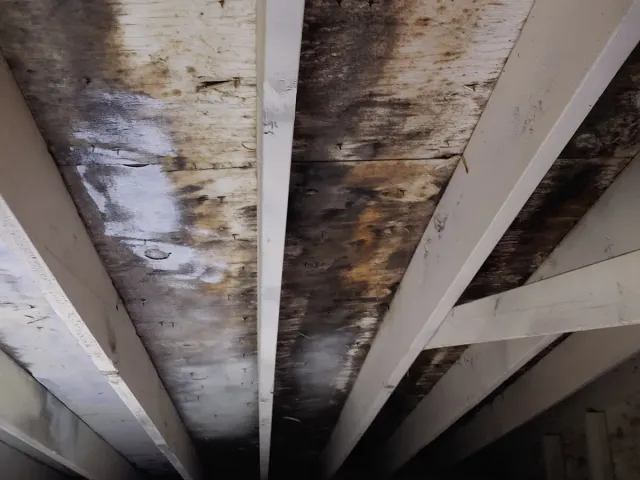
When moisture lingers, mold can grow on nearby organic materials such as drywall paper, wood framing, insulation, and dust buildup. Over time, what starts as minor dampness becomes a persistent moisture problem that supports mold growth in hidden areas.
In coastal homes, salt-air-related mold often develops gradually. It may begin near windows or attic spaces and slowly spread into wall cavities, flooring systems, or HVAC components as moisture continues to move through the structure.
Why This Happens So Often in Brevard County
Brevard County’s geography places homes in near-constant contact with salt-laden air. On Merritt Island, moisture moves inland from both the Indian River and Banana River, surrounding properties with humid, salty air from multiple directions.
High humidity is present year-round, not just during summer. Even cooler months bring enough moisture to prevent materials from fully drying. Salt residue left behind during humid periods continues to attract moisture long after the air feels drier.
Salt air also accelerates material breakdown. Caulking, window seals, flashing, fasteners, and HVAC components degrade faster in coastal conditions. As these protective elements weaken, moisture intrusion becomes more likely—often without obvious signs at first.
Storms and hurricanes intensify the problem. Wind-driven rain combined with salt exposure can overwhelm aging seals and force moisture deep into walls, attics, and flooring systems, where it may remain trapped.
Common Signs Property Owners Notice
One of the earliest signs is persistent indoor humidity. Even with the air conditioner running, rooms may feel clammy or surfaces may stay cool and damp longer than expected.
Musty odors are another frequent indicator, especially near exterior walls, windows, closets, or ceiling edges. These smells often become stronger after rain or during periods of high humidity.
Visible clues may include discoloration around window frames, baseboards, or along ceiling lines. Paint may bubble, peel, or crack as moisture builds up behind surfaces.
In some homes, corrosion on metal components—such as window hardware, fasteners, or HVAC parts—signals ongoing salt air exposure and moisture retention that often accompanies mold growth.
Hidden or Overlooked Mold Sources Linked to Salt Air
Salt-air-related mold often develops in areas homeowners rarely inspect. Attics are a common trouble spot, especially when warm, humid air enters and condenses on cooler roof surfaces. Salt residue can make this condensation linger longer.
Wall cavities along exterior walls are another frequent source. Moisture can enter through small gaps in siding, stucco, or masonry and remain trapped behind drywall.
HVAC systems are particularly vulnerable in coastal environments. Salt air accelerates corrosion on coils and components, affecting drainage and increasing condensation. Ductwork running through humid attics can become a pathway for mold to spread.
Windows and doors are also high-risk areas. Degraded seals allow repeated moisture intrusion that feeds mold growth in surrounding framing and drywall.
Why DIY Mold Cleanup Often Falls Short
In salt-air environments, mold problems are rarely limited to surface growth. Cleaning visible mold or repainting affected areas may temporarily improve appearance, but it doesn’t address ongoing moisture exposure.
Household cleaners and bleach do not prevent moisture retention caused by salt residue or material degradation. Without improving sealing, ventilation, and humidity control, mold often returns.
DIY efforts also tend to miss hidden damage. Mold inside walls, attics, or HVAC systems continues to grow even when visible areas look clean.
Most importantly, DIY cleanup rarely accounts for salt air as a continuing factor. Without addressing how moisture enters and lingers, repeated mold problems are common.
Professional Mold Inspection and Testing Explained
A professional inspection in Brevard County looks beyond visible mold. It begins with understanding the home’s proximity to waterways, prevailing wind exposure, and construction style.
Inspectors use moisture detection tools to locate damp areas behind walls, under flooring, or in attic spaces. Thermal imaging helps identify hidden moisture caused by air intrusion or condensation.
When appropriate, air or surface sampling may be used to confirm mold activity and guide remediation decisions. Results are explained clearly, focusing on practical steps rather than technical jargon.
Local professionals familiar with coastal conditions understand how salt air affects moisture behavior and where mold is most likely to develop in Merritt Island homes.
Proper Mold Removal and Remediation Process
Effective remediation in salt-air environments focuses on both removal and prevention. Containment is established first to prevent spores from spreading during work.
Affected materials such as drywall, insulation, or flooring may be removed when contamination is extensive. Non-porous surfaces are cleaned only after thorough drying.
Correcting underlying issues is critical. This may include improving exterior sealing, replacing degraded materials, enhancing attic ventilation, or addressing HVAC condensation problems.
Companies like Mold Removal Merritt Island approach remediation with an understanding that coastal homes require solutions designed to withstand ongoing salt air exposure—not short-term fixes.
How to Reduce Mold Risk from Salt Air in Merritt Island Homes
Regular exterior maintenance is essential. Seals, caulking, and flashing around windows, doors, and roof penetrations should be inspected and maintained proactively.
Managing indoor humidity helps limit condensation. Air conditioning systems should be properly sized, maintained, and configured to control moisture effectively.
Attic ventilation plays a major role in coastal homes. Proper airflow helps prevent moisture buildup caused by warm, salt-laden air entering attic spaces.
After storms, interior and exterior inspections can catch early signs of intrusion before mold has time to develop.
For older homes, updating materials and moisture barriers designed for coastal environments can significantly reduce long-term risk.
Why Local Coastal Experience Matters
Salt air creates challenges that standard humidity alone does not. Local experience means understanding how Brevard County’s coastal conditions accelerate material wear and moisture intrusion.
Professionals familiar with Merritt Island homes recognize common failure points and can recommend solutions that hold up over time in a salt-air environment.
This local knowledge often reduces repeat repairs and lowers the risk of recurring mold problems.
A Calm, Practical Next Step
If you notice persistent humidity, musty odors, or signs of moisture damage in a coastal home, a professional evaluation can provide clarity. Not every situation requires extensive remediation, but early assessment helps prevent small issues from spreading.
For Merritt Island property owners, understanding how salt air contributes to mold growth is an important step toward protecting both the structure and long-term comfort of homes throughout Brevard County.