

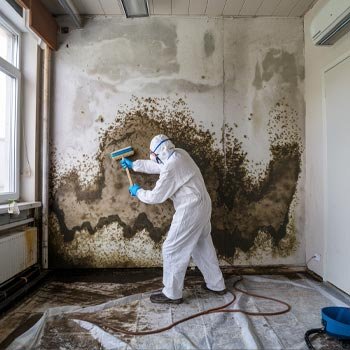
 Post-Remediation Mold Testing in North Merritt Island: What Merritt Island Property Owners Should Know
After mold remediation is completed, many North Merritt Island property owners assume the problem is automatically resolved. The visible mold is gone, materials have been removed or treated, and the home looks clean again. But in a coastal, high-humidity area like North Merritt Island, the most important question comes after the work: did the remediation actually work?
Post-remediation mold testing exists to answer that question. It’s not about fear or overchecking—it’s about verification. In an environment surrounded by waterways and persistent moisture, confirmation matters.
What Post-Remediation Mold Testing Is
Post-remediation mold testing—often called clearance testing—is performed after mold removal is complete to confirm that conditions inside the home have returned to normal.
The purpose is to verify that:
- Mold levels are no longer elevated
- Containment and removal were effective
- Mold spores are not spreading through indoor air
- Moisture issues have been corrected
- The space is ready for normal use again
In North Merritt Island homes, this step provides reassurance that remediation addressed both the mold and the environment that allowed it to grow.
Why Post-Remediation Testing Matters More in North Merritt Island
North Merritt Island homes face constant moisture pressure from nearby waterways, high water tables, and coastal humidity. Because drying is slower here, mold can reappear if even small moisture pockets remain.
Post-remediation testing is especially valuable locally because:
- Outdoor mold levels are naturally high and variable
- Indoor humidity can rise quickly after storms
- HVAC systems run most of the year
- Slab foundations can release lingering moisture
Testing helps ensure the home is truly stable—not just visually clean.
When Post-Remediation Testing Is Recommended
Not every mold situation requires post-remediation testing, but it’s often recommended when clarity or documentation is important.
Testing is commonly used when:
- Mold affected multiple rooms or hidden areas
- Mold was found in HVAC systems or attics
- The home had strong or persistent odors
- There’s a history of recurring mold
- A property is being sold, rented, or reoccupied
- Peace of mind is a priority after major work
In North Merritt Island, these scenarios are common due to climate and construction styles.
What Happens Before Testing Begins
Post-remediation testing should only occur after certain conditions are met. Testing too early can produce misleading results.
Before testing, professionals typically confirm that:
- All remediation work is complete
- Containment has been removed properly
- Affected materials are fully dry
- Air filtration devices have been turned off for a set period
- No visible dust or debris remains
This ensures results reflect real conditions—not leftover disturbance from cleanup.
Air Sampling After Remediation
Air sampling is the most common form of post-remediation testing. It measures airborne mold spores in areas that were affected and compares them to outdoor conditions.
The process usually includes:
- Collecting air samples from remediated areas
- Taking at least one outdoor control sample
- Sending samples to a laboratory for analysis
In North Merritt Island, outdoor air naturally contains mold, so results are evaluated by comparing indoor and outdoor levels—not by expecting zero spores indoors.
Why Outdoor Comparison Is Critical
Because North Merritt Island is surrounded by water and vegetation, outdoor mold levels are always present and often high. That’s normal.
Outdoor samples help determine:
- What’s typical for that specific day
- Whether indoor air reflects normal conditions
- If indoor levels are elevated beyond outdoor influence
Without outdoor comparison, results can easily be misunderstood.
Surface Sampling After Remediation
In some cases, surface sampling is used as part of post-remediation testing, especially if specific materials were treated or removed.
Surface sampling may be used to:
- Confirm cleaned surfaces are free of active growth
- Verify treatment effectiveness
- Document conditions for records
Surface samples support air testing but don’t replace it.
Interpreting Post-Remediation Results
Post-remediation test results are not pass/fail scores. They’re data that must be interpreted in context.
Proper interpretation considers:
- Indoor vs outdoor spore levels
- Types of spores present
- Areas tested and previous findings
- Moisture readings and drying status
In North Merritt Island, experienced interpretation is critical because coastal conditions influence baseline results.
What “Clearance” Really Means
Clearance doesn’t mean mold no longer exists anywhere—it means indoor conditions have returned to normal and are no longer supporting growth.
Clearance generally indicates:
- No elevated indoor mold levels
- No evidence of active growth
- Moisture issues addressed successfully
- Air quality consistent with outdoor environment
This provides confidence that remediation achieved its goal.
Common Reasons Clearance Testing Fails
Occasionally, post-remediation testing indicates further action is needed. This doesn’t mean remediation failed—it usually means something was missed.
Common causes include:
- Hidden moisture not fully dried
- Mold in adjacent, untreated areas
- HVAC contamination not addressed
- Testing performed too soon
- Elevated humidity returning too quickly
In North Merritt Island, moisture-related causes are the most common.
Why Timing Matters After Remediation
Testing should occur after the space has stabilized, but before reoccupation if possible.
Testing too early can detect:
- Disturbed spores from cleanup
- Temporary elevation from air movement
Testing too late can miss:
- Moisture re-entering the space
- New growth beginning elsewhere
Proper timing ensures meaningful results.
Post-Remediation Testing and HVAC Systems
If remediation involved areas near HVAC systems, post-remediation testing often focuses on air quality.
This helps determine:
- Whether spores are still circulating
- If odors should return
- Whether additional HVAC cleaning is needed
Because HVAC systems move air throughout the home, this step is especially important in North Merritt Island properties.
Documentation and Peace of Mind
Beyond technical results, post-remediation testing provides documentation.
This can be useful for:
- Homeowners seeking reassurance
- Buyers or sellers during transactions
- Property managers and landlords
- Insurance or maintenance records
Having clear results removes uncertainty and supports confident next steps.
Why Local North Merritt Island Experience Matters
Post-remediation testing isn’t generic. Local experience matters because professionals familiar with North Merritt Island understand:
- How lagoon humidity affects air samples
- How slab foundations influence moisture readings
- How storms change baseline conditions
- How AC systems impact indoor air
That local knowledge ensures results are interpreted accurately—not overreacted to or dismissed incorrectly.
A Practical Takeaway for Property Owners
Post-remediation mold testing isn’t about assuming something went wrong—it’s about confirming that things went right. In North Merritt Island, where moisture conditions are constant and mold can reappear quietly, verification provides clarity and confidence.
After remediation, testing helps ensure the home is stable, air quality is normal, and the problem truly is behind you. For many property owners, that peace of mind is just as important as the remediation itself.
