
Post-Remediation Mold Testing in Indian River: What Merritt Island Property Owners Should Know
After mold removal work is completed, many homeowners feel relieved and assume the problem is fully resolved. However, in Indian River and throughout Merritt Island, experienced property owners often ask one important follow-up question:
How do we know the mold problem is truly gone?
That’s where post-remediation mold testing comes in. In coastal Florida homes, where humidity and moisture are constant challenges, confirming successful remediation is often just as important as the removal itself.
Homes near the Indian River Lagoon frequently experience recurring moisture issues due to storms, humidity, and proximity to water. Without verification, mold problems can sometimes return months later.
Understanding what post-remediation testing is — and when it makes sense — helps Merritt Island property owners protect their homes and avoid repeat mold problems.
What Is Post-Remediation Mold Testing?
Post-remediation mold testing is conducted after mold removal work is completed to confirm that mold levels inside the home have returned to normal and that cleanup was successful.
The goal is simple:
• Confirm mold contamination was properly removed
• Ensure indoor air quality has improved
• Verify affected areas are dry and safe
• Check that mold spores are no longer elevated indoors
This testing helps homeowners feel confident that remediation work actually solved the problem rather than temporarily hiding it.
Why Testing Matters in Indian River Homes
Homes near the Indian River experience environmental conditions that make mold problems more likely to return if moisture issues persist.
Several local factors contribute:
Persistent Coastal Humidity
High humidity allows mold spores to thrive if moisture remains inside building materials.
Storm and Rain Exposure
Heavy storms and hurricanes often introduce hidden moisture into homes.
High Water Table
Moisture intrusion through foundations or crawl spaces is common in waterfront areas.
AC Condensation Problems
Cooling systems frequently produce condensation that may lead to hidden moisture buildup.
Because moisture problems can hide behind walls or flooring, testing helps confirm that remediation truly corrected the issue.
What Happens During Post-Remediation Testing?
Post-remediation testing usually involves several inspection steps to verify results.
Visual Inspection
The inspector checks previously affected areas to ensure mold growth has been removed and surfaces are clean and dry.
Moisture Measurements
Meters and infrared tools help confirm moisture problems have been corrected.
Air Sampling
Indoor air samples are compared with outdoor samples to measure mold spore levels.
Surface Sampling (when necessary)
In some situations, surfaces may be tested to ensure contamination is gone.
Lab Analysis
Samples are sent to a laboratory to determine mold types and concentration levels.
Results help determine whether mold levels are back to normal conditions.
When Is Post-Remediation Testing Recommended?
Not every mold situation requires testing afterward, but many Merritt Island homes benefit from confirmation.
Testing is often recommended when:
• Mold contamination was widespread
• Multiple rooms were affected
• Storm or flood damage occurred
• Mold existed inside HVAC systems
• Residents experienced recurring mold problems
• Indoor air quality concerns remain
• Insurance claims are involved
For larger remediation projects, testing provides reassurance that cleanup was successful.
Common Misunderstandings About Mold Testing
Some homeowners misunderstand the purpose of testing.
Myth: Testing Guarantees Mold Will Never Return
Testing confirms current conditions but cannot prevent future moisture problems.
Myth: No Mold Should Ever Be Found Indoors
Mold spores exist naturally indoors and outdoors. Testing checks whether levels are normal, not zero.
Myth: Cleaning Alone Proves Remediation Worked
Visible cleaning doesn’t always confirm hidden contamination was removed.
Testing provides measurable confirmation of results.
Signs Mold Problems May Still Exist After Remediation
Occasionally, mold problems persist after removal work if moisture sources weren’t fully corrected.
Warning signs include:
• Musty odors still present
• Damp conditions remain in affected areas
• Mold spots reappear weeks later
• Humidity problems continue
• Residents notice ongoing indoor air discomfort
In these cases, testing can help identify remaining issues.
How Mold Can Return Without Proper Verification
In Indian River homes, mold sometimes reappears when:
Hidden Moisture Remains
Water trapped behind walls or flooring may allow mold to regrow.
Ventilation Problems Continue
Poor airflow leads to condensation buildup.
AC Systems Still Produce Moisture Issues
Duct or unit condensation may persist.
Crawl Spaces Remain Damp
Ground moisture continues rising into the home.
Testing helps confirm whether remediation solved these issues.
What Happens If Testing Shows Mold Levels Are Still High?
If post-remediation testing reveals mold levels remain elevated, additional corrective steps may be needed.
These might include:
• Additional cleaning or removal
• Further drying of materials
• Correcting moisture sources
• Improving ventilation
• Re-inspecting HVAC systems
The goal is to address any remaining contamination before mold spreads again.
How Proper Mold Remediation Prevents Repeat Problems
True remediation involves more than removing visible mold.
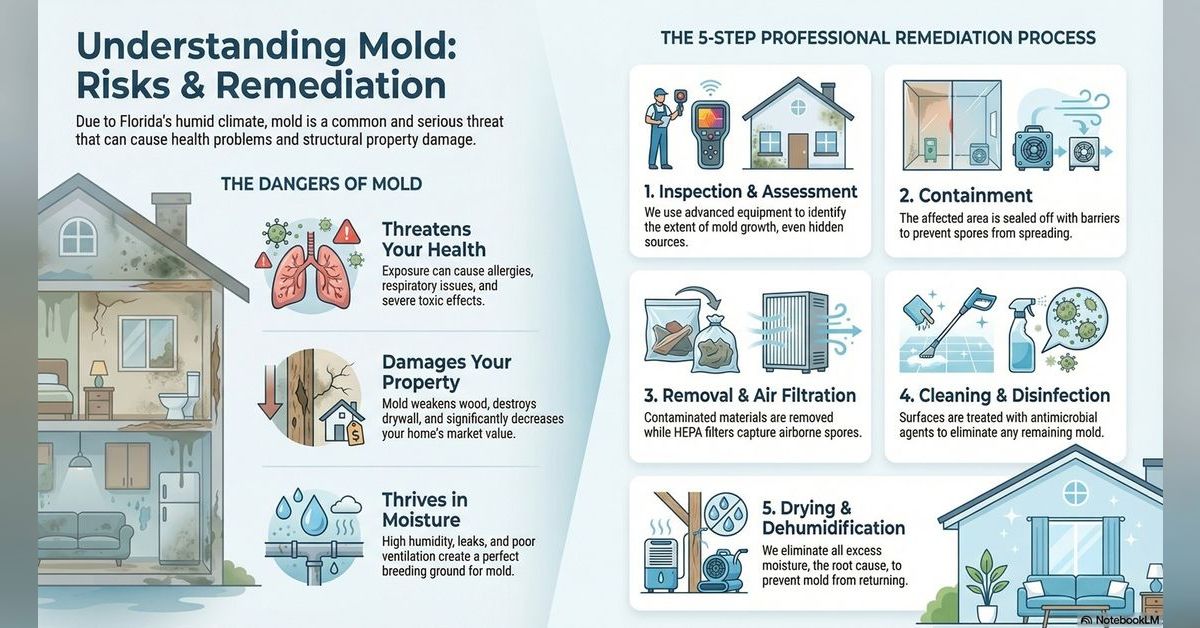
A proper remediation process includes:
Containment of Work Areas
Preventing spores from spreading to clean parts of the home.
Removal of Contaminated Materials
Damaged drywall or insulation may need replacement.
Thorough Cleaning
Remaining surfaces are cleaned using professional techniques.
Moisture Source Correction
Leaks or humidity issues are corrected.
Prevention Improvements
Ventilation or moisture controls reduce future risk.
Companies familiar with local conditions, such as Mold Removal Merritt Island, often focus on moisture correction so mold doesn’t return.
Preventing Mold After Remediation
Homeowners can help prevent mold from returning by maintaining moisture control.
Maintain Air Conditioning Systems
Regular service helps prevent condensation buildup.
Monitor Indoor Humidity
Keeping humidity below 55% reduces mold risk.
Inspect Homes After Storms
Check ceilings, attics, and walls for leaks.
Improve Ventilation
Bathrooms and kitchens should vent outdoors.
Address Small Leaks Quickly
Even minor leaks can lead to mold over time.
Check Crawl Spaces and Attics
Ensure proper airflow and moisture control exist.
Ongoing maintenance protects the investment in remediation.
Why Local Experience Matters for Testing and Prevention
Homes near the Indian River face environmental conditions that differ from inland communities.
Professionals familiar with Merritt Island understand:
• Coastal humidity patterns
• Storm-related water intrusion risks
• Typical moisture entry points
• Common building designs
• Areas prone to mold growth
Local knowledge leads to faster identification and correction of moisture issues.
Confirming the Job Was Done Right
Post-remediation mold testing provides peace of mind after mold removal. It confirms whether cleanup worked and helps homeowners avoid repeated problems.
For many Indian River homeowners, testing ensures that moisture problems have been corrected and indoor conditions are back to normal.
When necessary, experienced local professionals like Mold Removal Merritt Island can help guide property owners through inspection and testing steps to confirm their homes are safe and dry.
The goal isn’t just removing mold — it’s making sure the problem is truly solved so homeowners can move forward with confidence and comfort in their homes.
