
Post-Remediation Mold Testing in Indian River: What Merritt Island Property Owners Should Know
After mold remediation is completed, many property owners in Indian River assume the problem is fully resolved. The visible mold is gone, damaged materials have been removed, and the area looks clean. While these are important steps, they don’t always answer the most critical question: did the remediation actually work?
Post-remediation mold testing is designed to provide that answer. In a coastal environment like Indian River, where humidity remains high and moisture dries slowly, verification is especially important. Understanding what post-remediation testing does — and when it truly matters — helps Merritt Island property owners move forward with confidence instead of uncertainty.
Why Post-Remediation Testing Matters in Indian River
Homes near the Indian River face constant environmental moisture. Even after professional remediation, lingering humidity, hidden dampness, or airflow issues can allow mold conditions to persist.
Post-remediation testing is not about finding fault. It’s about confirming that:
- Mold-affected materials were properly removed or cleaned
- Moisture levels are back to normal
- The indoor environment has stabilized
- Mold-related particles are no longer elevated
In coastal areas, this confirmation provides peace of mind and helps prevent repeat problems.
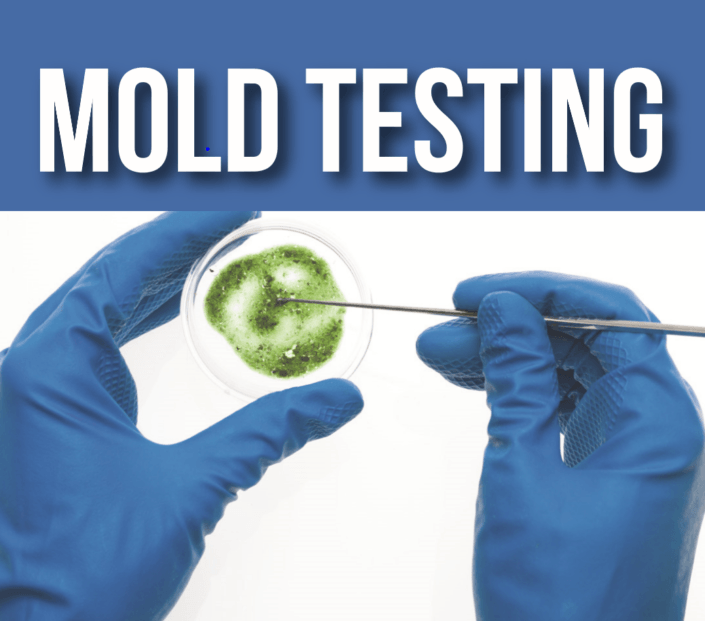
What Post-Remediation Mold Testing Actually Is
Post-remediation mold testing, sometimes called clearance testing, is performed after remediation work is complete and the area has been thoroughly dried and cleaned.
Its purpose is to verify that remediation goals were achieved, not to diagnose new problems. Testing focuses on whether the indoor environment now reflects normal, acceptable conditions.
In Indian River homes, testing is most valuable when moisture issues were significant, mold was widespread, or documentation is needed.
When Post-Remediation Testing Is Most Useful
Not every mold job requires post-remediation testing, but there are situations where it is strongly recommended.
Testing is especially helpful when:
- Mold affected a large area
- Hidden mold was involved
- HVAC systems were impacted
- The property is a rental or sale
- Previous mold problems kept returning
- Insurance or third-party documentation is needed
In these cases, testing provides objective confirmation that the work was successful.
The Role of Drying Before Testing
Testing should never be performed immediately after remediation. Proper drying is critical.
In Indian River’s humid climate, materials may take longer to fully dry, even after active drying equipment is removed. If testing is done too soon, results can be misleading.
Post-remediation testing is typically performed only after:
- All wet materials are dry
- Containment has been removed
- Dust and debris have settled
- Normal HVAC operation has resumed
Timing plays a major role in accurate results.
Air Sampling in Post-Remediation Testing
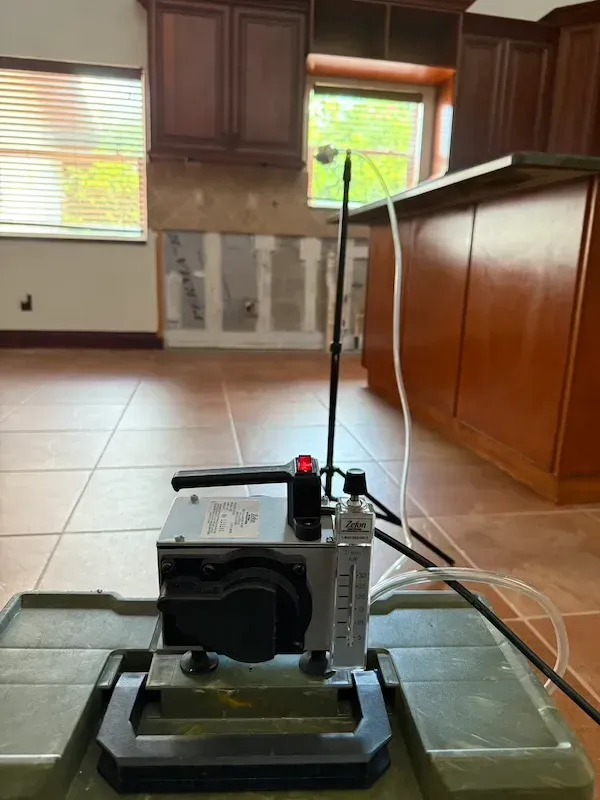
Air sampling is the most common method used during post-remediation testing. It measures mold-related particles in the air at the time of sampling.
Samples are usually taken:
- In the remediated area
- In nearby unaffected areas
- Outdoors for comparison
In Indian River homes, outdoor samples are especially important because coastal air naturally contains mold spores. Indoor results are evaluated in relation to outdoor levels rather than in isolation.
What Air Test Results Are Used For
Air test results help determine whether indoor mold-related particle levels are consistent with normal environmental conditions.
The goal is not to achieve “zero mold,” which is unrealistic, but to confirm that indoor conditions do not indicate an active mold source.
Results are interpreted alongside inspection findings and moisture measurements, not as standalone numbers.
Surface Testing After Remediation
Surface testing may be used in certain situations, particularly when there were concerns about specific materials or locations.
Tape lifts or swab samples can help confirm that cleaned surfaces are free of residual growth. This type of testing is typically targeted rather than widespread.
In Indian River homes, surface testing is most useful when remediation involved detailed cleaning rather than material removal.
Moisture Verification Is Just as Important as Mold Testing
Post-remediation verification is not limited to mold samples. Moisture verification is equally important.
Moisture meters are used to confirm that drywall, framing, flooring, and other materials are dry. If moisture remains, mold conditions can return even if testing results look acceptable.
In coastal environments, moisture verification often provides more long-term value than testing alone.
Common Misunderstandings About Post-Remediation Testing
One common misconception is that testing guarantees mold will never return. In reality, testing confirms conditions at that moment in time.
Another misunderstanding is that testing can identify future problems. Testing verifies current conditions, but ongoing moisture control is what prevents recurrence.
Post-remediation testing is a snapshot, not a permanent warranty.
Why Testing Sometimes “Fails” Even After Good Remediation
Occasionally, test results raise concerns even when remediation was performed correctly. This can happen for several reasons.
High outdoor mold levels, improper timing, incomplete drying, or ongoing humidity issues can influence results. In Indian River homes, elevated outdoor humidity can temporarily affect indoor air samples.
This is why interpretation matters more than raw data.
The Importance of Proper Interpretation
Test results should always be explained in clear, practical terms. Numbers alone can be confusing or alarming without context.
Proper interpretation considers:
- Outdoor conditions
- Seasonal factors
- Building layout
- HVAC operation
- Recent weather
- Moisture readings
This context helps property owners understand what results actually mean for the home.
Post-Remediation Testing for Rentals and Property Sales
For landlords and property managers, post-remediation testing provides documentation that work was completed properly. This can be important for tenant communication and recordkeeping.
During property sales, testing can provide reassurance to buyers and help avoid last-minute concerns. In Indian River, where mold is a known environmental issue, documentation often adds value.
Testing supports transparency and confidence during transitions.
Why Coastal Homes Benefit More From Verification
Indian River homes face ongoing moisture pressure. Even after successful remediation, conditions can change quickly if humidity rises or storms occur.
Post-remediation testing helps establish a baseline. If future concerns arise, results can be compared to earlier conditions to identify changes.
This is particularly useful in waterfront and slab foundation homes.
How Professionals Decide Whether Testing Is Needed
The decision to perform post-remediation testing depends on:
- The scope of remediation
- The type of materials affected
- Moisture history
- Occupancy type
- Owner goals
In some cases, visual inspection and moisture verification are sufficient. In others, testing adds valuable confirmation.
Mold Removal Merritt Island works with property owners to determine when post-remediation testing is appropriate based on real Indian River conditions rather than a one-size-fits-all approach.
What Post-Remediation Testing Does Not Replace
Testing does not replace:
- Proper remediation
- Moisture control
- Ongoing maintenance
- Routine inspections
It is a verification step, not a substitute for prevention.
Understanding its role prevents unrealistic expectations.
Preventing Problems After Remediation
The best way to protect remediation work is to maintain moisture control. This includes:
- Monitoring indoor humidity
- Maintaining HVAC systems
- Inspecting after storms
- Addressing small leaks promptly
Post-remediation testing confirms success, but prevention keeps it that way.
Why Local Experience Matters
Interpreting post-remediation testing in Indian River requires local knowledge. Coastal humidity, outdoor mold levels, salt air exposure, and building styles all affect results.
Professionals familiar with Merritt Island understand these variables and can explain results accurately without unnecessary alarm.
A Clear Takeaway for Property Owners
Post-remediation mold testing is about verification, not fear. It provides reassurance that remediation was effective and that indoor conditions are stable.
For Indian River property owners, testing is most valuable when moisture issues were significant, mold was hidden or widespread, or documentation is needed. When used appropriately, it removes uncertainty and supports long-term confidence.
In a coastal environment where mold conditions can change quickly, confirmation matters. Mold Removal Merritt Island is familiar with how post-remediation testing applies to Indian River homes and uses it as a practical tool to support clear, informed decisions.
