
Musty Odors Explained in South Merritt Island: What Merritt Island Property Owners Should Know
Musty odors are one of the most common complaints from property owners in South Merritt Island. These smells often appear gradually, linger despite cleaning, and seem worse after rain or during humid weather. With the Banana River and Indian River nearby, along with frequent storms and salt air exposure, moisture is a constant presence in local homes. Where moisture lingers, odors often follow.
Many property owners assume musty smells are minor or temporary. In South Merritt Island, however, persistent odors usually point to underlying moisture issues and often indicate hidden mold growth. Understanding why these odors develop, where they typically originate, and what they mean helps property owners respond early and avoid more serious problems.
Why Musty Odors Are So Common in South Merritt Island
South Merritt Island’s coastal environment creates ideal conditions for lingering moisture. Humidity remains high most of the year, and drying happens slowly. Even small amounts of moisture from condensation, minor leaks, or storm exposure can remain trapped inside building materials.
Homes near waterways often experience higher ambient humidity, especially during warmer months. Slab foundations, older construction, and limited ventilation compound the issue. As materials stay damp, organic matter begins to break down, producing the musty, earthy odors many homeowners recognize.
These smells are rarely random. They are usually the first noticeable sign that moisture is not being properly managed.
What a Musty Smell Really Means
A musty odor typically indicates microbial growth, most commonly mold. Mold releases volatile organic compounds as it grows, which create the characteristic earthy smell.
In South Merritt Island homes, this odor often appears before visible mold is present. Growth may be occurring behind walls, under flooring, inside HVAC systems, or in attics. Because air moves throughout the home, odors can travel far from their source.
Masking the smell with air fresheners or cleaning products does not resolve the underlying issue. The odor usually returns because the source remains active.
Common Areas Where Musty Odors Originate
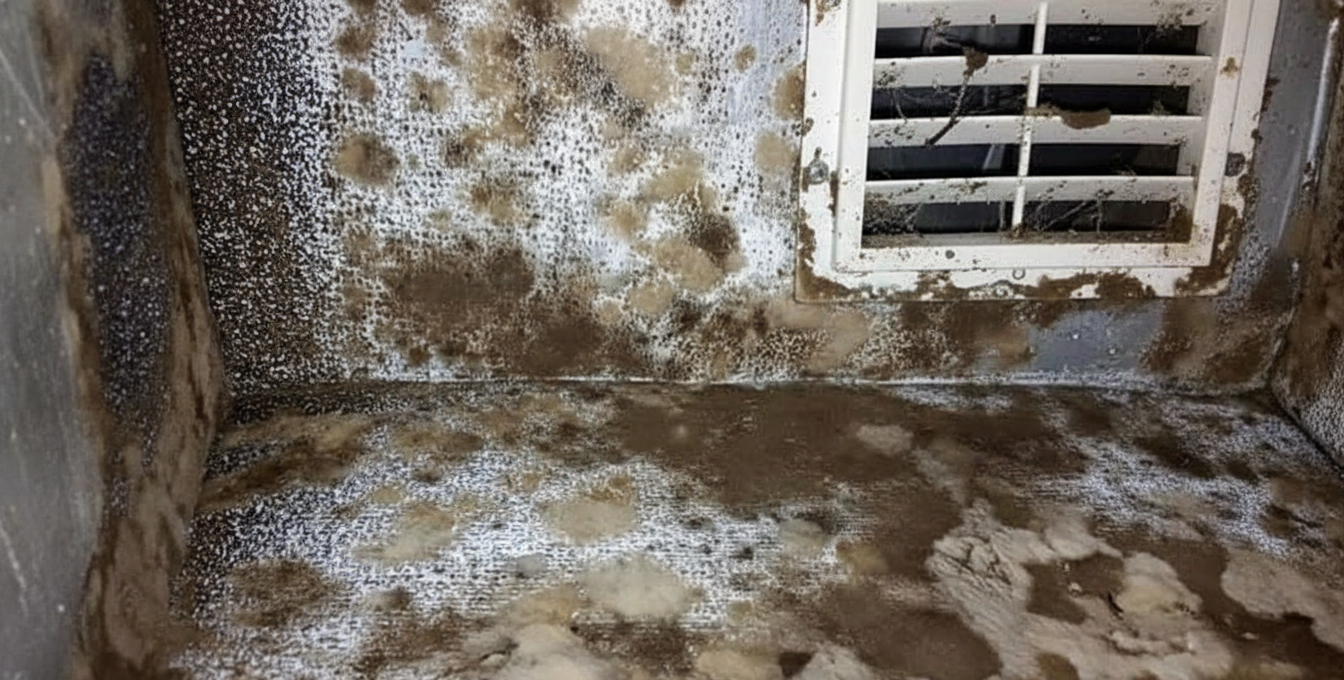
Musty smells often come from areas that are rarely inspected. Air handler closets are a frequent source due to condensation and poor airflow. HVAC ductwork can also trap moisture and circulate odors throughout the home.
Attics are another common origin point. Warm, humid air rises and condenses on roof decking when ventilation is inadequate. This often leads to mold growth that produces odors noticeable inside living spaces.
Under flooring is another overlooked area. In South Merritt Island, moisture can migrate upward from slab foundations, especially after heavy rain. Mold beneath flooring materials often causes odors long before visible damage appears.
Why Odors Get Worse After Rain or High Humidity
Many property owners notice that musty odors intensify after storms or during particularly humid days. This happens because existing mold becomes more active when moisture levels rise.
Rain can introduce new moisture through small roof or exterior vulnerabilities. Increased humidity can also raise indoor moisture levels, especially if HVAC systems struggle to keep up.
These conditions temporarily accelerate mold activity, making odors stronger and more noticeable.
HVAC Systems and Musty Smells
HVAC systems play a major role in odor distribution. When moisture builds up inside air handlers, drain pans, or ductwork, mold can develop and spread odors through airflow.
Salt air exposure in coastal areas can accelerate corrosion, increasing condensation issues inside HVAC components. If drain lines clog or insulation degrades, moisture can linger unnoticed.
Musty odors coming from vents or worsening when the system runs are often linked to HVAC-related moisture problems.
Attic Odors That Travel Downward
Attic mold is a frequent but misunderstood source of musty smells. Poor ventilation allows heat and moisture to build up, especially during humid summers.
Odors from attic mold can travel downward through ceiling penetrations, light fixtures, and duct chases. Property owners may smell mustiness in hallways or rooms without realizing the source is above them.
Regular attic inspections are essential in South Merritt Island homes due to storm exposure and humidity.
Flooring and Baseboard Odors
Musty smells near floors or baseboards often indicate moisture beneath the surface. In slab homes, ground moisture can migrate upward and become trapped under flooring materials.
Vinyl plank, laminate, and carpet can all conceal mold growth underneath. The odor may be strongest in the morning or after rain when moisture levels rise.
These odors rarely resolve on their own and usually worsen over time if not addressed.
Why Cleaning Alone Rarely Solves Odor Problems
Cleaning surfaces may temporarily reduce odors, but it does not remove mold hidden behind walls or under floors. Household cleaners and deodorizers only address what is visible or airborne.
In humid environments like South Merritt Island, moisture remains unless actively controlled. Mold continues to grow quietly, and odors return.
Repeated cleaning without addressing moisture often leads to frustration and escalating problems.
How Professional Inspections Identify Odor Sources
Professional mold inspections focus on identifying moisture patterns rather than just locating visible mold. Moisture meters, visual assessment, and evaluation of ventilation and HVAC systems help pinpoint odor sources.
In South Merritt Island homes, inspections often reveal combinations of humidity issues, minor leaks, and airflow problems. Understanding how these factors interact is key to resolving odors permanently.
Mold Removal Merritt Island works with property owners to trace musty odors back to their source using local building knowledge and moisture diagnostics.
Preventing Musty Odors Before They Start
Prevention focuses on moisture control. Regular HVAC maintenance ensures proper dehumidification and drainage. Using bathroom and kitchen ventilation consistently reduces indoor moisture.
Inspecting homes after storms helps catch water intrusion early. Monitoring indoor humidity levels provides valuable insight, especially during peak summer months.
For homes near the Banana River or Indian River, these preventive steps are essential to keeping indoor air fresh.
Why Local Experience Matters
Musty odors in South Merritt Island are shaped by coastal humidity, salt air, and building styles common to the area. Solutions that work inland may not be effective here.
Local experience means understanding where moisture commonly accumulates, how storms affect structures, and why odors often originate in hidden spaces. This knowledge leads to more accurate diagnosis and lasting solutions.
A Practical Way to Address Musty Odors
Musty odors are not just a nuisance. They are signals that moisture and microbial growth are present somewhere in the home. Ignoring them rarely leads to improvement.
A calm, informed approach starts with identifying the moisture source, correcting it, and addressing any resulting mold growth properly. Early action limits damage and disruption.
When odors persist or return, a professional evaluation provides clarity and direction. Mold Removal Merritt Island is familiar with the specific causes of musty odors in South Merritt Island homes and surrounding Brevard County communities, offering guidance rooted in real local conditions.
