
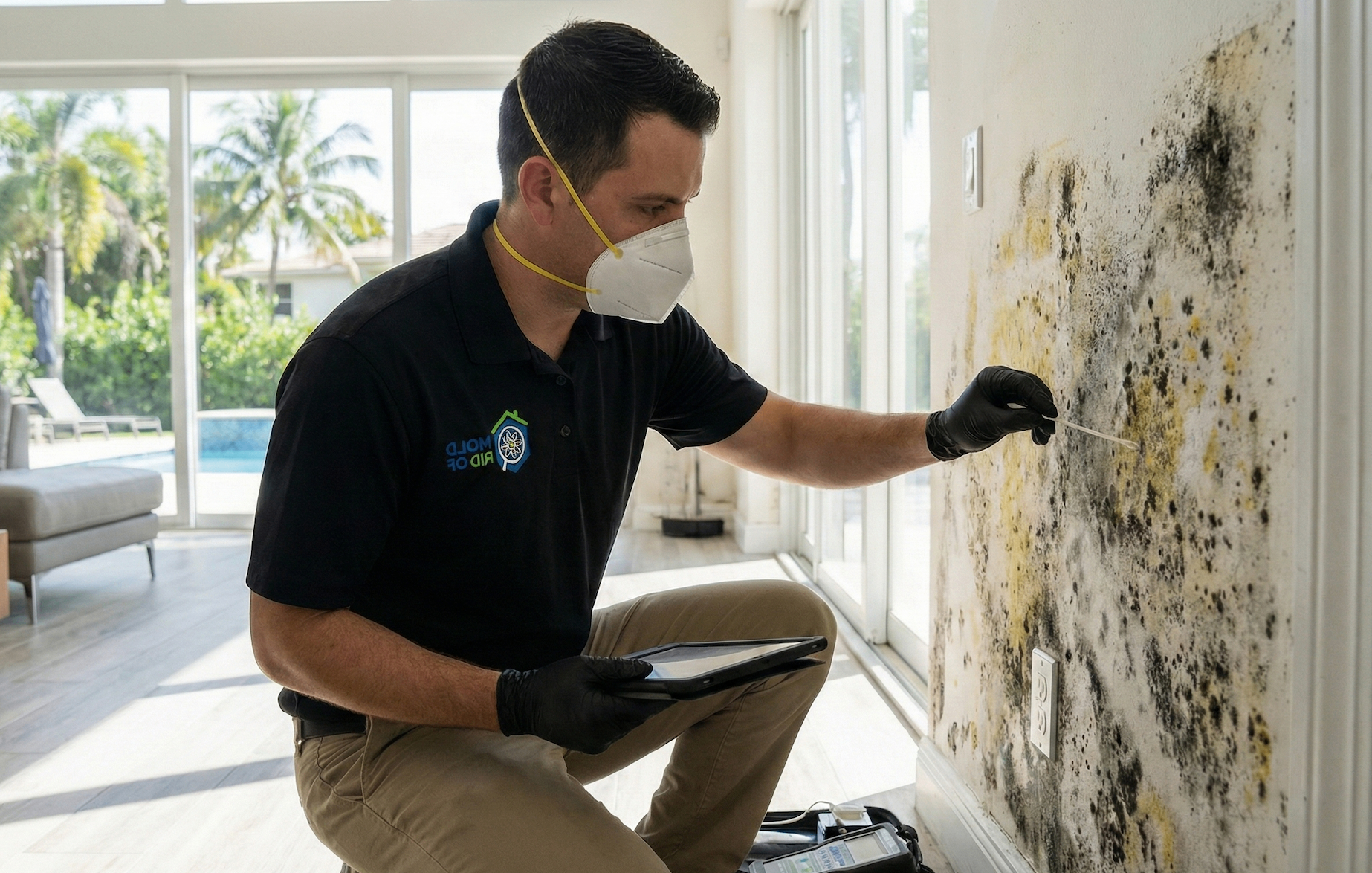
🧪 Mold Testing in South Merritt Island: What Merritt Island Property Owners Should Know
In South Merritt Island, mold problems don’t always show up as obvious black spots on the wall. More often, they hide behind drywall, under flooring, or inside HVAC systems—affecting indoor air quality long before anything looks wrong. That’s where professional mold testing comes in. Done correctly, testing helps confirm whether mold is affecting your home, where it’s coming from, and what level of action is actually needed.
This guide explains when mold testing makes sense, what it includes, and what Merritt Island property owners should know before scheduling it.
🌴 Why Mold Testing Is Especially Important in South Merritt Island
South Merritt Island homes face persistent moisture pressure from:
- High coastal humidity year-round
- Salt air that slows drying
- Slab-on-grade construction that releases moisture upward
- Long AC seasons with constant condensation
- Wind-driven rain entering around doors and windows
- High water tables after storms
Because mold often grows out of sight, testing is frequently the only way to confirm a problem early.
🦠 What Mold Testing Actually Does (and Doesn’t)
Mold testing is not about panic—it’s about clarity.
Proper testing helps:
- Confirm whether indoor mold levels are elevated
- Identify hidden mold sources
- Distinguish indoor mold from outdoor background levels
- Document conditions for insurance or real estate
- Guide whether remediation is necessary—and how extensive
Testing does not fix mold. It tells you what you’re dealing with.
🧱 Common Reasons Homeowners Request Mold Testing
In South Merritt Island, testing is often requested when homeowners notice:
- Persistent musty odors with no visible mold
- Odors stronger when the AC runs
- Mold that keeps returning after cleaning
- Allergy, asthma, or respiratory symptoms indoors
- Recent leaks, storms, or AC drain problems
- Preparing for home sale or purchase
If symptoms exist without visible growth, testing is often the next logical step.
🧪 Types of Mold Testing Used in Homes
Professional mold testing is targeted, not random.
🌬️ Air Sampling
- Compares indoor air to outdoor air
- Identifies elevated spore levels indoors
- Useful for detecting hidden mold in walls, attics, or HVAC
🧫 Surface Sampling
- Tests visible or suspect areas
- Confirms whether staining is mold
- Helps identify the type of growth present
💧 Moisture Correlation
- Testing is paired with moisture readings
- Mold results without moisture context are incomplete
Good testing always looks at air + surfaces + moisture together.
🌬️ The HVAC Connection in South Merritt Island Homes
HVAC systems are a common reason testing is needed.
Issues include:
- Condensation buildup in air handlers
- Clogged or slow drain lines
- Damp duct insulation in attics
- Mold odors spreading when AC runs
Air testing often reveals HVAC-related mold before it becomes visible.
🧪 Why DIY Mold Test Kits Are Often Misleading
DIY kits frequently cause confusion because:
- They don’t compare indoor vs. outdoor air
- Florida’s outdoor mold levels are naturally high
- Results lack professional interpretation
- They don’t identify moisture sources
Finding mold spores alone doesn’t mean there’s a problem—context matters.
🧽 When Mold Testing Is (and Isn’t) Necessary
Mold testing is useful when:
✔ Mold is suspected but not visible
✔ Odors persist without a clear source
✔ Health symptoms are unexplained
✔ Documentation is needed for insurance or sale
Mold testing is usually not needed when:
- There’s obvious, extensive visible mold (remediation is already indicated)
- Moisture damage is clearly active and ongoing
Testing should support decisions—not delay action.
🛠️ What Happens After Mold Testing
Based on results, recommendations may include:
- No action (normal background levels)
- Moisture correction only
- Targeted remediation in specific areas
- HVAC cleaning or repairs
- Follow-up testing after remediation
Clear results prevent overreaction—or underreaction.
📄 Real Estate & Insurance Benefits of Mold Testing
In South Merritt Island, testing often helps:
- Reduce buyer uncertainty
- Document pre-existing conditions
- Support claims tied to sudden water damage
- Avoid last-minute deal issues
Proper documentation protects homeowners.
📉 How Mold Testing Protects Property Value
Hidden mold discovered late can:
- Fail inspections
- Delay closings
- Reduce offers
- Trigger emergency remediation
Testing early allows homeowners to control timing and cost.
🌊 Why South Merritt Island Homes Need Extra Awareness
Compared to inland areas, South Merritt Island properties:
- Dry more slowly
- Experience higher indoor humidity
- Have longer mold growth seasons
What’s “normal” inland may be a warning sign here.
🛑 How to Prepare for Mold Testing
To get accurate results:
- Don’t clean suspected mold areas beforehand
- Keep AC running normally
- Avoid opening windows before testing
- Note when odors or symptoms are strongest
Preparation helps pinpoint the real issue.
✅ Final Takeaway for Merritt Island Property Owners
In South Merritt Island, mold testing is a diagnostic tool, not a scare tactic.
Remember:
✔ Mold often hides before it shows
✔ Odors and symptoms matter
✔ HVAC systems are common sources
✔ Testing works best with moisture data
✔ Early clarity prevents bigger problems
When used correctly, professional mold testing helps Merritt Island homeowners make informed decisions, protect indoor air quality, and avoid unnecessary remediation.
If you’d like, I can also provide a mold testing decision guide, air vs surface testing comparison, or a post-testing action checklist tailored specifically for South Merritt Island homes.
