
Mold Remediation in Brevard County: What Merritt Island Property Owners Should Know
Mold issues in Brevard County are rarely isolated or short-lived. Between coastal humidity, nearby rivers and lagoons, high water tables, and year-round air conditioning, homes in and around Merritt Island experience moisture conditions that allow mold to develop quietly and return repeatedly if not handled correctly. When mold appears, true mold remediation — not surface cleanup — is what stops the cycle.
For property owners, understanding what mold remediation actually involves, why it’s different from basic cleaning, and how Brevard County’s environment affects results is essential for protecting both indoor comfort and long-term property value.
Why Mold Is So Common in Brevard County Homes
Brevard County’s geography creates constant moisture pressure on residential properties.
- Persistent coastal and lagoon humidity
- Proximity to the Banana River, Indian River, and Sykes Creek
- High water tables affecting slab foundations
- Frequent storms and heavy rain
- Warm temperatures year-round
- Heavy AC use that creates condensation
- Salt air that degrades seals and building materials
Because of these factors, mold often develops without obvious leaks or flooding, growing behind walls, under flooring, or inside HVAC systems before homeowners notice anything wrong.
Mold Cleanup vs. Mold Remediation: A Critical Difference
One of the biggest mistakes homeowners make is confusing cleanup with remediation.
Mold cleanup
- Cleans visible mold only
- Surface-level treatment
- No containment
- No moisture correction
- Mold often returns
Mold remediation
- Removes visible and hidden mold
- Uses containment and air filtration
- Addresses moisture sources
- Designed to prevent recurrence
In Brevard County homes, mold problems almost always require full remediation, not cosmetic cleaning.
Common Areas Mold Is Found During Remediation
Mold remediation projects frequently uncover growth in areas homeowners don’t routinely inspect.
HVAC systems
Air handlers, drain pans, coils, and ductwork collect condensation and are a major mold source.
Lower walls and baseboards
High water tables allow moisture vapor to rise through concrete slabs into drywall.
Under flooring
Tile, laminate, vinyl, and engineered wood can trap moisture over slabs, allowing mold to spread unseen.
Attics
Warm, humid air entering attic spaces condenses on framing and insulation when ventilation is limited.
Behind cabinets and walls
Slow leaks or long-term humidity often create hidden mold that spreads quietly.
How Mold Develops in Brevard County Homes
Mold growth usually follows a predictable pattern.
- Moisture enters through condensation, intrusion, or ground vapor
- Materials absorb moisture slowly
- Limited airflow prevents drying
- Mold establishes itself out of sight
- Odors or visible growth appear later
By the time mold is visible, it’s often been active for weeks or months.
Why DIY Mold Removal Usually Fails
DIY mold removal rarely works long-term in Brevard County’s coastal environment.
- Bleach doesn’t penetrate porous materials
- Scrubbing spreads spores into the air
- Hidden mold remains behind walls or floors
- Moisture sources stay active
- Mold returns in the same or new locations
Without containment and moisture correction, DIY efforts often make problems worse.
What Proper Mold Remediation Involves
Professional mold remediation follows a structured process designed for lasting results.
Containment
Affected areas are sealed off to prevent mold spores from spreading.
Air filtration
HEPA filtration controls airborne particles during remediation.
Removal of contaminated materials
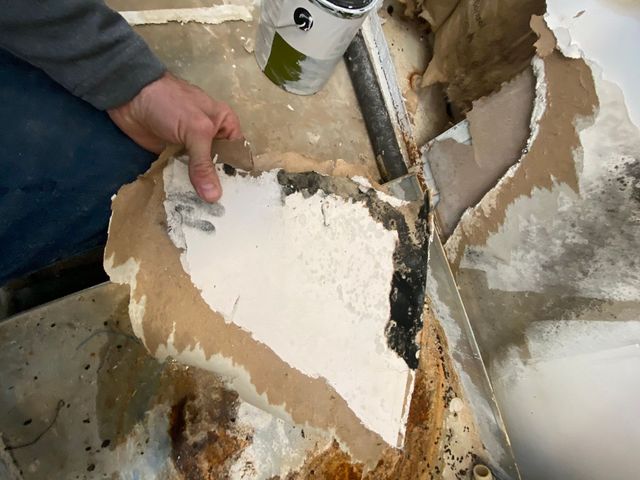
Drywall, insulation, flooring, or other materials are removed when cleaning alone isn’t sufficient.
Detailed cleaning
Remaining surfaces are cleaned using appropriate methods for residential environments.
Moisture correction
The underlying cause — HVAC condensation, intrusion points, slab moisture, or ventilation issues — is addressed.
Final evaluation
Conditions are reassessed to ensure mold growth has been controlled.
This process is what separates true remediation from temporary fixes.
Why Mold Keeps Coming Back Without Proper Remediation
Recurring mold is common when:
- Moisture sources aren’t fully identified
- Drying is incomplete
- Flooring traps moisture underneath
- HVAC condensation isn’t corrected
- High humidity persists
Each storm, humidity spike, or system issue can reactivate the same problem areas.
Mold Remediation and HVAC Systems
HVAC systems play a major role in Brevard County mold issues.
- Condensation forms inside air handlers and ducts
- Clogged drain lines create standing water
- Mold spreads through airflow
- Odors and indoor comfort issues follow
Effective remediation often includes addressing HVAC moisture — not just visible mold elsewhere in the home.
Managing Remediation in Occupied Homes
Homeowners often worry about disruption. Professional remediation is designed to minimize it.
- Work is done in phases when possible
- Containment allows unaffected areas to remain usable
- Clear communication sets expectations
- Targeted remediation avoids unnecessary demolition
Early action often keeps remediation less invasive.
Preventing Mold After Remediation
Long-term prevention is essential in Brevard County homes.
- Maintain steady indoor temperatures
- Avoid turning AC completely off
- Monitor indoor humidity levels
- Keep HVAC systems serviced and drain lines clear
- Improve ventilation in bathrooms and laundry rooms
- Inspect lower walls and attics after storms
- Address small leaks promptly
Consistency matters more than occasional fixes.
Why Local Brevard County Experience Matters
Mold remediation must reflect local conditions. Experience matters because professionals understand:
- Coastal humidity patterns
- High water table behavior
- Storm-driven moisture intrusion
- HVAC condensation common in Florida homes
- Construction styles typical of Brevard County
Mold Removal Merritt Island applies this local knowledge to remediation plans that address root causes, not just symptoms.
A Practical Takeaway for Property Owners
Mold remediation in Brevard County isn’t about panic or overreaction — it’s about doing the job correctly the first time. In a coastal environment where moisture is constant, surface cleaning rarely lasts, and delays often lead to larger, more disruptive projects.
For Merritt Island property owners, professional mold remediation paired with moisture control protects indoor comfort, prevents recurring mold, and preserves long-term property value in one of Florida’s most moisture-challenged regions.
