
Mold Near Rivers and Lagoons in Merritt Island: What Merritt Island Property Owners Should Know
Living near rivers and lagoons is one of the biggest draws of Merritt Island. Views of the Banana River, Indian River, and nearby waterways offer a unique coastal lifestyle that many property owners value deeply. At the same time, proximity to water creates conditions that quietly increase mold risk, often without obvious warning signs.
Mold near rivers and lagoons in Merritt Island is not unusual, and it is rarely the result of poor maintenance. Instead, it is tied to persistent humidity, slow drying conditions, high water tables, and daily moisture movement from surrounding waterways. Understanding how these factors affect homes helps property owners recognize early signs, avoid repeat issues, and protect long-term property value.
Why Homes Near Rivers and Lagoons Face Higher Mold Risk
Waterways influence the microclimate around a home. Properties near rivers and lagoons experience higher ambient humidity than inland areas, even when weather conditions seem mild.
Moist air moves constantly from the water toward nearby structures, raising indoor humidity levels. This moisture doesn’t always appear as visible water damage, but it lingers in walls, attics, flooring systems, and HVAC components.
In Merritt Island, this constant moisture exposure means mold can develop without dramatic leaks or flooding events.
Humidity That Never Fully Leaves
One of the biggest challenges near rivers and lagoons is that humidity rarely drops low enough for materials to dry completely. Even when air conditioning is running, outdoor humidity continuously re-enters the home through doors, windows, and building materials.
This creates a situation where surfaces may feel dry, but internal moisture remains. Drywall, wood framing, insulation, and subflooring can all hold enough moisture to support mold growth.
Over time, this persistent dampness allows mold to establish itself quietly.
High Water Tables and Slab Foundations
Many Merritt Island homes are built on slab foundations, and homes near rivers and lagoons often sit above high water tables. After heavy rain or extended wet periods, ground moisture can migrate upward through concrete slabs.
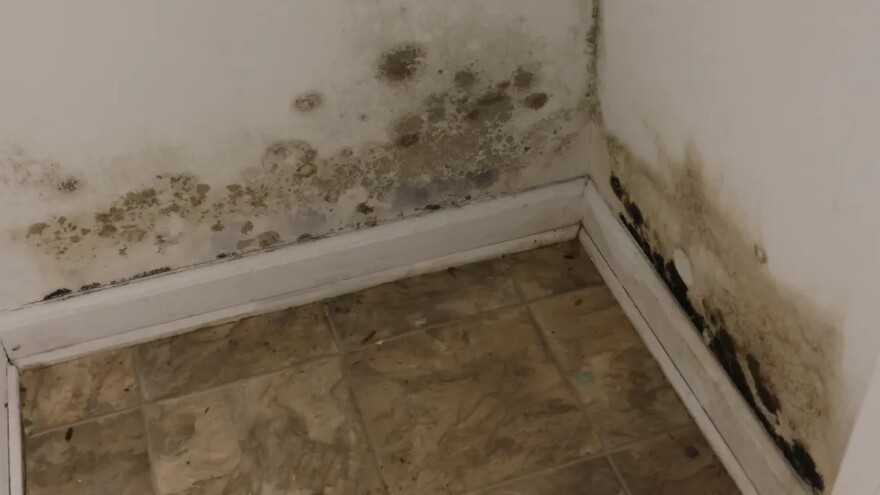
This raises moisture levels at the lowest parts of the home, particularly along baseboards, flooring edges, and closets. Mold near floors is a common issue in waterfront properties because moisture is being fed from below rather than from a visible leak.
Because slab moisture is ongoing, mold in these areas often becomes recurring if not addressed properly.
Daily Condensation Cycles Near Waterways
Homes near rivers and lagoons experience frequent condensation cycles. Warm, humid air contacts cooler surfaces inside the home, especially when air conditioning is running.
Condensation commonly forms on:
- Exterior-facing walls
- HVAC components
- Windows and frames
- Supply vents
- Plumbing lines
Even small amounts of repeated condensation can keep materials damp long enough for mold to grow. These cycles happen daily, making mold near waterways more persistent.
Attics and Roof Structures Near Water
Attics in waterfront homes are especially vulnerable. Warm, moisture-heavy air rises and can condense on roof decking if ventilation is limited or overwhelmed by humidity.
Near rivers and lagoons, attic ventilation systems often struggle to keep up with moisture load. As a result, mold may develop on roof sheathing, trusses, and insulation.
Attic mold often goes unnoticed until musty odors or ceiling stains appear inside the living space.
HVAC Systems and Waterfront Moisture
Air conditioning systems play a critical role in managing humidity, but they are also a common mold contributor in waterfront homes. Constant condensation combined with salt air exposure increases the risk of system failures.
Clogged drain lines, cracked drain pans, or poorly insulated ducts allow moisture to escape into surrounding materials. Mold near air handlers and vents is common in homes near rivers and lagoons because systems run frequently and produce continuous condensation.
If HVAC-related moisture is not addressed, mold often spreads beyond the original source.
Why Mold Often Appears Without a Leak
Many property owners assume mold only develops after leaks or floods. Near waterways, this assumption is often incorrect.
In Merritt Island, mold near rivers and lagoons frequently develops due to elevated humidity alone. Moisture does not need to drip or pool to support mold growth. Long-term exposure to damp air is often enough.
This is why mold sometimes seems to appear “out of nowhere” in waterfront homes.
Hidden Mold in Waterfront Properties
Mold near rivers and lagoons often starts in hidden areas. Common locations include:
- Behind drywall on exterior walls
- Under flooring near sliding doors
- Inside wall cavities
- In closets with limited airflow
- Around HVAC closets
Because these areas are out of sight, mold can grow for long periods before being discovered. By the time visible signs appear, the affected area may be larger than expected.
Storms Make Waterfront Mold Worse
Storms significantly increase mold risk near rivers and lagoons. Wind-driven rain, roof stress, and ground saturation introduce additional moisture into already damp environments.
Even when no obvious damage occurs, moisture can be absorbed by building materials and take weeks to dry. In the meantime, mold conditions intensify.
Waterfront homes often experience mold flare-ups weeks after storms, not immediately.
Why DIY Mold Cleanup Often Fails Near Water
DIY mold cleanup may remove visible growth temporarily, but it rarely addresses the moisture conditions driving mold near rivers and lagoons.
Scrubbing or spraying without containment can spread mold particles. Using water-based cleaners can add moisture to already damp materials. Without controlling humidity or correcting moisture pathways, mold almost always returns.
In waterfront environments, DIY cleanup often accelerates recurrence rather than preventing it.
Professional Evaluation Focuses on Moisture Behavior
Proper mold evaluation near rivers and lagoons looks beyond visible growth. Inspections focus on how moisture moves through the home, how long materials stay damp, and where drying is insufficient.
Moisture meters, attic inspections, HVAC evaluations, and slab moisture assessments help identify hidden contributors. This approach explains why mold keeps appearing even when leaks are not present.
Mold Removal Merritt Island works with local property owners to evaluate mold issues based on real waterfront conditions rather than assumptions.
Long-Term Impact on Property Value
Mold near rivers and lagoons can affect property value if it becomes recurring or poorly documented. Buyers and inspectors familiar with coastal properties pay close attention to moisture history.
Properly addressed mold with clear documentation is viewed very differently than recurring or unexplained mold. Addressing issues early helps preserve value and buyer confidence.
Ignoring mold near waterways often leads to larger repair costs later.
Preventing Mold in Waterfront Homes
Prevention near rivers and lagoons focuses on moisture control rather than occasional cleaning. Practical strategies include:
- Keeping HVAC systems running at humidity-controlling settings
- Monitoring indoor humidity year-round
- Inspecting attics and exterior walls periodically
- Checking slab-edge areas after heavy rain
- Addressing condensation issues promptly
These steps help stabilize indoor conditions even in high-humidity environments.
Why Local Experience Matters
Mold behavior near rivers and lagoons in Merritt Island is shaped by constant humidity, high water tables, slab foundations, salt air, and storm patterns. These conditions differ significantly from inland properties.
Local experience helps identify problem areas quickly and apply realistic solutions that reduce recurrence. Generic advice often fails in waterfront environments.
A Practical Takeaway for Merritt Island Property Owners
Mold near rivers and lagoons is a predictable challenge in Merritt Island, not a personal failure. It is driven by environmental conditions that require ongoing awareness and moisture management.
The key is early recognition, proper evaluation, and addressing moisture rather than just visible mold. When handled correctly, mold becomes manageable instead of recurring.
For property owners near Merritt Island’s rivers and lagoons, understanding how moisture behaves is the first step toward long-term protection. When mold concerns arise or continue returning, professional evaluation provides clarity and direction. Mold Removal Merritt Island understands the unique challenges of waterfront properties and helps owners protect their homes with solutions grounded in real local conditions.
