
🏖️ Mold in Vacation Rentals in North Merritt Island: What Merritt Island Property Owners Should Know
Vacation rentals in North Merritt Island face a mold risk that full-time residences don’t: intermittent occupancy. Homes sit empty between guests, AC settings change, doors stay closed, and humidity creeps up. In Brevard County’s coastal climate, that’s all mold needs. Many owners first discover a problem after a guest reports a musty smell—or worse, leaves a negative review.
This guide explains why vacation rentals are especially vulnerable, where mold hides, and what property owners should do to protect guests, reviews, and long-term value.
🌴 Why Vacation Rentals Are Mold-Prone in North Merritt Island
Short-term rentals combine several high-risk factors:
- High coastal humidity year-round
- Periods of vacancy with little airflow
- AC turned up or off to save energy
- Salt air that slows drying
- Slab foundations that keep floors and lower walls cool
- Fast turnovers that mask early warning signs
Even well-maintained homes can develop mold between bookings.
🦠 How Mold Develops Between Guests
A common scenario looks like this:
- Guests leave; AC is raised or shut off
- Indoor humidity climbs above 55–60%
- Condensation forms on cool walls, floors, and ducts
- Closets, cabinets, and bathrooms stay closed
- Mold begins growing within 24–48 hours
- Odors appear by the next check-in
Because nobody is present, growth often goes unnoticed until it’s established.
🧱 High-Risk Mold Hotspots in Vacation Rentals
Owners should pay extra attention to:
- Closets on exterior walls
- Bathrooms & laundry rooms (steam + closed doors)
- Under sinks and vanities
- HVAC air handlers & drain pans
- Ductwork (especially in attics)
- Bedrooms that stay closed between stays
- Garages and rooms above them
If a musty smell greets guests at the door, mold is already active somewhere.
👃 Guest Complaints That Signal Mold Risk
Common early warnings in rentals include:
- “The place smells damp or musty”
- Clothes and towels smell moldy
- Allergy symptoms during the stay
- Odors strongest when AC turns on
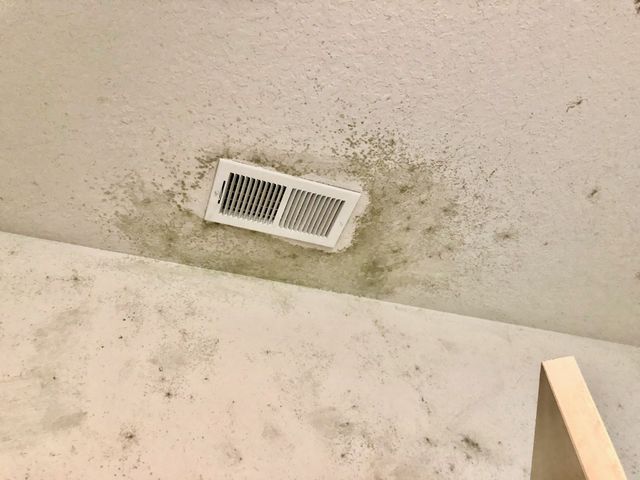
- Visible spotting in bathrooms or closets
Ignoring these can quickly lead to poor reviews—or platform action.
🤧 Health, Liability & Reputation Concerns
Mold in vacation rentals isn’t just maintenance—it’s risk management.
Potential impacts:
- Guest health complaints (especially asthma/allergies)
- Refund demands or cancellations
- Negative reviews that hurt bookings
- Platform penalties if complaints repeat
- Increased insurance scrutiny
Preventing mold protects both guests and income.
🧪 Why Mold Is Often Missed in Rentals
Rental mold slips through because:
- Turnovers focus on cleaning, not moisture checks
- Odors are masked by fragrances
- AC settings vary by guest
- Small leaks go unnoticed
- Vacant periods allow growth to accelerate
Cleaning alone doesn’t control humidity.
🧽 Why “Quick Cleanups” Don’t Work
Wiping visible spots between guests fails because:
- Moisture remains in walls and air
- Mold roots stay in porous materials
- HVAC continues circulating spores
- Growth resumes during the next vacancy
If mold returns, the environment—not the cleaning—was the problem.
🛠️ Proven Prevention Strategies for Vacation Rentals
Humidity & airflow control are non-negotiable.
Effective steps include:
- Keep indoor humidity ≤55% (50% ideal)
- Leave AC running on dehumidify-friendly settings between guests
- Use smart thermostats with humidity alerts
- Add whole-home or portable dehumidifiers
- Keep bedroom and closet doors slightly open during vacancy
- Run exhaust fans after cleaning
- Inspect HVAC drain lines regularly
- Schedule periodic moisture checks—not just cleanings
These steps pay for themselves by preventing downtime.
🌬️ HVAC Settings That Reduce Mold Between Stays
Avoid:
- Turning AC completely off
- Setting temps too high in humid weather
- Oversized systems that cool without dehumidifying
Aim for steady operation that controls humidity, not just temperature.
🛑 When Vacation Rental Mold Needs Professional Help
Call a professional if:
- Odors persist between bookings
- Mold keeps returning
- Multiple rooms are affected
- HVAC systems are involved
- Guests report health symptoms
- Moisture lasted longer than 48 hours
Early intervention avoids cancellations and negative reviews.
📄 Documentation & Platform Protection
Keep records of:
- Moisture inspections
- Repairs and remediation
- HVAC maintenance
- Post-remediation verification (when done)
Documentation helps resolve disputes and reassures platforms and insurers.
📉 How Mold Affects Rental Income & Value
Unchecked mold can lead to:
- Lower occupancy
- Reduced nightly rates
- Costly last-minute repairs
- Failed inspections during sale
- Decreased property value
Proactive prevention protects cash flow and equity.
🌊 Why North Merritt Island Rentals Need Extra Care
Near-water homes experience:
- Slower drying
- Higher baseline humidity
- More condensation pressure
What works inland often isn’t enough here.
✅ Final Takeaway for Merritt Island Property Owners
In North Merritt Island, vacation rentals face unique mold risks—but they’re manageable.
Remember:
✔ Vacancy fuels mold
✔ Humidity control beats cleaning
✔ AC settings matter between guests
✔ Odors are early warnings
✔ Prevention protects reviews and revenue
Treat mold prevention as part of your rental operations—not a reaction—and your property (and ratings) will thank you.
If you want, I can provide a vacancy-period humidity checklist, smart-thermostat setup guide, or turnover inspection sheet tailored specifically for North Merritt Island vacation rentals.
