
Mold in Schools in North Merritt Island: What Merritt Island Property Owners Should Know
Schools in North Merritt Island operate in one of the most moisture-challenged environments in Florida. Coastal humidity, nearby waterways like Sykes Creek, frequent storms, and buildings that run on strict schedules all contribute to mold risks that are very different from residential homes. When mold develops in a school, the impact goes beyond property damage — it affects learning environments, staff comfort, parent concerns, and operational continuity.
For school administrators, property owners, and facility managers, understanding why mold develops in schools, where it hides, and how it should be addressed is essential for maintaining safe, functional educational spaces in a coastal climate.
Why Schools in North Merritt Island Are Vulnerable to Mold
School buildings face several conditions that make mold more likely.
- High year-round humidity
- Proximity to waterways and wetlands
- Large slab foundations affected by high water tables
- HVAC systems running on schedules rather than continuously
- Buildings closed overnight, on weekends, and during breaks
- Storm-driven rain affecting roofs, windows, and exterior walls
When moisture enters a school building, it often remains trapped longer than in continuously occupied spaces.
How Mold Commonly Develops in School Buildings
Mold in schools rarely starts in classrooms themselves. It usually begins in hidden or low-traffic areas.
HVAC systems
Large air handlers, ductwork, drain pans, and coils create constant condensation. Mold in HVAC systems can affect multiple rooms at once.
Ceiling and plenum spaces
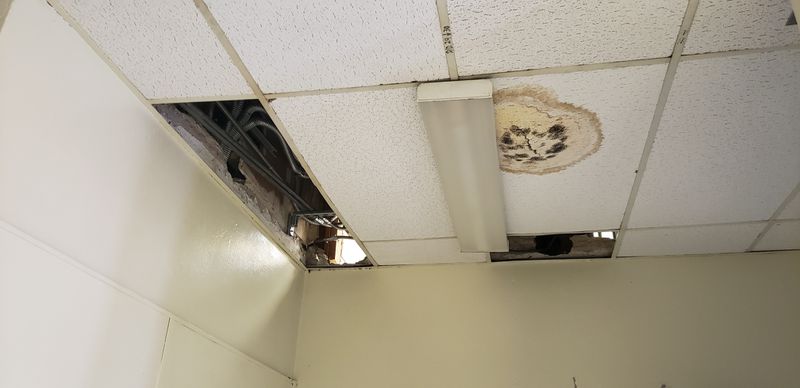
Leaks above drop ceilings or condensation from roof-mounted units often go unnoticed for long periods.
Lower walls and baseboards
High water tables in North Merritt Island allow moisture to wick upward through slab foundations into drywall.
Restrooms and locker areas
High moisture use combined with heavy traffic and limited drying time increases risk.
Storage rooms and utility areas
Poor airflow and infrequent inspection allow mold to grow quietly.
Why Mold in Schools Often Goes Undetected
Schools are busy environments, and early warning signs are easy to miss.
- Odors blend into large spaces
- Mold grows above ceilings or behind walls
- Symptoms are mistaken for ventilation or cleaning issues
- Breaks and holidays allow moisture to linger unnoticed
By the time mold becomes visible, it often reflects weeks or months of moisture exposure.
Early Warning Signs Schools Should Not Ignore
- Persistent musty or damp odors
- Condensation around vents or windows
- Ceiling tile stains or sagging
- Peeling paint on lower walls
- Recurring mold in the same rooms
- HVAC drain backups or moisture issues
- Odors that worsen after rain or long closures
These signs often point to hidden moisture rather than surface-level issues.
Why Mold in Schools Is More Than a Maintenance Issue
In educational environments, mold affects more than the building itself.
- Disruption to classrooms and schedules
- Temporary room closures or relocations
- Parent and staff concerns
- Damage to finishes, walls, and ceilings
- Increased long-term maintenance costs
Early detection helps avoid major disruptions later.
Why DIY or Surface Cleanup Is Not Appropriate for Schools
School mold issues should never be handled as simple cleaning problems.
- Hidden growth remains behind walls and ceilings
- HVAC contamination spreads spores building-wide
- Moisture sources remain active
- Mold often returns, sometimes more extensively
Incomplete solutions typically result in larger remediation projects later.
The Role of Professional Mold Inspections in Schools
Professional inspections focus on building systems and moisture behavior, not just visible mold.
School inspections often include:
- Moisture detection at slab and wall levels
- HVAC and ductwork evaluation
- Ceiling and plenum inspections
- Roof and exterior wall assessments
- Identification of storm-related intrusion points
Mold Removal Merritt Island frequently finds that school mold problems stem from HVAC condensation, roof intrusion, and slab-level moisture, not isolated events.
Mold Cleanup vs. Mold Remediation in Schools
Understanding the difference is critical for educational facilities.
Cleanup
- Cosmetic only
- Addresses visible mold
- No containment
- No moisture correction
- High risk of recurrence
Remediation
- Removes visible and hidden mold
- Uses containment and HEPA filtration
- Corrects moisture sources
- Designed for long-term control
Schools in North Merritt Island almost always require full remediation, not surface cleanup.
Containment and Scheduling in Active School Environments
Professional remediation is designed to minimize disruption.
- Containment barriers isolate affected areas
- Negative air pressure prevents spore spread
- Work scheduled after hours or during breaks
- Phased remediation keeps other areas operational
This approach allows schools to remain functional while issues are addressed safely.
Preventing Mold in North Merritt Island Schools
Long-term prevention focuses on consistency and system management.
- Routine HVAC inspections and drain maintenance
- Monitoring indoor humidity levels
- Prompt roof and window repairs
- Regular ceiling and wall inspections
- Post-storm walkthroughs
- Extra inspections after long closures
Preventive maintenance is far less disruptive than emergency remediation.
Why Local North Merritt Island Experience Matters
School mold must be evaluated within local environmental context. Local experience matters because professionals understand:
- Coastal humidity patterns near Sykes Creek
- High water table behavior in slab-built schools
- Storm-driven rain intrusion common to the area
- HVAC condensation patterns in large buildings
- Construction styles typical of North Merritt Island schools
Mold Removal Merritt Island applies this local knowledge to help schools address mold efficiently, safely, and responsibly.
A Practical Takeaway for Property Owners and Administrators
Mold in schools in North Merritt Island isn’t uncommon — but it requires a higher level of care and planning than residential mold issues. The biggest risks come from hidden growth, HVAC involvement, and delayed response, not from isolated surface spots.
For Merritt Island property owners and school administrators, early inspection, professional remediation when needed, and consistent moisture management protect educational spaces and prevent small issues from becoming major disruptions in a coastal environment where moisture is always present.
