
Mold in Daycares in Banana River: What Merritt Island Property Owners Should Know
Daycare facilities near the Banana River operate in one of the most moisture-challenging environments in Merritt Island. Coastal humidity, frequent rain, high water tables, and year-round air conditioning all influence how buildings dry and how mold develops. When those environmental factors combine with daily occupancy, frequent cleaning, and moisture-heavy activities, mold risk increases quietly and consistently.
For property owners, operators, and facility managers, mold in daycares is not just a building maintenance issue. It affects daily operations, inspections, scheduling, and long-term property condition. Understanding why mold develops in daycare settings near the Banana River helps owners take informed action early and avoid repeated disruptions.
Why Daycares Near the Banana River Face Higher Mold Risk
Properties near the Banana River are exposed to constant ambient moisture. Even on dry days, humidity remains elevated due to nearby waterways and warm temperatures.
Daycares amplify these conditions because of high daily occupancy. Children, staff, restrooms, handwashing, cleaning routines, and food preparation all add moisture to the indoor environment. When moisture is introduced faster than it can be removed, mold-friendly conditions develop.
Unlike residential homes, daycares must maintain consistent indoor comfort while managing frequent moisture spikes throughout the day.
Daily Occupancy and Moisture Build-Up
Daycare facilities experience continuous activity. Doors open frequently, restrooms are used repeatedly, and floors are cleaned often. Each of these actions introduces moisture into the building.
During operating hours, HVAC systems work hard to keep temperatures comfortable. After hours, systems may reduce operation, allowing humidity to rise overnight. Moisture introduced during the day may not fully dry before the next morning.
This daily cycle of moisture accumulation and incomplete drying creates steady conditions for mold growth.
HVAC Systems and Daycare Mold Issues
HVAC systems play a central role in mold behavior in daycare buildings. These systems run for long hours and produce significant condensation.
Common HVAC-related mold contributors include:
- Clogged or slow-draining condensate lines
- Overflowing or cracked drain pans
- Poorly insulated ductwork
- Condensation above ceiling areas
- Uneven airflow between rooms
When condensation escapes into ceiling cavities or walls, moisture can remain hidden for long periods.
Classrooms and Activity Rooms
Classrooms and play areas are often the first places where mold becomes noticeable. These rooms experience high activity, frequent cleaning, and occasional spills.
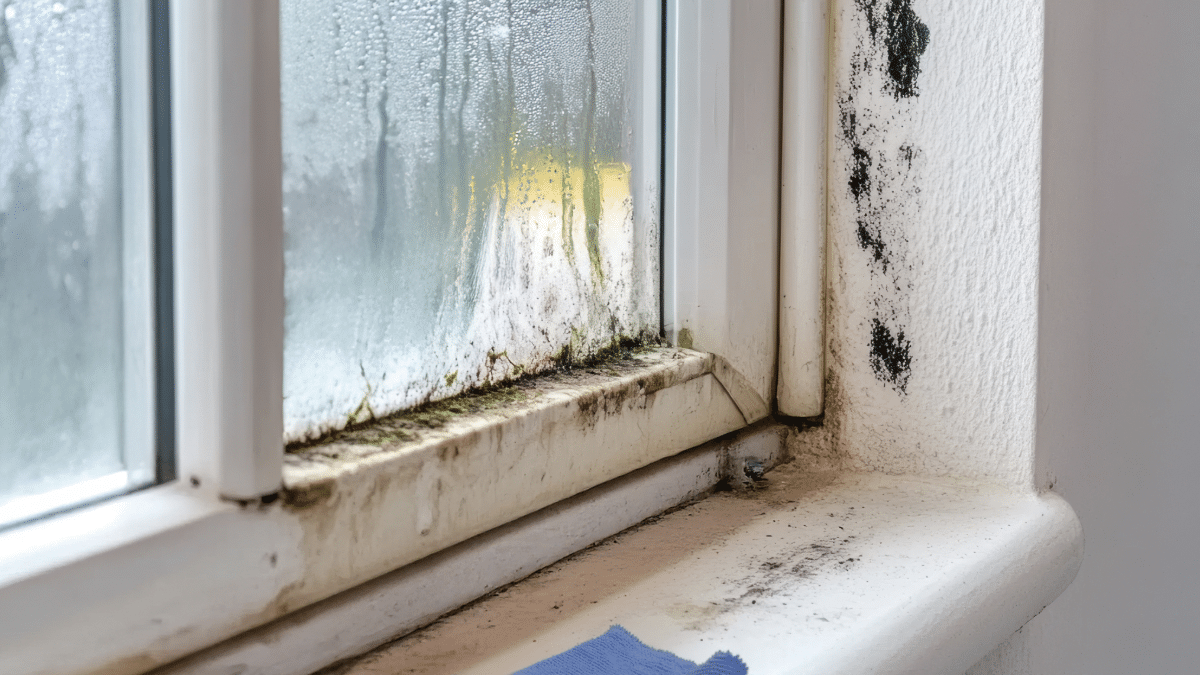
If ventilation is limited or humidity remains elevated, moisture settles into wall surfaces, flooring, and furnishings. Mold may appear near windows, along baseboards, or behind storage furniture.
Because these rooms are cleaned daily, early mold growth may be mistaken for dirt or staining rather than a moisture issue.
Restrooms and Handwashing Areas
Restrooms and handwashing stations are constant moisture sources. In daycares, sinks are used frequently throughout the day, increasing humidity.
If exhaust fans are undersized, malfunctioning, or turned off after hours, moisture lingers. Mold often develops behind sinks, under cabinets, above ceilings, or inside wall cavities connected to plumbing.
In humid coastal environments, even small ventilation issues can lead to recurring mold in these areas.
Storage Areas and Supply Rooms
Daycare storage areas often contain paper supplies, cardboard boxes, fabric items, and cleaning products. These materials absorb moisture easily.
Storage rooms typically have limited airflow and may be located along exterior or slab-level walls. Mold commonly develops on stored items first, then spreads to walls and shelving.
Because storage rooms are accessed less frequently, mold may go unnoticed until damage is visible.
Slab Foundations and Floor-Level Mold
Most daycare buildings in Merritt Island are constructed on slab foundations. After heavy rain, groundwater levels rise and increase moisture pressure beneath the slab.
Moisture migrates upward through concrete as vapor, raising humidity near floors. Mold may develop along baseboards, under flooring, or beneath rugs and mats.
In daycare settings, floor-level mold is often hidden by furniture or play equipment.
Storms and Mold in Daycare Facilities
Storms are a major mold trigger near the Banana River. Wind-driven rain can enter roof systems, exterior walls, or window assemblies without obvious damage.
Even minor intrusion can affect multiple rooms. Moisture may spread above ceilings or inside walls and remain damp long after the storm passes.
Because daycare buildings may be unoccupied overnight or on weekends, storm-related moisture can sit undetected for extended periods.
Why Mold in Daycares Often Goes Unnoticed
Mold in daycare facilities often develops quietly. Odors may be masked by cleaning products. Visible growth may remain hidden behind furniture, inside walls, or above ceilings.
Staff may notice changes in air freshness without seeing a clear source. By the time mold is discovered, the affected area may be larger than expected.
Routine inspections beyond surface cleaning are essential for early detection.
DIY Cleanup Is Not Enough in Daycare Settings
Surface cleaning does not resolve mold issues in daycare environments. Wiping visible growth does not address hidden moisture or growth inside walls and ceilings.
Using water-based cleaners can add moisture to already damp areas. Disturbing mold without containment can spread particles to other rooms.
Daycare mold issues require evaluation of moisture behavior, not just cosmetic cleanup.
Professional Mold Evaluation for Daycare Properties
Professional mold inspections focus on identifying moisture sources and movement patterns. In Banana River daycare facilities, evaluations often include:
- HVAC system inspection
- Ceiling cavity assessments
- Slab-edge moisture testing
- Indoor humidity monitoring
- Review of airflow and ventilation
This approach explains why mold developed and how to prevent recurrence.
Mold Removal Merritt Island works with property owners to evaluate daycare mold issues using knowledge grounded in local Banana River conditions rather than generic assumptions.
Operational Challenges in Daycare Mold Situations
Mold concerns in daycare settings must be handled carefully to minimize disruption. Scheduling inspections and remediation around operating hours requires planning.
Early detection helps prevent emergency situations that could lead to temporary closures or schedule changes. Clear documentation and communication support smooth decision-making.
Addressing issues early is far less disruptive than reacting later.
Long-Term Impact on the Building
If moisture and mold remain unaddressed, long-term damage can occur. Drywall, insulation, flooring, and cabinetry may deteriorate over time.
In daycare buildings, this can lead to larger renovation costs and extended downtime. Preventive maintenance protects both the structure and ongoing operations.
Preventing Mold in Daycare Facilities
Effective prevention focuses on moisture control and consistent oversight. Practical strategies include:
- Maintaining HVAC drain lines and insulation
- Monitoring indoor humidity daily
- Ensuring restroom exhaust fans work properly
- Inspecting storage areas regularly
- Keeping supplies off floors
- Checking conditions after storms
Consistency is key in high-use environments.
Why Local Experience Matters
Daycare mold behavior near the Banana River is shaped by coastal humidity, slab foundations, storm exposure, and daily occupancy patterns. These conditions differ from inland facilities.
Local experience helps identify high-risk areas quickly and apply solutions that reflect how buildings actually behave in this environment.
A Practical Takeaway for Property Owners
Mold in daycares near the Banana River is a manageable issue when moisture behavior is understood. It is rarely the result of poor housekeeping and more often tied to environmental conditions and building systems.
The key is early detection, proper evaluation, and addressing moisture sources rather than surface symptoms. When handled correctly, mold does not need to disrupt daily operations or long-term property value.
For property owners responsible for daycare facilities facing mold concerns — or aiming to prevent them — professional evaluation provides clarity and direction. Mold Removal Merritt Island understands the challenges unique to daycare buildings near the Banana River and helps property owners protect their facilities using solutions grounded in real local conditions.
