
Mold in Attics in Banana River: What Merritt Island Property Owners Should Know
Attic mold is one of the most common — and least understood — problems facing homes near the Banana River. Many property owners rarely enter their attic, so mold can grow there for long periods without being noticed. In a coastal environment like Merritt Island, the attic often becomes a collection point for moisture, heat, and poor airflow, creating ideal conditions for mold to develop quietly above living spaces.
For homeowners, landlords, and property managers near the Banana River, attic mold is rarely caused by a single leak. It is usually the result of ongoing humidity, ventilation issues, and moisture movement through the home. Understanding why attic mold forms, where it appears, and how it should be addressed helps prevent long-term damage and repeated problems.
Why Attics Are Vulnerable in Banana River Homes
Attics sit at the highest point of the home, where warm, moist air naturally rises. In Banana River neighborhoods, that air already carries high humidity due to surrounding waterways and warm temperatures.
When humid air enters the attic and cannot escape properly, it condenses on cooler surfaces like roof decking, trusses, and nails. Over time, repeated condensation allows mold to grow even when there are no roof leaks.
Coastal homes rarely experience long dry periods, which makes attics especially vulnerable to moisture buildup.
Attic Mold Often Forms Without Roof Leaks
One of the most common misconceptions is that attic mold means the roof is leaking. While leaks can cause attic mold, many Banana River homes develop attic mold without any water intrusion from above.
Instead, moisture often enters the attic from inside the home. Warm, humid air escapes through ceiling penetrations, recessed lights, attic hatches, bathroom exhaust fans, and duct chases. Once that moisture reaches the cooler attic, condensation forms and mold follows.
Because this process is gradual, attic mold often goes unnoticed until it becomes widespread.
Common Signs of Attic Mold
Attic mold rarely announces itself clearly at first. Early signs are often subtle and indirect.
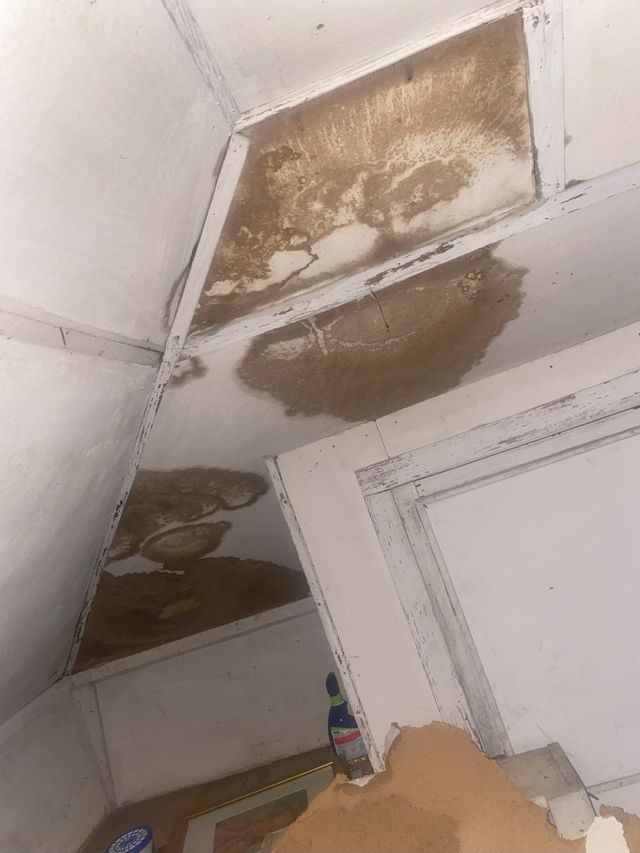
Property owners may notice musty odors inside the home, especially in upper rooms, unexplained humidity indoors, ceiling discoloration, or recurring mold near ceiling vents. Sometimes attic mold is discovered only during inspections, renovations, or after storms.
By the time visible mold is seen on roof decking, it has usually been present for some time.
Where Mold Grows in Attics
Mold in Banana River attics tends to grow in predictable areas based on airflow and temperature differences.
Common locations include the underside of roof decking, attic trusses and rafters, around roof nails, on insulation surfaces, near bathroom exhaust fan terminations, around HVAC ductwork, and near attic access points.
These areas experience repeated condensation and limited drying, making them ideal for mold growth.
Bathroom Exhaust Fans and Attic Mold
Improperly vented bathroom exhaust fans are one of the leading contributors to attic mold. In many homes, fans vent into the attic instead of outdoors, releasing warm, moist air directly into the space.
Even when fans are vented outside, loose connections or damaged ducts can leak moisture into the attic. Over time, this moisture accumulates and supports mold growth on nearby surfaces.
Bathroom-related moisture is a frequent driver of attic mold in coastal homes.
HVAC Systems and Attic Moisture
HVAC systems often run through or near the attic. Ductwork carrying cold air can cause condensation when exposed to warm, humid attic air.
If duct insulation is damaged or inadequate, condensation forms on duct surfaces and drips onto attic materials. This creates localized moisture that supports mold growth.
Because HVAC systems run much of the year in Merritt Island, attic moisture from condensation is often ongoing rather than occasional.
Roof Ventilation Challenges
Proper attic ventilation is critical in coastal environments, but many homes struggle with inadequate or imbalanced ventilation.
Blocked soffit vents, undersized ridge vents, or poor airflow patterns trap humid air inside the attic. Without consistent air movement, moisture cannot escape.
In Banana River homes, even small ventilation deficiencies can lead to long-term moisture buildup and mold growth.
Slab Foundations and Attic Mold Connection
It may seem counterintuitive, but slab foundations can influence attic mold. Ground moisture migrates upward through slabs as vapor, increasing humidity inside the home.
That humid air eventually rises into the attic. When combined with poor ventilation, this upward moisture movement contributes to attic mold over time.
Understanding how moisture moves through the entire home helps explain why attic mold can persist even without roof leaks.
Why DIY Attic Mold Cleanup Often Fails
Attic mold is especially difficult to address with DIY methods. Surface cleaning may remove visible staining, but it rarely addresses moisture sources or widespread growth.
DIY cleanup often fails because:
- Moisture sources remain uncorrected
- Ventilation problems are not fixed
- Mold on porous materials remains embedded
- No containment prevents spore spread
- No drying or humidity control is used
In Banana River’s humid climate, attic mold almost always returns after surface-level cleanup.
Hidden Impact of Attic Mold on the Home
Attic mold does not stay isolated forever. Over time, mold spores and moisture conditions can affect the rest of the home.
Mold odors may enter living spaces through air leaks. Insulation performance can degrade, affecting energy efficiency. Moisture may contribute to ceiling staining or drywall damage.
Left unaddressed, attic mold can become a whole-house problem rather than a contained one.
How Attic Mold Is Properly Addressed
Properly addressing attic mold starts with identifying moisture sources. This includes evaluating ventilation, exhaust fan routing, HVAC duct insulation, and attic air sealing.
When mold is present, effective steps typically include:
- Correcting ventilation and airflow issues
- Redirecting exhaust fans outdoors
- Improving attic air sealing
- Removing or treating mold-affected materials
- Cleaning non-porous surfaces appropriately
- Drying and dehumidifying the attic space
Without moisture correction, attic mold removal is temporary.
Containment During Attic Mold Work
Containment is important during attic mold remediation. Disturbing moldy materials without containment can spread spores into living spaces through ceiling penetrations and duct systems.
Proper containment protects the rest of the home while work is performed. This is especially important in occupied homes.
Drying and Moisture Stabilization
Drying is a critical step after attic mold removal. In coastal Florida, natural drying is rarely sufficient.
Dehumidification and improved airflow help remove lingering moisture from attic materials. Drying continues until conditions no longer support mold growth.
Skipping this step often leads to mold returning in the same areas.
Long-Term Risks of Ignoring Attic Mold
Ignoring attic mold allows moisture and mold to continue damaging roof decking, trusses, and insulation. Over time, materials weaken and repairs become more expensive.
Attic mold can also complicate home sales and insurance discussions. Early action protects both the structure and the long-term value of the property.
Attic Mold in Rental Properties
For landlords and property managers, attic mold often goes unnoticed until tenants report odors or ceiling issues. Because the attic is out of sight, problems can progress quietly.
Proactive attic inspections and moisture control reduce tenant complaints and prevent larger remediation later.
Preventing Attic Mold in Banana River Homes
Prevention focuses on controlling moisture movement and ventilation. Practical steps include:
- Ensuring exhaust fans vent outdoors
- Maintaining proper attic ventilation
- Sealing ceiling air leaks
- Insulating HVAC ductwork properly
- Monitoring indoor humidity
- Inspecting attics after storms
Regular checks are especially important in coastal homes.
Why Local Experience Matters
Attic mold near the Banana River behaves differently than in inland areas. Coastal humidity, salt air exposure, slab foundations, and storm patterns all influence moisture behavior.
Local experience helps identify why attic mold is forming and which solutions actually work here. Mold Removal Merritt Island understands how attics in Banana River homes respond to moisture and addresses mold using strategies grounded in real local conditions.
A Practical Takeaway for Property Owners
Attic mold is one of the most common mold issues in Banana River homes and one of the easiest to overlook. It rarely results from a single mistake and almost always develops over time as moisture accumulates unnoticed.
By focusing on ventilation, moisture control, proper drying, and early evaluation, attic mold can be resolved before it spreads or causes structural damage. Surface cleaning alone rarely provides lasting results.
For Merritt Island property owners dealing with attic mold or concerned about hidden moisture above their living spaces, professional evaluation provides clarity and direction. Mold Removal Merritt Island helps homeowners move from recurring attic mold issues to long-term solutions built around moisture control and the realities of Banana River’s coastal environment.
