
Mold in Airbnb Properties in Sykes Creek: What Merritt Island Property Owners Should Know
Why Airbnb Properties Are Extra Vulnerable to Mold
Short-term rentals create a perfect storm for moisture.
Key risk factors include:
- Vacancies with little airflow
- AC turned off or set too warm between stays
- Guests opening doors/windows during humid hours
- Rapid turnovers with limited deep checks
- Owner closets and storage rooms kept closed
In Sykes Creek humidity, materials can stay damp long enough for mold to activate in 24–48 hours.
The Most Common Airbnb Mold Mistake
Turning the AC off between guests.
What really happens:
- Indoor humidity spikes quickly
- Walls, ceilings, and furniture absorb moisture
- Condensation forms when AC is restarted
- Mold activates behind surfaces—out of sight
A “hot but dry” home doesn’t exist here. Without active dehumidification, moisture wins.
Where Mold Commonly Hides in Airbnb Units
Mold in short-term rentals often isn’t obvious—until a guest complains.
High-risk areas:
- Closets on exterior walls
- Owner storage rooms
- Under sinks and inside cabinets
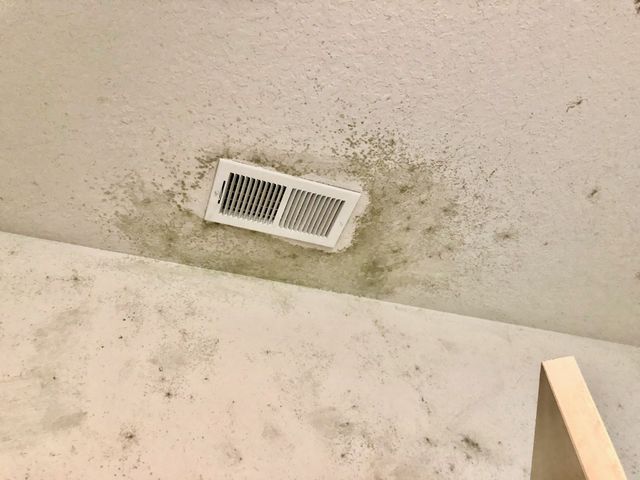
- Around air handlers, drain pans, and vents
- Behind beds and sofas against walls
- Bathrooms with weak exhaust fans
Because guests don’t inspect closely, growth can go unnoticed between bookings.
Guest Turnover Accelerates Mold Spread
Each stay introduces:
- Moist air from frequent door/window openings
- Wet towels, swimsuits, and luggage
- Shower steam without long drying windows
If humidity isn’t reset between guests, moisture stacks. Mold spreads through airflow and soft furnishings.
How Mold Hurts Reviews and Revenue
Mold rarely photographs well—but it reviews terribly.
Common guest complaints:
- Musty or damp odors
- Allergy or respiratory irritation
- Visible spotting in closets or baths
- Clothes and luggage smelling moldy
One mold-related review can reduce bookings far more than the cost of prevention or proper remediation.
Health, Liability, and Platform Risk
Airbnb hosts carry higher exposure than homeowners.
Risks include:
- Guest health complaints and refunds
- Chargebacks and platform penalties
- Delisting for habitability issues
- Insurance disputes without documentation
If a guest reports symptoms, response speed and records matter.
Why “Quick Turnover Cleaning” Isn’t Enough
Standard turnovers focus on surfaces—not moisture.
Cleaning alone:
- Doesn’t lower humidity
- Doesn’t dry wall cavities or insulation
- Doesn’t remove hidden mold
Units can look spotless while mold continues growing behind walls or cabinets.
When Airbnb Mold Needs Professional Help
Bring in professionals if:
- Musty odors persist between stays
- Mold keeps reappearing in the same areas
- Guests report symptoms
- HVAC or attic areas are involved
- The unit sits vacant for extended periods
Short-term rentals often have hidden mold because moisture problems go unnoticed longer.
How Professional Mold Removal Protects Bookings
Proper remediation:
- Identifies and fixes moisture sources
- Removes hidden mold safely with containment
- Improves indoor air quality
- Reduces repeat complaints
- Provides documentation if disputes arise
For Airbnbs, stopping recurrence protects revenue and ratings.
Practical Prevention for Sykes Creek Airbnbs
Control Humidity—Always
- Never shut the AC off completely
- Use settings that manage humidity, not just temperature
- Add dehumidifiers where needed
Inspect Between Guests
- Smell the unit before arrival
- Check closets, cabinets, and AC areas
- Address dampness immediately
Improve Airflow
- Leave closet doors open during vacancies
- Avoid pushing furniture tight to exterior walls
- Ensure bathroom fans work and are used
Act Fast on Moisture
Delays of a few days here often turn a small issue into a remediation job.
Insurance and Platform Considerations
Many policies and platforms expect:
- Safe, habitable conditions
- Prompt response to complaints
- Proof of repairs and moisture control
Ignoring mold can create coverage gaps or listing penalties.
Final Takeaways for Sykes Creek Airbnb Hosts
Mold in Airbnb properties isn’t random—it’s predictable.
Key points to remember:
- Vacant units mold faster than occupied homes
- AC and humidity control are critical
- Guest turnover stacks moisture
- Odors and reviews are early warnings
- Professional help often prevents repeat losses
If your unit ever smells musty, feels damp, or draws a mold-related complaint, act immediately. In Sykes Creek, mold grows between bookings—not between seasons.
If you want help assessing mold risk in your Airbnb, setting up humidity-control protocols, or deciding when remediation makes sense, just let me know.
