
Mold in Airbnb Properties in North Merritt Island: What Merritt Island Property Owners Should Know
Why Airbnb Homes Face Higher Mold Risk
Airbnbs don’t live like normal homes.
They cycle through:
- Heavy, short-term use
- Long gaps with no occupants
- AC settings changed constantly
- Windows and doors opening to humid air
That stop-start rhythm allows humidity to build fast. In North Merritt Island’s coastal climate, it doesn’t take long for moisture to settle into walls, closets, and soft materials.
Guest Habits (Totally Normal, Still a Problem)
Guests aren’t thinking about mold—and they shouldn’t have to.
Common guest behaviors that increase risk:
- Turning the AC off when leaving
- Setting the thermostat very high
- Taking long, hot showers
- Not using bathroom exhaust fans
- Leaving balcony or patio doors open
Individually, these seem harmless. Together, they create warm, damp conditions mold loves.
AC Settings Make or Break Mold Control
This is one of the biggest issues I see with Airbnb properties.
Problems start when the AC is:
- Turned off between guests
- Set too high to dehumidify
- Oversized, cooling air but not removing moisture
A home can feel cool during a stay and still stay humid enough for mold to grow after guests leave. Cooling ≠ drying—especially here.
Where Mold Commonly Hides in Airbnb Rentals
Mold rarely shows up in obvious places first.
In North Merritt Island Airbnbs, it often starts:
- In closets along exterior walls
- Behind beds or sofas
- Under bathroom sinks
- In laundry rooms
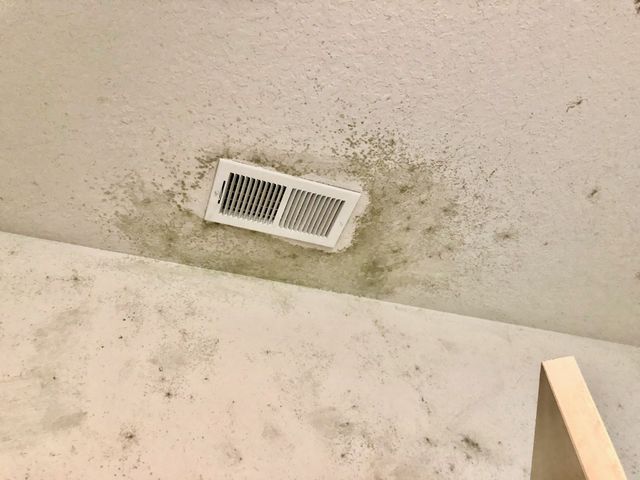
- Around AC vents and returns
Hosts usually discover it during turnovers—or after a guest complains about a musty smell.
Why Mold Escalates Faster in Short-Term Rentals
Timing works against hosts.
Mold spreads faster because:
- No one lives there full-time to notice early signs
- Odors build up between stays
- Moisture lingers longer
- Growth expands before the next guest arrives
By the time it’s visible, it’s usually not new.
Reviews and Platform Issues Raise the Stakes
Mold doesn’t just affect the property—it affects bookings.
Even minor issues can lead to:
- Negative reviews mentioning odors or dampness
- Refund requests
- Cancelled stays
- Platform warnings or listing penalties
Once mold appears in reviews, recovery gets harder—even if the issue is fixed later.
Cleaning Helps, But It’s Not Prevention
Professional cleaning is essential for Airbnbs. It’s just not enough on its own.
Cleaning:
- Removes surface residue
- Makes the space look and smell better short-term
It does not:
- Control humidity
- Dry hidden moisture
- Prevent condensation
That’s why spotless rentals can still develop mold behind the scenes.
Seasonal Risk Spikes in North Merritt Island
Mold risk isn’t constant—it spikes.
Higher-risk times include:
- Summer months
- Rainy season
- After storms or humid weather patterns
During these periods, even short vacancy gaps can allow mold to start growing if humidity isn’t managed.
Why Mold Keeps Coming Back in Some Airbnb Homes
Recurring mold almost always points to the same thing: conditions never changed.
Common causes include:
- Indoor humidity staying above 60%
- AC not running consistently between stays
- Poor airflow in closed rooms
- Hidden moisture never addressed
Without fixing these, mold becomes a recurring maintenance issue—and a guest experience problem.
Practical Prevention That Actually Works
You don’t need extreme measures—just consistency.
Helpful strategies include:
- Keeping the AC running at a dehumidifying setting when vacant
- Using bathroom exhaust fans during and after stays
- Leaving interior doors open between bookings
- Monitoring indoor humidity
- Checking closets and under sinks during turnovers
Small, repeatable habits beat emergency fixes every time.
Inspections Matter More for Short-Term Rentals
Routine inspections catch problems guests won’t mention.
Inspections help identify:
- Early mold growth
- AC condensation issues
- Poor airflow zones
- Moisture that cleaning won’t catch
Early detection keeps problems from becoming public—or expensive.
Documentation Protects Hosts
When mold issues come up, records matter.
Documentation helps with:
- Guest disputes
- Platform communications
- Maintenance tracking
- Insurance questions
Clear records show proactive management, not reactive scrambling.
Why Local Experience Makes the Difference
Mold behaves differently in coastal Florida than in other markets. North Merritt Island Airbnbs deal with humidity, salt air, storm cycles, and constant AC use that change how moisture behaves indoors.
That’s why Mold and Duct Cleaning Experts help Merritt Island hosts manage mold risk based on how short-term rentals actually operate here—not generic advice meant for full-time homes.
Final Thoughts
Mold in Airbnb properties isn’t about poor hosting—it’s about managing humidity when no one’s watching. In North Merritt Island, even well-run rentals can develop mold if moisture control drops between stays.
Stay ahead of humidity, keep airflow consistent, and check the quiet spaces guests never notice. That’s how you keep mold out of your Airbnb—and out of your reviews.
