
Mold in Air Ducts in North Merritt Island: What Merritt Island Property Owners Should Know
Air ducts play a critical role in keeping homes in North Merritt Island comfortable. Your HVAC system circulates cooled air through ducts every day, especially in Florida’s warm and humid climate. But when moisture enters ductwork, mold can develop inside areas that homeowners rarely see.
Because air ducts distribute air throughout the home, mold in ductwork can affect multiple rooms at once. Understanding why mold forms in air ducts, how to recognize the warning signs, and how to prevent it helps property owners maintain a healthier and more efficient home environment.
Why Mold Can Grow in Air Ducts
Air ducts normally carry conditioned air, but they can also accumulate moisture under certain conditions. Mold grows when three basic factors are present:
- Moisture
- Organic material such as dust and debris
- Warm temperatures
Dust and microscopic particles naturally collect in ductwork over time. When condensation or humidity is introduced, those particles can support mold growth.
Why Air Duct Mold Is Common in North Merritt Island
Homes in North Merritt Island experience environmental conditions that increase the likelihood of moisture inside duct systems.
High coastal humidity
Moist air from nearby waterways can increase condensation inside ducts, especially in attics or crawl spaces.
Continuous air-conditioning use
Long operating cycles produce condensation around cooling coils and ducts.
Frequent storms and rain
High humidity after storms can allow moisture to enter duct systems.
Temperature differences in attics
Ducts installed in hot attics may develop condensation when cooled air flows through them.
Because these conditions are common in coastal Brevard County, air duct inspections are often recommended when musty odors or humidity issues appear.
Common Places Mold Appears in Air Duct Systems
Mold does not always grow throughout the entire system. It often forms in specific areas where moisture collects.
Typical locations include:
- Inside flexible duct insulation
- Around air handler connections
- Near supply vents in humid rooms
- Around evaporator coils or plenums
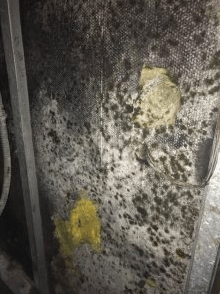

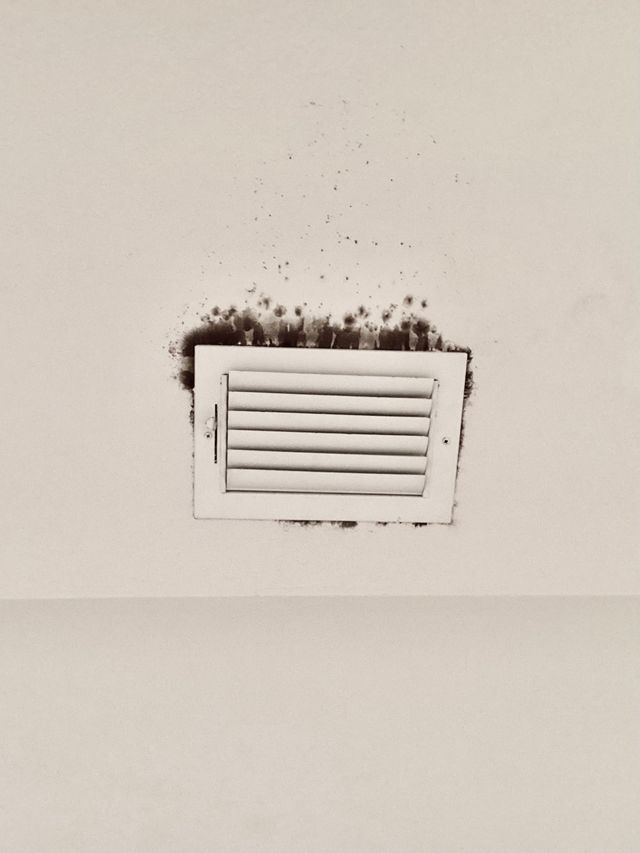
These areas can remain damp longer than other parts of the system, allowing mold to develop gradually.
Early Signs Mold May Be Present in Air Ducts
Because ductwork is hidden, mold is often first detected through indirect signs.
Homeowners may notice:
- Musty odors when the HVAC system runs
- Dark dust or spotting near vents
- Increased indoor humidity
- Uneven airflow or reduced cooling efficiency
- Allergy-like irritation indoors that improves outside the home
Odors are often the earliest and most noticeable indicator of a potential duct issue.
Hidden Mold That Often Goes Undetected
One of the biggest challenges with air duct mold is that it may remain hidden for long periods.
Hidden mold may develop:
- Inside duct insulation layers
- In long sections of flexible duct
- Around joints and connections
- Inside return air ducts
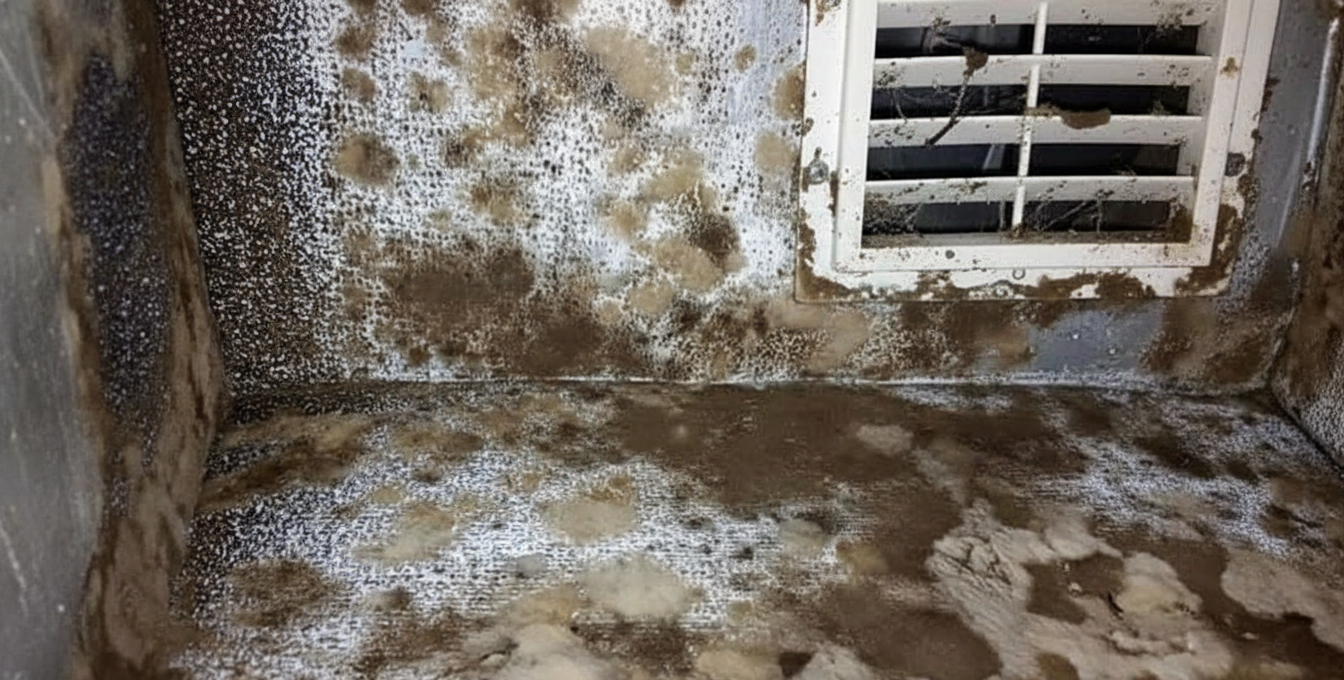

Because these areas are not visible without inspection tools, mold may spread before being discovered.
Why Mold in Air Ducts Should Not Be Ignored
Even small amounts of mold inside ducts can lead to ongoing problems if moisture remains.
Over time, mold in duct systems can:
- Spread spores through airflow
- Create persistent odors
- Reduce HVAC efficiency
- Affect duct insulation and components
Addressing mold early helps prevent larger repairs and improves indoor comfort.
Why DIY Cleaning Often Doesn’t Solve the Problem
Some homeowners try to clean vents or spray household cleaners into ducts. While this may improve appearance temporarily, it usually does not remove mold inside the system.
DIY cleaning may fall short because:
- Mold inside ducts or insulation remains
- Moisture sources are not corrected
- Drain lines or condensation problems are not addressed
- Household equipment cannot reach deep duct areas
Professional inspection helps ensure that both mold and moisture sources are properly identified.
How Professional Mold Inspection Helps
A professional duct inspection focuses on identifying both mold growth and the conditions that allowed it to develop.
An inspection may include:
- Visual inspection of accessible ductwork
- Checking air handlers and drain systems
- Measuring humidity and airflow
- Inspecting attics or crawl spaces where ducts are located
Professionals familiar with local conditions, such as Mold Removal Merritt Island, understand how coastal humidity and attic temperatures affect duct systems in North Merritt Island homes.
How Mold Remediation Works in Air Ducts
If mold is confirmed, remediation focuses on cleaning or replacing affected components and correcting moisture problems.
Typical steps include:
- Cleaning or replacing contaminated duct sections
- Cleaning air handlers and coils
- Clearing condensate drain lines
- Sealing ducts and improving insulation
- Reducing humidity levels


Correcting moisture issues is essential to preventing mold from returning.
How to Prevent Mold in Air Ducts
Preventive maintenance is the most effective way to reduce mold risks.
Helpful steps include:
- Replacing HVAC filters regularly
- Scheduling routine HVAC maintenance
- Keeping indoor humidity between 45–55%
- Inspecting ducts in attics and crawl spaces periodically
- Ensuring condensate drain lines remain clear
These steps help keep duct systems dry and functioning properly.
The Importance of Proper Duct Insulation and Sealing
Duct insulation plays an important role in preventing condensation. When ducts are poorly insulated or sealed, warm humid air can contact cooler surfaces and form moisture.
Improving duct performance may include:
- Sealing joints and connections
- Repairing damaged insulation
- Ensuring ducts are properly supported
- Reducing attic heat buildup where possible
Proper insulation and sealing significantly reduce moisture problems.
Why Local Experience Matters in North Merritt Island
Mold behavior in coastal Brevard County differs from inland areas. Homes in North Merritt Island often experience:
- Higher baseline humidity
- Continuous AC operation
- Hot attics with temperature differences
- Frequent storms and heavy rain
Professionals familiar with these local conditions can diagnose moisture problems more quickly and recommend solutions suited to coastal homes and HVAC systems.
A Calm, Practical Next Step
Mold in air ducts is not uncommon in humid climates, but most problems can be managed effectively when addressed early. Regular maintenance, humidity control, and inspections help prevent mold from developing and spreading through the HVAC system.
If you notice musty odors when your system runs, dark dust near vents, or persistent humidity indoors, having the duct system evaluated can help determine whether mold may be present and what steps may be needed.
For homeowners in North Merritt Island and throughout Brevard County, staying proactive with HVAC maintenance remains one of the most reliable ways to keep homes comfortable, dry, and well maintained year-round.
