
 Mold From AC Condensation in Sykes Creek: What Merritt Island Property Owners Should Knowz
Air conditioning is essential in Sykes Creek homes. With year-round humidity, waterfront moisture, and long cooling seasons, AC systems often run daily just to keep indoor spaces comfortable. What many Merritt Island property owners don’t realize is that the same system designed to remove humidity can also become one of the most common sources of mold when condensation is not properly managed.
In Sykes Creek, mold from AC condensation is extremely common. Homes near the water experience higher ambient humidity, salt air exposure, and slower drying conditions. When condensation forms inside or around AC systems and is not drained, dried, or controlled correctly, mold can develop quietly and spread before anyone notices. Understanding how AC condensation leads to mold helps property owners prevent recurring problems and costly remediation.
Why AC Condensation Is a Frequent Mold Source in Sykes Creek
Air conditioners naturally create condensation as they remove moisture from the air. Under normal conditions, that water is collected and safely drained away. In Sykes Creek homes, however, high humidity means AC systems produce condensation almost constantly.
Salt air accelerates corrosion in metal components, drain pans, and fittings. Over time, this can cause drain lines to clog, pans to crack, or connections to loosen. When condensation cannot drain properly, it spills or backs up into surrounding materials.
Because humidity remains high near Sykes Creek, any moisture that escapes the system dries slowly, creating ideal conditions for mold growth.
Common AC Condensation Problems That Lead to Mold
Many condensation-related mold problems start with small issues that go unnoticed. Clogged condensate drain lines are one of the most common causes. Algae, dust, and debris can block the line, forcing water to overflow into air handler closets or ceilings.
Cracked or rusted drain pans are another frequent issue in coastal homes. Even a small crack can allow water to leak steadily into drywall, insulation, or flooring.
Poorly insulated ductwork can also create condensation. When warm, humid air contacts cold duct surfaces, moisture forms on the outside of the ducts and drips onto ceilings or inside wall cavities.
Why Mold Often Appears Away From the AC Unit
One confusing aspect of AC-related mold is that growth often appears far from the air handler itself. Water from condensation can travel along framing, ducts, or ceiling cavities before soaking into materials.
In Sykes Creek homes, property owners may notice mold near vents, baseboards, or ceilings in rooms far from the AC closet. The original condensation source may still be hidden inside walls or above ceilings.
This makes it easy to clean the visible mold without ever addressing the true moisture source.
AC Closets and Utility Rooms as Mold Hotspots
AC closets and utility rooms are one of the most common locations for mold growth in Merritt Island homes. These spaces often have limited airflow, making it difficult for moisture to evaporate.
When condensation leaks into these areas, drywall, wood framing, and flooring materials absorb moisture quickly. In high-humidity environments like Sykes Creek, those materials can stay damp for extended periods.
Musty odors coming from an AC closet are often an early warning sign that condensation-related mold is present.
Mold Near Vents and Registers
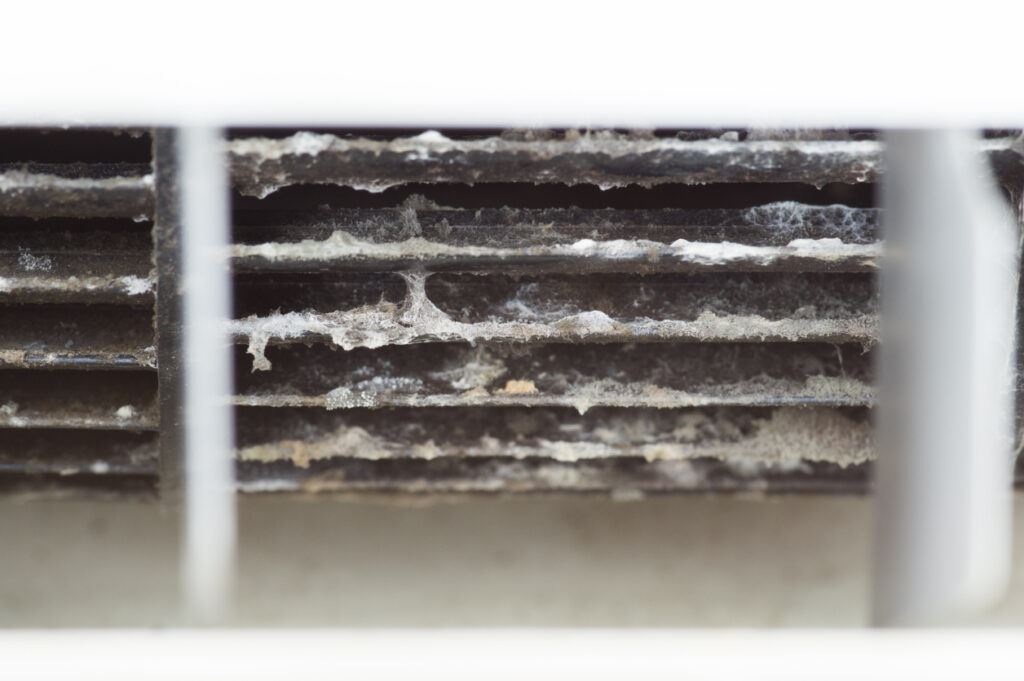
Condensation issues don’t always stay near the air handler. Supply vents and registers can also become mold-prone areas.
If duct insulation is damaged or missing, condensation can form near vents, especially in slab homes common around Sykes Creek. Moisture around vents often leads to staining, discoloration, or mold growth on ceilings and walls.
These signs are frequently mistaken for roof leaks when the real cause is AC condensation.
Why Mold From AC Condensation Is Often Missed
AC systems are designed to handle moisture, so condensation problems are often overlooked. Property owners may assume water near an AC unit is normal and temporary.
In reality, repeated or persistent moisture is never normal. Because AC condensation issues develop slowly, mold can establish itself behind walls, inside insulation, or under flooring long before visible signs appear.
By the time mold is discovered, the problem has usually been present for some time.
Why DIY Cleanup Rarely Solves AC-Related Mold
Cleaning visible mold around vents or AC closets does not fix condensation problems. Without correcting drainage, insulation, or airflow issues, moisture continues to feed mold growth.
DIY drying methods may remove surface moisture but often fail to dry materials inside walls or ceilings. In humid coastal environments, moisture returns quickly once AC systems resume normal operation.
This cycle leads to recurring mold and repeated frustration for property owners.
The Role of HVAC Design and Maintenance
Proper HVAC design is critical in Sykes Creek homes. Oversized systems cool air quickly but do not remove enough moisture, increasing condensation problems.
Poor maintenance also plays a major role. Clogged drain lines, dirty coils, damaged insulation, and improperly sloped pans all increase mold risk.
Regular inspections and maintenance help ensure condensation is controlled rather than released into the home.
How Professional Inspections Identify AC Condensation Mold
Professional mold inspections focus on moisture patterns, not just visible growth. Inspectors evaluate AC systems, drain lines, insulation, and surrounding materials.
Moisture meters help identify damp drywall, ceilings, and flooring near HVAC components. In Sykes Creek homes, inspections often reveal condensation damage that is not visible on the surface.
This approach allows property owners to correct the cause rather than repeatedly cleaning symptoms.
Mold Removal Merritt Island works with local property owners to identify condensation-related mold issues based on coastal humidity patterns and common HVAC layouts in the area.
Proper Remediation for AC Condensation Mold
Effective remediation requires addressing both mold and moisture. This often includes repairing or replacing drain pans, clearing drain lines, improving duct insulation, and drying affected materials thoroughly.
If drywall, insulation, or flooring has been compromised, removal may be necessary to fully eliminate mold. Simply cleaning surfaces without correcting condensation issues almost always leads to recurrence.
A proper approach restores normal moisture control and prevents future growth.
Preventing Mold From AC Condensation
Prevention starts with routine HVAC maintenance. Drain lines should be cleaned regularly, pans inspected for corrosion, and duct insulation checked for damage.
Monitoring indoor humidity helps identify systems that are not dehumidifying effectively. Using ventilation properly and ensuring AC closets have adequate airflow also reduces moisture buildup.
For homes near Sykes Creek, these steps are not optional — they are essential for mold prevention.
Why Local Experience Matters With AC-Related Mold
AC condensation issues behave differently in coastal environments than inland. Salt air, constant humidity, and slab construction all affect how moisture accumulates and spreads.
Local experience means understanding where condensation problems typically occur in Merritt Island homes and how to correct them effectively. This reduces guesswork and prevents repeat issues.
A Practical Approach for Property Owners
Mold from AC condensation is one of the most preventable mold issues in Sykes Creek homes, yet it remains one of the most common. The key is recognizing that condensation should never escape the system.
By paying attention to early warning signs, maintaining HVAC systems properly, and addressing moisture promptly, property owners can avoid recurring mold problems and unnecessary repairs.
When condensation issues are unclear or mold keeps returning, professional evaluation provides clarity. Mold Removal Merritt Island is familiar with the specific AC-related mold challenges seen in Sykes Creek and throughout Merritt Island, offering guidance grounded in real local conditions.
Word count: approximately 1,090–1,130 words, within your required 1,000–1,200 word range.
