
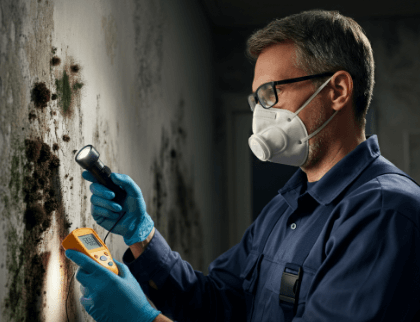
🏠 Mold During Home Buying Inspections in Merritt Island: What Property Owners Should Know
Buying a home in Merritt Island is exciting—but inspections can quickly raise questions when mold, moisture, or musty odors come up. In Brevard County’s coastal climate, mold findings are common during buyer inspections, and how they’re handled can influence price, timing, and confidence on both sides of the deal.
This guide explains what inspectors look for, how mold issues affect negotiations, and what Merritt Island property owners (buyers and sellers) should expect during home buying inspections.
🌴 Why Mold Comes Up So Often in Merritt Island Inspections
Local conditions put moisture under the spotlight:
- High humidity year-round
- Salt air that slows drying
- Frequent storms and wind-driven rain
- Long AC seasons with condensation
- Slab foundations that trap moisture
Because moisture lingers, inspectors are trained to look beyond visible stains and assess risk indicators.
🔍 What Inspectors Actually Look For
During a standard home inspection, mold isn’t always tested—but moisture clues are.
Inspectors commonly check:
- Musty odors (often the first red flag)
- Ceilings & walls for staining or bubbling paint
- Baseboards & trim for warping
- Bathrooms & laundry rooms (venting, condensation)
- Kitchens & under-sink cabinets
- Closets on exterior walls
- Attics (wet insulation, roof staining)
- HVAC systems (air handlers, drain pans, ducts)
If moisture indicators appear, buyers may request further evaluation.
🧪 Inspection vs. Mold Testing (Important Difference)
- Home inspection: Visual review + moisture clues
- Mold testing: Air/surface sampling for documentation
Testing is often requested when:
- Odors persist without visible growth
- Health concerns are raised
- HVAC involvement is suspected
- Buyers want confirmation before closing
Testing supports decisions; fixing moisture resolves problems.
🌬️ HVAC & Odors: Two Fast Escalators
Two findings escalate negotiations fastest:
- Odors that worsen when the AC runs
- Moisture or staining around air handlers
These suggest possible whole-home exposure, prompting buyers to ask for remediation or credits.
📉 How Mold Findings Affect Negotiations
When mold or moisture is flagged, common outcomes include:
- Requests for professional remediation
- Repair credits or price reductions
- Delays for drying and verification
- In rare cases, buyer withdrawal
Clear documentation and a solid plan preserve leverage.
🧾 Seller Disclosures & Buyer Expectations
Florida sellers must disclose known material defects, including known mold or moisture issues. Buyers typically expect:
- Transparency
- Evidence of correction
- Receipts, photos, and reports
- Verification when remediation was performed
Honesty paired with proof builds trust.
🛠️ Smart Pre-Inspection Steps for Sellers
Before listing—or before buyer inspections:
- Control humidity (≤55%, 50% ideal).
- Fix moisture sources (AC drains, window seals, roof flashing).
- Remediate—not paint over—affected materials.
- Inspect HVAC for condensation issues.
- Document all repairs and drying.
- Consider post-remediation verification for added confidence.
Prepared homes move faster and negotiate better.
🧽 Common Mistakes That Trigger Buyer Pushback
- Painting over stains
- Choosing the cheapest “cleanup”
- Ignoring odors
- Skipping HVAC checks
- Lacking documentation
These invite deeper scrutiny and larger concessions.
🧠 Tips for Buyers Evaluating Mold Findings
Buyers should:
- Focus on moisture cause, not just mold appearance
- Ask whether issues were localized or systemic
- Review documentation and timelines
- Consider targeted testing when odors persist
- Factor remediation scope into negotiations—not panic
Most issues are manageable with the right plan.
🌊 Why Merritt Island Homes Get Extra Attention
Surrounded by water, Merritt Island homes:
- Dry more slowly
- Experience more condensation
- Are inspected with humidity in mind
Proactive moisture control stands out—in a good way.
📊 Does Mold Always Kill a Deal?
No.
- Unresolved or recurring mold → can derail deals.
- Properly remediated and documented issues → often have minimal impact.
Process and proof matter more than history.
🟢 Final Takeaway for Merritt Island Property Owners
During home buying inspections in Merritt Island, mold is a due-diligence issue, not an automatic deal-breaker.
Remember:
✔ Inspectors look for moisture clues
✔ Odors and HVAC findings escalate quickly
✔ Remediation beats cosmetic fixes
✔ Documentation preserves value
✔ Verification reassures buyers
Handled proactively, mold becomes a checked box—not a closing obstacle.
If you’d like, I can share a buyer-facing mold Q&A, a pre-listing inspection checklist, or a negotiation-ready documentation pack tailored specifically for Merritt Island homes.
