
Mold Cleanup vs Mold Remediation in Brevard County: What Merritt Island Property Owners Should Know
Mold Cleanup: What It Actually Is
Mold cleanup focuses on what you can see.
Cleanup usually means:
- Wiping or scrubbing visible mold
- Cleaning surfaces like tile, drywall, or trim
- Using sprays, cleaners, or antimicrobial products
- Improving appearance and smell short-term
Cleanup works best when mold is:
- Small and surface-level
- Caused by a short, obvious moisture event
- In an area that fully dries afterward
In other words, cleanup treats the symptom, not the system.
When Mold Cleanup Is Enough
To be fair, cleanup absolutely has its place.
Cleanup can be sufficient when:
- Mold is limited to a small area
- The moisture source is fixed immediately
- No odors linger
- Mold doesn’t return after cleaning
For example, a little mold on bathroom tile caused by poor ventilation can often be handled with proper cleaning plus better airflow. Problem solved.
The key phrase there is plus better airflow.
Why Mold Cleanup Often Fails in Brevard County
This is where Florida reality kicks in.
In Brevard County, cleanup alone often fails because:
- Humidity stays high year-round
- Materials dry slowly
- Condensation happens daily
- Moisture hides inside walls and floors
You clean the surface, it looks fine, and then a few weeks later—boom—it’s back. That’s not bad luck. That’s moisture still doing its thing behind the scenes.
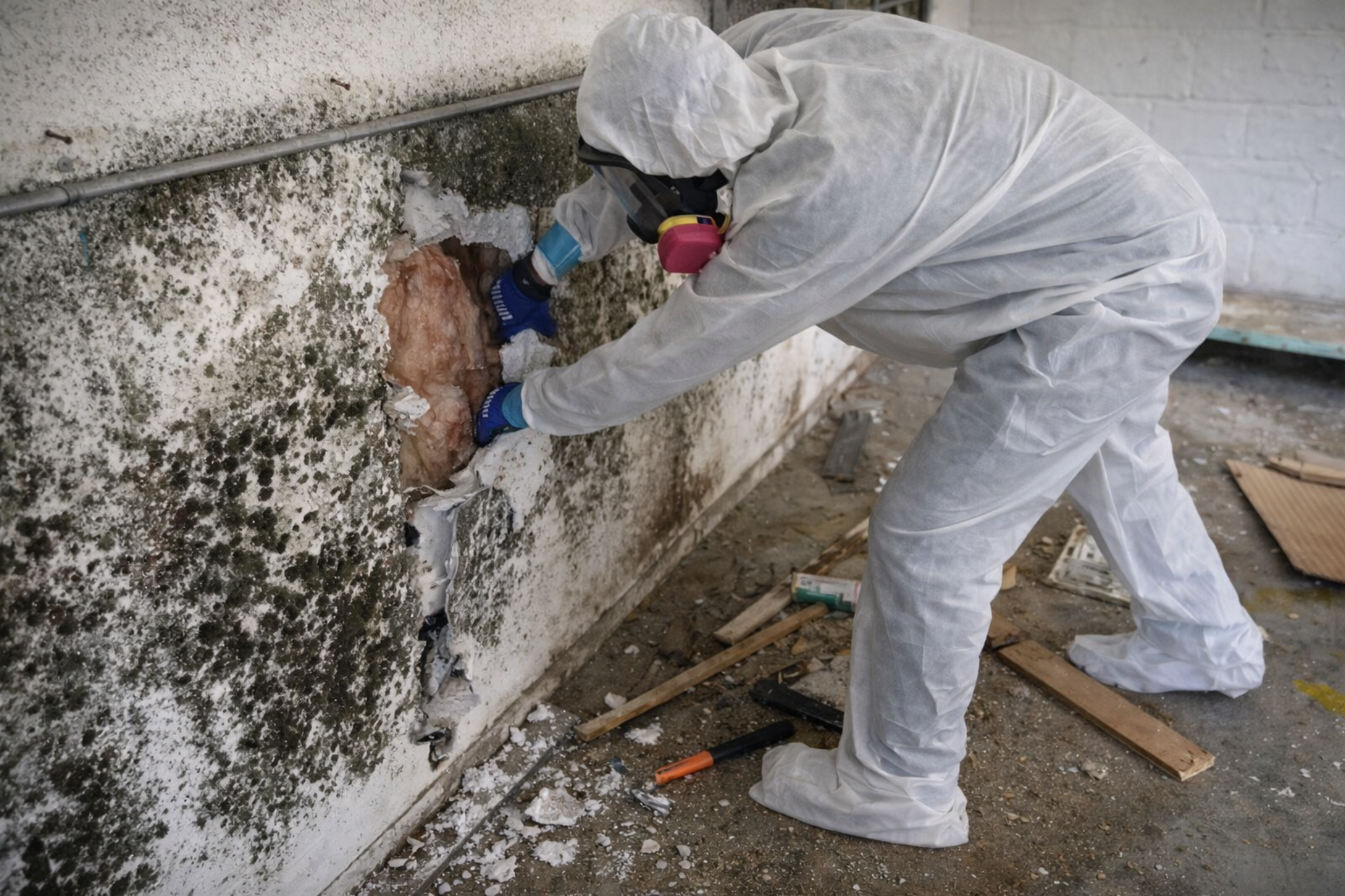
Mold Remediation: What’s Different
Mold remediation focuses on why the mold exists—not just where you see it.
Remediation typically includes:
- Identifying moisture sources
- Containing affected areas to prevent spread
- Removing contaminated materials when necessary
- Cleaning and treating impacted spaces properly
- Correcting conditions that allow mold to grow
Think of remediation as addressing the cause and the consequences, not just the appearance.
Containment Is the Big Difference
One of the biggest distinctions between cleanup and remediation is containment.
During remediation:
- Barriers isolate affected areas
- Airflow gets controlled
- Mold spores stay contained
- Spread into other rooms gets prevented
Cleanup skips this step entirely. That’s why DIY or surface-only cleaning sometimes makes mold problems worse instead of better.
Hidden Mold Is Where Cleanup Falls Short
In Merritt Island homes, mold often grows:
- Behind drywall
- Under flooring
- Inside closets on exterior walls
- In attics
- Near HVAC components
Cleanup doesn’t reach these areas. Remediation does.
If mold keeps returning in the same spot—or appears in new spots—hidden growth is usually involved.
Moisture Control: The Heart of Remediation
Here’s the part that actually stops mold long-term.
Remediation addresses:
- High indoor humidity
- AC condensation problems
- Drainage or ventilation issues
- Moisture trapped in materials
Without moisture control, even the best cleanup in the world won’t hold. Mold always follows moisture. Always.
Why Remediation Costs More (and Why That Matters)
Remediation usually costs more than cleanup—and that’s intentional.
You’re paying for:
- Time spent identifying moisture patterns
- Proper containment and safety measures
- Removal of affected materials
- Long-term correction instead of repeat visits
IMO, remediation often costs less in the long run because it prevents the cycle of repeated cleanups.
Signs You Need Remediation, Not Cleanup
If you’re unsure which path applies to your home, these signs help clarify things.
You likely need remediation if:
- Mold keeps coming back
- Musty odors linger
- Mold appears in multiple rooms
- Mold worsens during humid months
- You’ve cleaned it more than once already
At that point, the issue isn’t cleaning—it’s conditions.
Why Brevard County Homes Tip Toward Remediation
Local conditions matter more than most people realize.
Brevard County homes deal with:
- Coastal and near-water humidity
- Slab foundations that hold moisture
- Heavy AC use year-round
- Slow drying after rain or leaks
These factors make mold more persistent. Cleanup alone often can’t keep up.
How Inspections Help Decide the Right Approach
A proper inspection helps determine whether cleanup or remediation makes sense.
Inspections look at:
- Moisture inside walls and floors
- Attics and HVAC systems
- Airflow and ventilation patterns
- Past water events
Once you understand where moisture lives, the right solution becomes obvious.
Why Local Experience Makes the Difference
Mold remediation in Florida isn’t the same as in dry climates. What works elsewhere often fails here.
That’s why Mold and Duct Cleaning Experts help Merritt Island property owners choose the right approach based on Brevard County conditions—not generic advice.
Final Thoughts
Mold cleanup and mold remediation aren’t competing options—they’re tools for different situations. Cleanup improves appearance. Remediation changes conditions.
In Brevard County, where moisture never really leaves, knowing the difference is everything. If mold keeps coming back, smells won’t disappear, or new areas get affected, it’s time to stop cleaning symptoms and start fixing causes.
That’s when mold finally stops winning.
