Mold and Respiratory Issues in Sykes Creek: What Merritt Island Property Owners Should Know
Homes around Sykes Creek enjoy calm water views and steady coastal breezes, but that same setting creates a moisture-rich indoor environment that can quietly affect comfort. One of the most common concerns property owners raise is how persistent moisture and mold growth relate to breathing comfort and indoor air quality—especially when the home smells musty or feels heavy even with the AC running.
In Sykes Creek, mold-related respiratory discomfort isn’t usually about dramatic, visible growth. More often, it’s about hidden moisture, slow mold development, and the way coastal humidity circulates air through a home. Understanding how these pieces fit together helps property owners spot early warning signs and take calm, practical steps to protect their property.
Why Sykes Creek Homes Are Prone to Moisture-Driven Mold
Sykes Creek sits amid waterways that keep humidity elevated day and night. Even during drier seasons, moisture rarely drops low enough for building materials to fully dry.
Local factors that raise mold risk include:
- Constant evaporation from surrounding water
- Coastal airflow that limits nighttime drying
- High groundwater levels beneath slab foundations
- Warm temperatures that hold moisture in the air
- Salt air accelerating wear on HVAC components
When moisture lingers, mold can establish itself in places that are easy to miss—long before anything looks wrong.
How Mold Influences Breathing Comfort Indoors
Mold affects indoor comfort primarily through air movement, not appearance. As mold grows, it releases tiny particles and odors that circulate through rooms—especially when HVAC systems run frequently to manage humidity.
In Sykes Creek homes, this often shows up as:
- Persistent musty or earthy smells
- Air that feels damp or stale
- Uneven comfort from room to room
- Odors strongest near vents, floors, or closets
These changes can make breathing feel less comfortable indoors, even when there’s no visible mold.
Common Mold Locations Linked to Air Quality Changes
Mold that influences indoor air is usually hidden in areas where moisture and airflow meet.
HVAC Systems
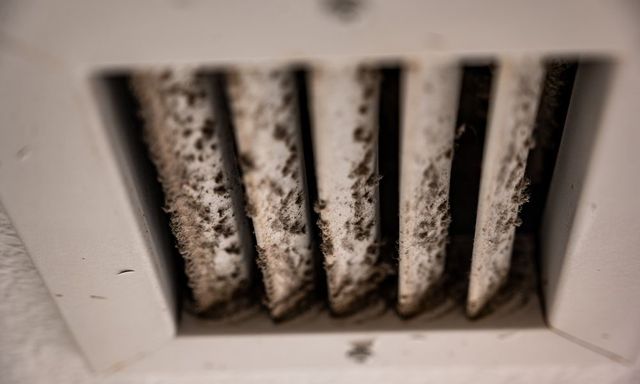
Air handlers, drain pans, and ductwork are prime locations for condensation in humid coastal homes. Mold inside HVAC systems can distribute odors and particles throughout the house.
Under Flooring
Tile, vinyl, and laminate flooring installed over slabs can trap moisture underneath. Mold growth here often releases odors that rise into living spaces.
Attics
Warm, humid air rises and condenses on roof decking when ventilation is limited. Attic mold frequently affects air quality without being seen.
Wall Cavities
Moisture intrusion from exterior walls, plumbing lines, or condensation allows mold to grow inside walls, slowly impacting indoor air.
These hidden locations explain why surface cleaning rarely improves indoor comfort for long.
Why Respiratory Discomfort Often Feels Worse Indoors
Property owners commonly notice a pattern:
- Air feels heavier inside the home
- Odors linger despite cleaning
- Comfort improves when windows are opened or when leaving the house
- Symptoms seem worse during humid weather
In coastal environments like Sykes Creek, this pattern often points to indoor moisture and mold growth, not just outdoor conditions.
The Role of Humidity in Mold-Related Air Issues
Humidity is the main driver behind mold-related air quality concerns.
When indoor humidity stays elevated:
- Mold growth is continuously supported
- Materials absorb moisture instead of drying
- Condensation forms on vents and ductwork
- Odors and airborne particles persist
In Sykes Creek, indoor humidity can remain high even when AC systems are running, especially if equipment isn’t optimized for moisture control.
Why Cleaning and Air Fresheners Don’t Solve the Problem
Many property owners try to improve comfort by cleaning more often or using air fresheners. These steps may mask odors briefly, but they don’t address the source.
That’s because:
- Mold growth is usually hidden
- Odors originate inside materials or HVAC systems
- Moisture conditions remain unchanged
- Mold continues releasing particles into the air
True improvement comes from drying and moisture control, not surface treatments.
Why DIY Mold Cleanup Can Make Air Quality Worse
DIY mold cleanup can unintentionally increase airborne particles when mold is disturbed without containment.
Common DIY pitfalls include:
- Scrubbing visible mold while hidden growth remains
- Spreading particles through the HVAC system
- Adding moisture through improper cleaning
- Ignoring humidity and condensation sources
In Sykes Creek’s humid climate, DIY attempts often lead to recurring issues rather than lasting relief.
How Professional Mold Inspection Evaluates Air Concerns
A professional mold inspection focuses on moisture behavior and airflow, not just visible growth.
A thorough evaluation may include:
- Measuring humidity levels throughout the home
- Moisture mapping of walls, floors, and ceilings
- HVAC inspection for condensation and drainage issues
- Attic ventilation and insulation assessment
- Air or surface sampling when appropriate
This approach helps identify where moisture is entering and why air quality feels off.
Proper Mold Removal and Indoor Air Improvement
When mold is confirmed, remediation should address both removal and prevention.
A professional process typically involves:
- Containment to prevent particle spread
- Safe removal of contaminated materials
- Thorough drying and dehumidification
- Correcting HVAC, ventilation, or drainage issues
- Verifying moisture levels are back within safe ranges
When moisture is controlled, indoor air quality often improves noticeably.
Preventing Mold-Related Air Quality Problems in Sykes Creek
Prevention is especially important in homes surrounded by water.
Helpful prevention steps include:
- Keeping indoor humidity below 55%
- Running AC systems consistently, even during cooler months
- Maintaining HVAC systems and condensate drain lines
- Improving attic and bathroom ventilation
- Monitoring flooring and exterior walls after storms
- Managing humidity during vacancies
Consistency matters more than occasional fixes in coastal homes.
Why Local Sykes Creek Experience Matters
Homes near Sykes Creek behave differently than inland Brevard County properties. Local experience matters because:
- Coastal humidity stays elevated day and night
- Slab foundations interact with high groundwater levels
- Salt air accelerates HVAC corrosion
- Airflow patterns vary near waterways
Mold Removal Merritt Island understands these local conditions and approaches inspections with a moisture-focused, environment-specific perspective.
A Calm, Practical Takeaway
In Sykes Creek homes, respiratory discomfort often connects to indoor moisture and hidden mold growth, even when nothing is visible. These issues usually develop slowly and won’t resolve on their own in a coastal environment.
Early evaluation focused on moisture behavior can help restore indoor comfort, improve air quality, and prevent small problems from becoming larger ones. Addressing the source—rather than the symptoms—usually brings the most lasting results.