
How Fast Mold Grows in Florida in Brevard County: What Merritt Island Property Owners Should Know
In Brevard County, mold growth happens faster than most property owners expect. Between constant humidity, warm temperatures, nearby waterways, and frequent storms, homes on Merritt Island sit in an environment where moisture rarely gets a chance to fully dry. That means mold doesn’t take weeks or months to get started—it can begin much sooner.
Understanding how quickly mold grows in Florida helps homeowners, landlords, and property managers respond appropriately after leaks, storms, or humidity issues. In a coastal county like Brevard, timing matters more than people realize.
Why Mold Grows Faster in Brevard County Than Many Areas
Florida’s climate already favors mold, but Brevard County adds several local factors that accelerate growth. Merritt Island homes are surrounded by the Banana River, Indian River, and Sykes Creek, keeping ambient humidity elevated day and night.
Key conditions that speed up mold growth include:
- Warm temperatures most of the year
- High relative humidity, often above normal indoor targets
- Slab foundations with high water tables
- Frequent rain and storm-driven moisture
- Heavy, year-round air conditioning use
When moisture is present, these conditions allow mold to activate and spread quickly.
How Quickly Mold Can Start Growing
In Brevard County homes, mold can begin growing within 24 to 48 hours after materials become damp. That doesn’t mean you’ll see mold immediately, but growth can start behind the scenes very quickly.
Common situations where this happens include:
- Roof leaks during storms
- Plumbing leaks inside walls or cabinets
- AC condensation overflow or drain backups
- Flooded or over-saturated ground near slabs
- High indoor humidity combined with poor airflow
Once materials like drywall, insulation, or wood stay damp for more than a day or two, mold has what it needs to begin.
Why Mold Isn’t Always Visible Right Away
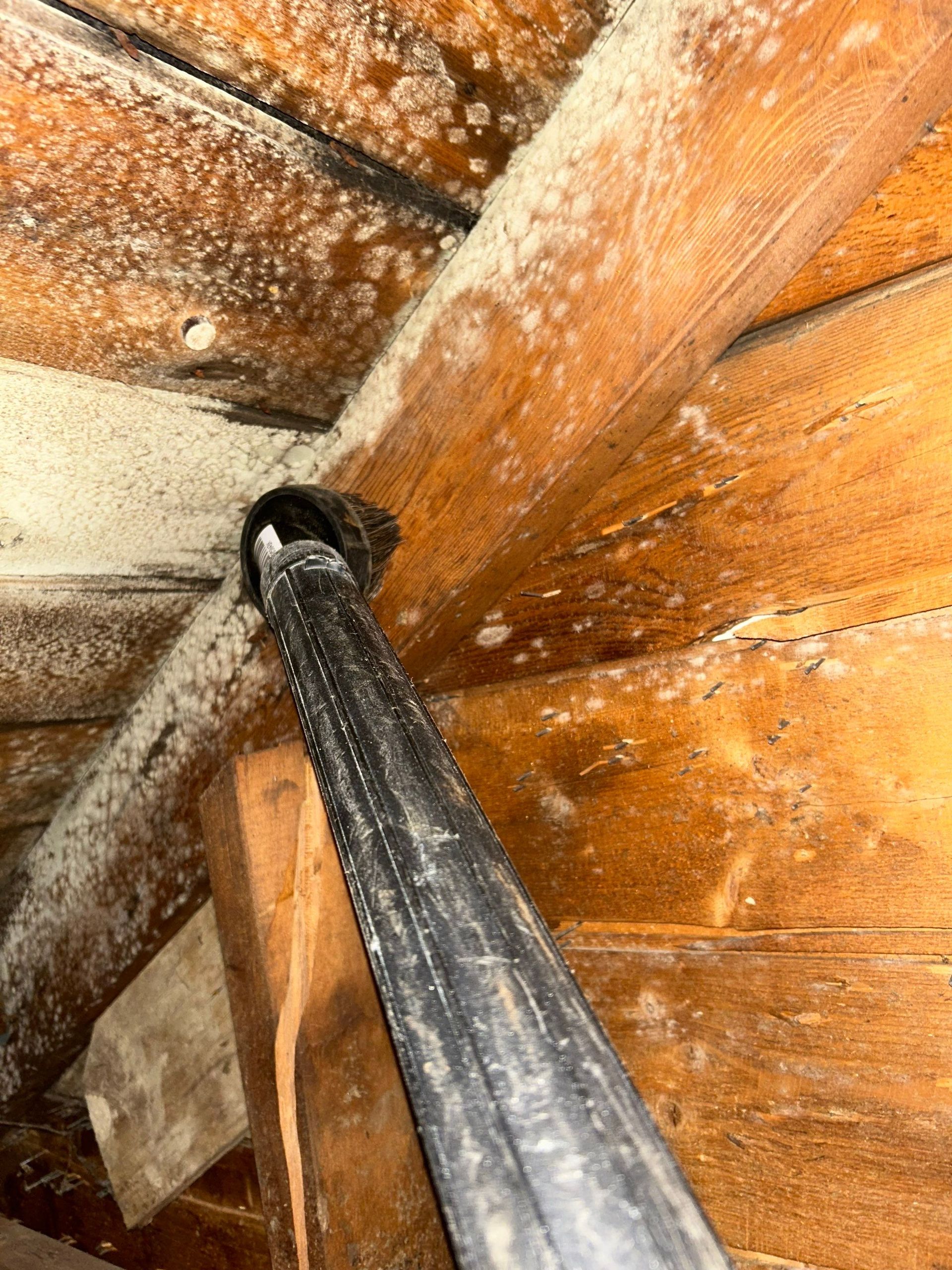
One reason mold seems to “appear suddenly” is because it often grows out of sight first. In Merritt Island homes, mold commonly starts in hidden areas where moisture dries slowly.
These areas include:
- Inside wall cavities
- Above ceilings
- Attics and insulation
- Under flooring installed over slab
- HVAC systems and ductwork
By the time mold becomes visible, it may have been growing for days or even weeks.
The Role of Humidity in Mold Speed
Humidity alone can drive mold growth, even without leaks. In Brevard County, indoor humidity can remain elevated despite air conditioning—especially in closets, attics, and rooms with limited airflow.
When indoor humidity stays high:
- Mold grows faster once it starts
- Damp materials dry more slowly
- Spores remain active longer
- Growth spreads to nearby areas more easily
This is why mold problems often worsen during summer and rainy seasons.
How Storms Accelerate Mold Growth
Storms don’t just add water—they slow drying. After storms, humidity rises indoors, ground moisture increases, and homes stay closed up while AC systems run continuously.
Storm-related mold growth often follows this pattern:
- Moisture enters through roofs, walls, or ground
- Materials stay damp due to humidity
- Mold begins growing within days
- Odors or stains appear weeks later
Because the growth is delayed, homeowners often don’t connect mold to the storm that caused it.
AC Systems and Rapid Mold Development
Air conditioning systems are meant to remove moisture, but in Brevard County they can also contribute to rapid mold growth when condensation isn’t managed properly.
AC-related mold growth can begin quickly when:
- Drain lines clog or back up
- Ductwork sweats in hot attics
- Air handlers sit in tight, damp closets
- Systems are oversized and don’t dehumidify well
Once moisture is present near HVAC components, mold can spread through airflow to other areas of the home.
Slab Foundations and Ground Moisture
Most Merritt Island homes are built on slab foundations. After heavy rain, groundwater levels rise, allowing moisture vapor to move upward through concrete.
This can cause:
- Damp conditions near floor level
- Mold growth along baseboards
- Moisture trapped under flooring
- Growth that spreads laterally beneath rooms
Because slab moisture moves slowly, mold growth can continue even after surface water dries.
How Fast Mold Spreads Once It Starts
Mold doesn’t stay confined to one spot. Once active, it spreads through spores carried by air movement.
In Brevard County homes, mold can spread through:
- HVAC circulation
- Natural airflow between rooms
- Attic and wall cavity connections
- Pressure changes when doors open and close
If other areas have moisture, secondary growth can begin quickly.
Why Waiting a Few Days Can Make a Big Difference
Many homeowners assume small leaks or damp areas can wait. In Brevard County, delays often turn minor moisture issues into mold problems.
Waiting allows:
- Moisture to soak deeper into materials
- Mold to establish roots in porous surfaces
- Growth to spread beyond the original area
- More materials to become affected
Early drying and inspection usually prevent much larger issues later.
How Fast Mold Returns After Cleaning
Mold can also return quickly if moisture conditions remain unchanged. In some Merritt Island homes, mold reappears within weeks after surface cleaning.
This happens when:
- Moisture behind walls wasn’t dried
- Attics or HVAC systems weren’t addressed
- Slab moisture continues
- Indoor humidity stays elevated
Mold removal without moisture correction is temporary.
When Speed Matters Most
Timing is especially critical after:
- Roof or plumbing leaks
- Storms or heavy rain
- AC condensation issues
- Flooding or ground saturation
- New construction moisture
The first 24–72 hours after moisture appears are the most important for preventing mold growth.
How Professionals Approach Mold Timing
Professional evaluations focus on identifying how long materials have been wet and whether drying is complete.
This often includes:
- Moisture readings in walls and floors
- Attic and insulation inspection
- HVAC condensation assessment
- Identifying active vs past moisture
Local providers such as Mold Removal Merritt Island often find that early evaluations stop mold before it becomes visible or widespread.
Why Local Brevard County Experience Matters
Mold growth timelines vary by climate. What takes weeks in dry climates can take days in Brevard County.
Local experience matters because professionals familiar with Merritt Island understand:
- How humidity slows drying
- How slab foundations affect moisture
- How storms change indoor conditions
- How AC systems influence mold speed
That knowledge allows for realistic timelines and appropriate responses.
A Practical Takeaway for Property Owners
In Brevard County, mold grows fast—often faster than homeowners expect. Moisture that lingers for just a couple of days can be enough to start the process, especially in humid, coastal environments like Merritt Island.
If a home has experienced leaks, storms, condensation, or persistent humidity, acting quickly is the best defense. Early drying, inspection, and moisture control usually prevent mold from ever becoming a visible or recurring problem.
