

Mold in Garages in Merritt Island: What Merritt Island Property Owners Should Know
Garages in Merritt Island are often treated as simple storage spaces, but they play a bigger role in a home’s overall moisture and mold picture than many property owners realize. Between coastal humidity, frequent storms, and daily temperature swings, garages can quietly become one of the most mold-prone areas of a property.
Because garages are not typically air-conditioned or closely monitored, mold can develop there long before it’s noticed. Understanding why garages in Merritt Island are vulnerable—and what signs to watch for—helps property owners prevent mold from spreading into the rest of the home.
Why Garages in Merritt Island Are Prone to Mold
Merritt Island’s environment creates ideal conditions for mold, and garages feel those effects more strongly than interior living spaces. Garages are often exposed directly to outdoor air, humidity, and moisture without the benefit of consistent climate control.
Local factors that increase mold risk in garages include:
- Persistent coastal humidity year-round
- Warm temperatures that encourage condensation
- Salt air that degrades seals and door weatherstripping
- Storm-driven rain entering through doors or walls
- Concrete slabs that retain and release moisture
When humid air enters a cooler garage, condensation forms on walls, ceilings, and stored items, creating a steady moisture source for mold.
The Role of Concrete Slabs and Moisture
Most garages in Merritt Island are built on concrete slabs, and concrete is not moisture-proof. In areas with high water tables, moisture can migrate upward through the slab and evaporate into the garage air.
This slab-related moisture can lead to:
- Damp garage floors that never fully dry
- Elevated humidity even without visible leaks
- Mold growth along lower walls and base plates
- Odors that worsen during humid weather
Because this moisture source is slow and constant, it often goes unnoticed until mold becomes visible.
Condensation From Temperature Changes
Garages experience larger temperature swings than interior spaces. When warm, humid outdoor air enters a cooler garage—especially in the morning or after rain—condensation can form quickly.
Condensation commonly appears on:
- Garage walls and ceilings
- Metal garage doors and tracks
- Stored tools and equipment
- Water heaters or mechanical components
Repeated condensation cycles provide just enough moisture for mold to establish itself over time.
Common Signs of Mold in Garages
Mold in garages doesn’t always look dramatic. In Merritt Island, it often appears gradually and in less obvious forms.
Common signs include:
- Musty or earthy odors when opening the garage door
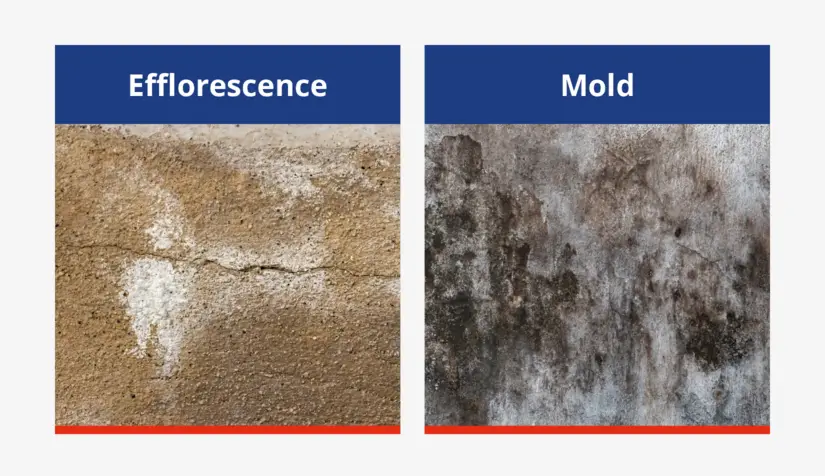
- Dark spotting or staining on drywall or concrete walls
- Fuzzy growth on cardboard boxes or stored items
- White or greenish residue on walls or ceilings
- Rust forming faster than expected on metal items
Because garages are not lived in, these signs are often ignored until the issue becomes more advanced.
Stored Items That Attract Mold Growth
Garages are frequently used to store materials that absorb moisture easily. In a humid coastal environment, these items can become mold sources themselves.
High-risk stored items include:
- Cardboard boxes
- Upholstered furniture
- Paper products and books
- Fabric items and clothing
- Wood shelving or untreated lumber
Once mold begins growing on stored items, it can spread spores throughout the garage and into adjacent areas.
Garages and Mold Migration Into the Home
Attached garages pose an additional concern because air moves between the garage and the home through shared walls, doors, and framing cavities.
Mold-related issues can spread when:
- Air leaks exist around the garage-to-home door
- HVAC ductwork runs through the garage
- Shared wall cavities allow airflow
- Odors migrate into interior rooms
In Merritt Island homes, garage mold is sometimes discovered only after musty smells appear inside the house.
Roof and Wall Leaks Affecting Garages
Garages often have simpler construction than main living areas, which can make them more vulnerable to leaks.
Common moisture entry points include:
- Roof edges and flashing above garages
- Exterior wall penetrations
- Aging garage doors and seals
- Cracks in stucco or siding
Because garages are rarely inspected closely, leaks can go unnoticed long enough for mold to develop.
Why DIY Cleaning Usually Falls Short
Many property owners try to address garage mold by scrubbing visible growth or throwing away affected items. While this may improve appearance temporarily, it often doesn’t solve the underlying moisture problem.
Common issues with DIY approaches include:
- Moisture sources remaining unaddressed
- Mold returning after cleaning
- Growth continuing behind drywall or insulation
- Spores spreading during cleaning
Without controlling humidity and moisture entry, mold in garages tends to come back.
Professional Evaluation of Garage Mold
A professional evaluation focuses on identifying why moisture is present, not just where mold is visible. In Merritt Island garages, inspections often include:
- Moisture readings along walls and floors
- Inspection of slab-related humidity
- Evaluation of ventilation and airflow
- Checking for roof or exterior wall leaks
When needed, further assessment helps determine whether mold is affecting adjacent living spaces. Providers like Mold Removal Merritt Island often see garage mold as an early indicator of broader moisture conditions on the property.
Practical Mold Prevention for Merritt Island Garages
Preventing mold in garages requires a few consistent habits tailored to the coastal environment.
Effective prevention steps include:
- Keeping garage doors sealed and weatherstripping intact
- Improving airflow or ventilation when possible
- Avoiding cardboard and moisture-sensitive storage
- Elevating stored items off the slab
- Inspecting after heavy rain or storms
These steps reduce moisture buildup and limit mold-friendly conditions.
The Importance of Post-Storm Checks
After storms or periods of heavy rain, garages should be checked carefully. Wind-driven rain and humidity spikes can introduce moisture even without obvious flooding.
Post-storm checks should include:
- Looking for damp walls or ceilings
- Noticing new odors
- Checking stored items for moisture
- Monitoring humidity levels
Catching moisture early often prevents mold from establishing itself.
Why Local Merritt Island Experience Matters
Garages near the coast behave differently than those inland. Local experience matters because professionals familiar with Merritt Island understand how salt air, slab foundations, and humidity affect garage spaces over time.
That local insight allows for accurate identification of moisture sources and practical recommendations suited to island conditions.
A Practical Next Step for Property Owners
Mold in garages is common in Merritt Island, but it doesn’t have to spread or become a larger issue. Garages often provide early warning signs of moisture problems affecting the property as a whole.
If a garage shows musty odors, visible growth, or recurring dampness, a professional evaluation can help identify the cause and guide appropriate next steps. Addressing garage mold early helps protect stored belongings, indoor air quality, and the long-term condition of the home.
