
Mold Under Sinks in South Merritt Island: What Merritt Island Property Owners Should Know
Mold under sinks is one of the most common moisture problems homeowners encounter in South Merritt Island. Kitchens, bathrooms, and laundry areas all contain plumbing connections that can develop slow leaks or condensation over time. Because the space under a sink is enclosed and often dark, moisture may remain unnoticed for weeks, allowing mold to grow quietly.
In coastal areas like Merritt Island, high humidity and warm temperatures make it even easier for mold to develop when moisture is present. Understanding how mold forms under sinks, how to recognize early warning signs, and how to prevent problems helps property owners protect their homes and avoid costly repairs.
Why Mold Forms Under Sinks
The area beneath a sink provides many of the conditions mold needs to grow:
- Occasional or slow plumbing leaks
- Limited airflow inside cabinets
- Warm indoor temperatures
- Organic materials such as wood, particle board, and dust
Even small drips from a pipe connection can create enough moisture for mold to develop over time.
Why Under-Sink Mold Is Common in South Merritt Island
Homes in South Merritt Island often face environmental factors that increase mold risks.
High coastal humidity
Moist air keeps cabinets and enclosed spaces damp longer than in drier climates.
Frequent storms and rain
Humidity rises after storms, slowing the drying of small leaks or damp materials.
Continuous air-conditioning use
Temperature differences between cooled indoor air and plumbing pipes can create condensation.
Older plumbing or cabinet materials
Particle board cabinets and aging pipe fittings may absorb moisture or develop leaks more easily.
Because these conditions are common, under-sink mold often develops gradually and may go unnoticed.
Common Signs of Mold Under Sinks
Mold under sinks usually shows warning signs before becoming severe.
Homeowners may notice:
- Musty or damp odors inside cabinets
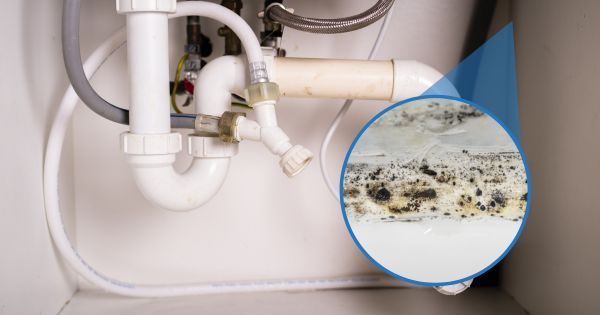
- Dark spotting or discoloration on wood or cabinet panels
- Warped or swollen cabinet bottoms
- Water stains or mineral deposits around pipes
- Peeling or bubbling cabinet finishes
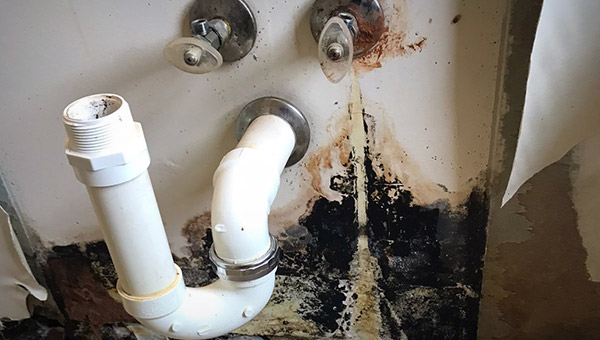

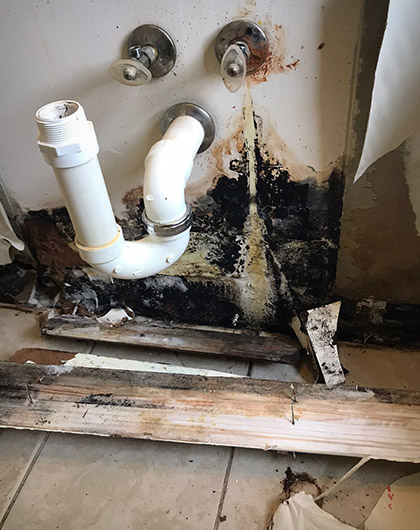
Checking under sinks periodically helps catch these signs early.
Hidden Mold That Can Develop Beneath Cabinets
Sometimes mold spreads beyond the visible cabinet interior.
Hidden mold may develop:
- Behind the cabinet back panel
- Inside wall cavities around plumbing
- Under flooring near the sink
- Beneath cabinet bases

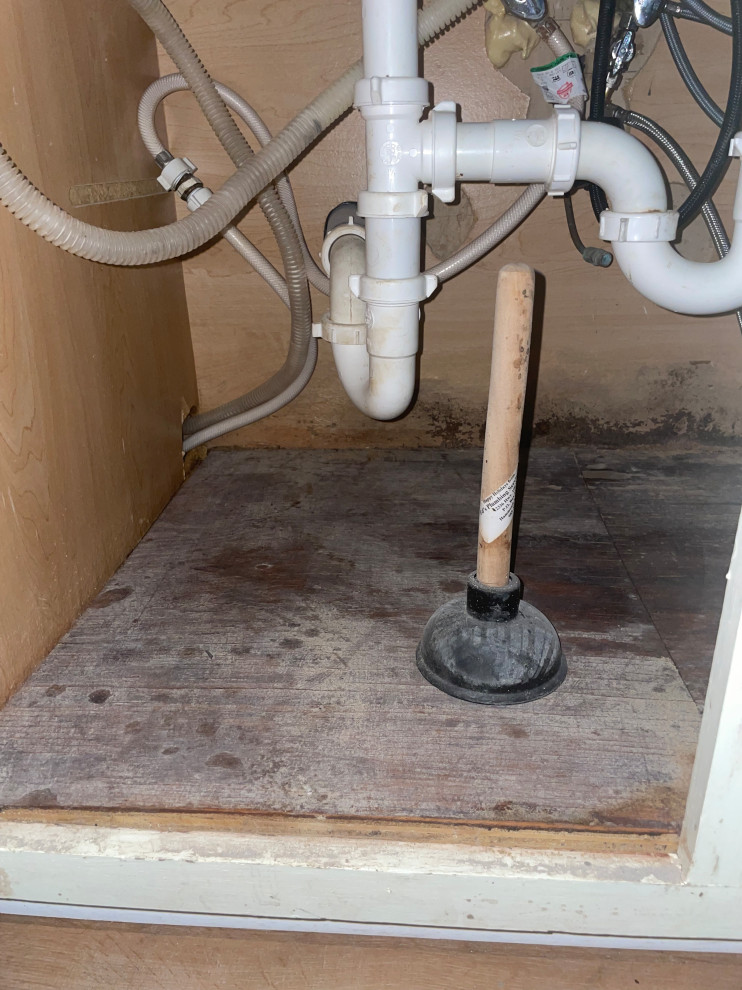
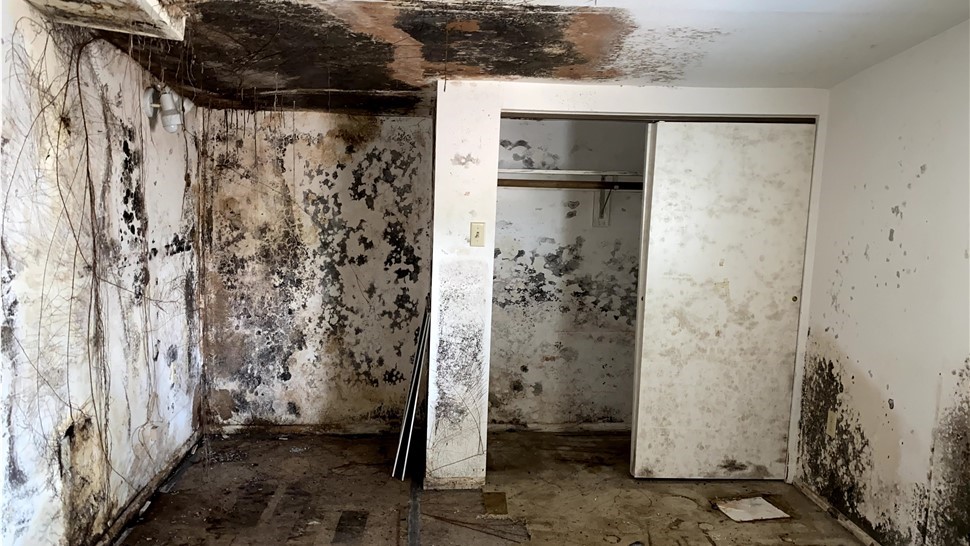
Because these areas are concealed, mold may continue growing even after visible stains are cleaned.
Why Mold Under Sinks Should Not Be Ignored
Even small mold problems under sinks can worsen if moisture continues.
Over time, mold can:
- Damage cabinetry and shelving
- Affect drywall and subflooring
- Create persistent odors
- Spread into adjacent walls or rooms
Addressing leaks and moisture early helps prevent larger repairs.
Why DIY Cleaning Often Falls Short
Many homeowners attempt to clean mold using household cleaners. While this may remove surface staining, it may not address the underlying moisture source.
DIY cleanup may fall short because:
- Leaks or condensation continue
- Mold inside porous materials remains
- Hidden mold behind cabinets is not removed
- Cabinet materials may already be damaged
Professional evaluation helps determine whether mold is limited to surfaces or has spread to hidden areas.
How Professional Mold Inspection Helps
A professional inspection helps identify:
- The extent of mold growth
- The moisture source causing the problem
- Whether building materials are affected
- Whether hidden mold may be present
Inspectors often use:
- Moisture meters
- Visual inspection of plumbing and cabinets
- Inspection of adjacent walls and flooring
Professionals familiar with local conditions, such as Mold Removal Merritt Island, understand the humidity patterns and construction styles common in South Merritt Island homes and can help identify problems accurately.
How Mold Remediation Works Under Sinks
If mold growth is extensive or recurring, remediation may be recommended.
Typical steps include:
- Repairing plumbing leaks or condensation problems
- Removing mold-damaged materials when necessary
- Cleaning and drying the area
- Treating affected surfaces
- Improving ventilation and moisture control
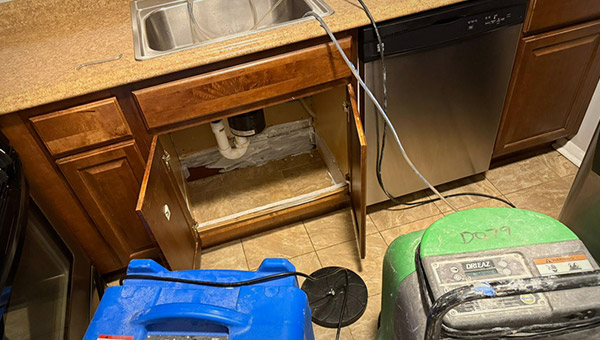
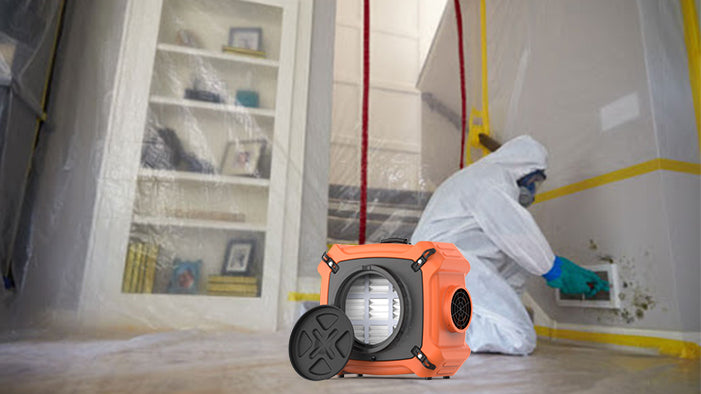
Correcting the moisture source is the most important step in preventing mold from returning.
How to Prevent Mold Under Sinks
Preventive maintenance is the most effective way to reduce mold risks.
Homeowners can help prevent problems by:
- Checking under sinks monthly for leaks
- Tightening loose plumbing connections
- Keeping cabinet interiors dry
- Using small moisture absorbers if humidity is high
- Repairing leaks promptly
Routine checks take only a few minutes but can prevent significant damage.
The Importance of Ventilation and Moisture Control
Under-sink areas often have very limited airflow. Improving ventilation and reducing humidity helps prevent mold.
Helpful measures include:
- Leaving cabinet doors open occasionally to allow drying
- Using exhaust fans in kitchens and bathrooms
- Maintaining indoor humidity between 45–55%
- Ensuring air-conditioning systems operate properly
These steps help reduce moisture buildup in enclosed spaces.
Why Local Experience Matters in South Merritt Island
Mold behavior in coastal Brevard County differs from inland areas. Homes in South Merritt Island often experience:
- Higher baseline humidity
- Slower drying after leaks
- Salt air exposure affecting materials
- Continuous AC operation
Professionals familiar with these local conditions can diagnose moisture problems more quickly and recommend solutions suited to coastal homes. Local experience often helps prevent recurring mold issues.
A Calm, Practical Next Step
Mold under sinks is common in humid coastal environments, but most problems can be managed effectively when addressed early. Regular inspections, prompt leak repairs, and good ventilation help prevent mold from spreading and damaging cabinetry or walls.
If you notice musty odors, stains, or warped cabinet materials under a sink, having the area evaluated can help determine whether mold may be present and what steps may be needed.
For homeowners in South Merritt Island and throughout Brevard County, staying proactive with plumbing maintenance and moisture control remains one of the most reliable ways to keep homes dry, clean, and well maintained year-round.
