
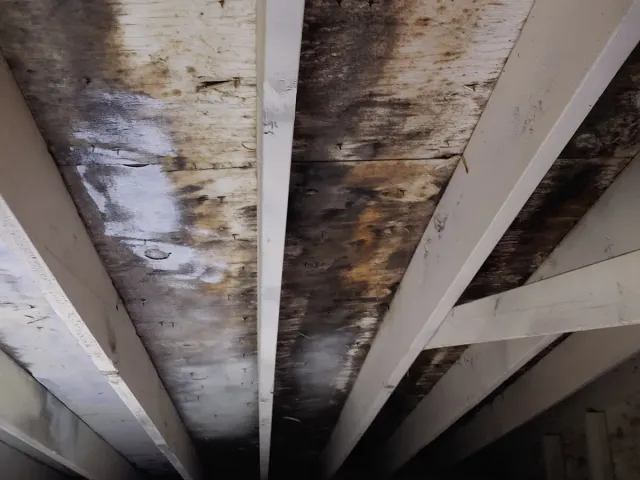
Mold From AC Condensation in South Merritt Island: What Merritt Island Property Owners Should Know
Air conditioning is a necessity in South Merritt Island. It keeps homes comfortable through long, humid seasons—but it can also be one of the most common sources of hidden mold problems. Many homeowners are surprised to learn that mold growth doesn’t always come from storms or plumbing leaks. In this part of Merritt Island, AC condensation is often the real culprit.
Understanding how condensation forms, where it collects, and why it leads to mold can help property owners catch problems early and avoid costly repairs.
Why AC Condensation Is a Big Issue in South Merritt Island
South Merritt Island sits between the Banana River and the Indian River, surrounded by warm, moisture-heavy air most of the year. Air conditioners work overtime here, pulling humidity out of the air as they cool the home.
That moisture has to go somewhere.
When AC systems aren’t draining, insulating, or ventilating properly, condensation can accumulate inside walls, ceilings, and HVAC components—creating ideal conditions for mold.
How AC Condensation Turns Into Mold
As warm, humid air passes over cold AC components, moisture condenses. Under normal conditions, that water drains safely away through condensate lines and drip pans.
Problems start when:
- Drain lines clog or back up
- Drip pans overflow or crack
- Ductwork sweats due to poor insulation
- Air handlers sit in humid attics or closets
- Systems short-cycle and don’t remove enough moisture
When condensation remains in contact with drywall, insulation, or wood, mold can begin growing in a matter of days.
Common Places Mold Forms From AC Condensation
In South Merritt Island homes, condensation-related mold is often found in places homeowners rarely inspect:
Around AC Air Handlers
Units located in closets, garages, or attics can leak or sweat, allowing moisture to soak into surrounding materials.
Inside Ductwork
Poorly insulated ducts running through hot attics can sweat continuously, feeding mold growth over time.
Near Supply and Return Vents
Condensation around vents can discolor ceilings or walls and lead to mold just beneath the surface.
Behind Walls and Ceilings
Slow condensation leaks can soak drywall from the inside, creating hidden mold colonies before stains appear.
Why These Problems Are Easy to Miss
AC condensation issues don’t usually cause dramatic water damage. Instead, they release small amounts of moisture consistently. In South Merritt Island’s humid environment, that moisture doesn’t dry out quickly.
Many homeowners first notice:
- Musty odors when the AC runs
- Dark staining around vents
- Peeling paint near air handlers
- Increased indoor humidity despite cooling
By the time these signs appear, moisture has often been present for a while.
The Role of Humidity and System Design
Modern homes are built tighter for energy efficiency, which means moisture has fewer ways to escape. If an AC system cools the home quickly but doesn’t run long enough to dehumidify properly, humidity stays high.
Common contributing factors include:
- Oversized AC units
- Poor airflow balance
- Inadequate return air
- Lack of dedicated dehumidification
In South Merritt Island, these design issues often show up as condensation-related mold rather than obvious leaks.
Why Simply Replacing Filters Isn’t Enough
Changing filters is important, but it doesn’t prevent condensation problems. Mold from AC systems is usually tied to moisture management, not air cleanliness alone.
Without addressing drainage, insulation, airflow, and humidity control, mold can continue growing even in a well-maintained system.
How Professionals Identify AC-Related Mold Issues
Proper evaluation goes beyond checking visible mold. It typically includes:
- Inspecting condensate drain lines and pans
- Measuring moisture around ducts and vents
- Checking insulation on ductwork
- Evaluating airflow and humidity levels
- Inspecting surrounding building materials
Local specialists like Mold Removal Merritt Island understand how South Merritt Island’s climate affects AC performance and moisture behavior inside homes.
Why DIY Cleanup Often Falls Short
Wiping visible mold near vents or repainting stained ceilings may improve appearance temporarily, but it doesn’t stop condensation from continuing. Without correcting the AC-related moisture source, mold often returns—sometimes in a new location.
Condensation problems require system-level solutions, not surface fixes.
Practical Steps to Reduce AC Condensation Mold Risk
Homeowners can lower risk by taking proactive steps:
- Keep indoor humidity below 60 percent
- Have AC systems serviced regularly
- Ensure condensate lines are clear
- Check around air handlers for moisture
- Address sweating ducts promptly
- Inspect ceilings and vents after humid periods
Consistency is key in South Merritt Island’s climate.
Why Early Action Matters
Condensation-related mold often spreads slowly but steadily. Early detection usually means smaller affected areas and simpler corrections. Waiting often leads to more extensive mold growth behind walls or in duct systems.
Catching these issues early protects both indoor air quality and building materials.
A Practical Next Step for South Merritt Island Property Owners
If your home has musty odors when the AC runs, visible staining near vents, or unexplained humidity issues, AC condensation should be evaluated. A professional assessment can clarify whether moisture or mold is present and help prevent ongoing problems.
In South Merritt Island, air conditioning keeps homes livable—but only when moisture is managed correctly.
