
Mold in Slab Homes in Brevard County: What Merritt Island Property Owners Should Know
If you own a slab home in Brevard County, mold concerns probably feel frustratingly familiar. You clean visible spots, control the AC, and try to keep humidity down—yet musty odors or recurring mold keep showing up anyway. For many Merritt Island property owners, the root of the problem isn’t housekeeping or bad luck. It’s the way slab homes interact with Florida’s coastal moisture.
Slab construction is common throughout Merritt Island, Sykes Creek, Banana River, Indian River, and nearby communities. While slabs work well structurally, they create very specific moisture pathways that can quietly feed mold if conditions aren’t managed carefully. Understanding how slab homes behave in this environment is the first step toward stopping mold long-term instead of chasing it room by room.
What the Mold Issue Is in Slab Homes
Mold in slab homes usually isn’t dramatic or sudden. It develops slowly, often out of sight, and tends to reappear in the same areas. The key issue isn’t the slab itself—it’s how moisture moves through and around it.
Concrete is porous. It doesn’t leak like a pipe, but it can absorb and release moisture. When surrounding soil is wet or humidity stays high, moisture can migrate upward through the slab and into flooring materials, baseboards, and lower wall cavities. Over time, that moisture creates conditions where mold can grow even without an obvious leak or flood.
This is why slab-home mold problems often feel confusing. Homeowners don’t see water, but mold still shows up.
Why This Happens So Often in Merritt Island and Brevard County
Slab homes in Brevard County deal with several overlapping moisture challenges that aren’t always obvious.
Persistent Coastal Humidity
Living near the Banana River, Indian River, and surrounding lagoons means humidity rarely drops for long. Even on dry days, moisture in the air can be high enough to slow drying and encourage condensation.
High Water Tables
Much of Brevard County sits over a naturally high water table. After heavy rain or storms, groundwater rises and keeps soil around slab foundations damp for extended periods. That moisture doesn’t disappear quickly—it slowly migrates upward.
Frequent Storms and Heavy Rain
Tropical systems, summer storms, and hurricanes regularly saturate the ground. Even when homes don’t flood, slabs can absorb moisture from prolonged soil saturation.
AC Condensation and Cooling Cycles
Air conditioning runs most of the year. Cool indoor surfaces meet warm, humid air, creating condensation—especially near floors, baseboards, and supply vents. In slab homes, this effect is more pronounced.
Common Signs Homeowners Notice First
Mold problems in slab homes usually announce themselves quietly.
- Musty or earthy odors, especially near floors or in certain rooms
- Discoloration or spotting on baseboards or lower drywall
- Peeling or bubbling paint near the floor line
- Warped flooring or edges lifting on laminate or vinyl
- Rooms that feel damp even when the AC is running
- Recurring mold in the same areas despite cleaning
These signs often come and go with weather changes, which is a big clue that moisture—not surface contamination—is the real issue.
Hidden or Overlooked Mold Sources in Slab Homes
What makes slab-home mold so stubborn is how often it’s hidden.
Under Flooring
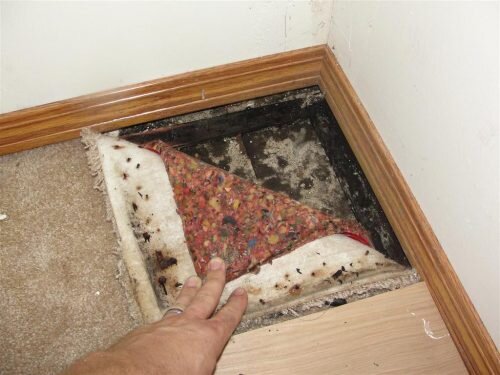
Moisture migrating through the slab can get trapped beneath laminate, vinyl plank, tile underlayment, or carpet padding. Floors may look fine while mold grows underneath.
Behind Baseboards and Drywall
Lower wall cavities are common trouble spots. Drywall can absorb moisture from the slab edge without visible staining at first.
Inside HVAC Systems
Slab homes often rely heavily on AC to manage humidity. Condensation in air handlers, drain pans, or duct insulation can spread moisture-related mold issues throughout the home.
Bathrooms and Kitchens on Exterior Walls
Plumbing plus slab moisture plus limited airflow creates ideal conditions for hidden growth behind cabinets and fixtures.
Past Water Damage
Even if a leak or storm event happened years ago, moisture trapped under flooring or behind walls can continue feeding mold if it was never fully dried.
Why DIY Mold Removal Usually Fails in Slab Homes
Many slab-home owners try to handle mold themselves—and end up frustrated.
Bleach, sprays, and surface cleaners may remove visible growth, but they don’t address:
- Moisture coming through the slab
- Damp materials behind walls or floors
- Condensation patterns caused by AC operation
In some cases, aggressive scrubbing or sanding actually spreads spores and drives moisture deeper into porous materials. That’s why mold often returns in the same place weeks or months later.
DIY cleanup treats the symptom. Slab-home mold requires solving the moisture pathway.
Professional Mold Inspection & Testing Explained
A proper mold inspection in a slab home focuses less on what’s visible and more on how moisture is behaving.
Visual Inspection
Inspectors look closely at baseboards, flooring transitions, AC components, bathrooms, kitchens, and areas affected by past water intrusion.
Moisture Detection
Specialized tools are used to detect:
- Moisture beneath flooring
- Damp drywall at slab edges
- Condensation-prone areas
- Elevated humidity patterns
This step is critical in slab homes because moisture is often hidden.
Mold Testing (When Appropriate)
Testing may be recommended when:
- Mold is suspected but not visible
- Documentation is needed
- Post-remediation confirmation is required
Lab results are used to support decisions—not replace inspection findings.
Proper Mold Removal & Remediation in Slab Homes
Effective remediation in slab homes follows a clear, controlled process.
Containment
Affected areas are isolated to prevent spores from spreading during removal.
Safe Removal of Contaminated Materials
Porous materials like damaged drywall, insulation, or flooring may need to be removed if they can’t be dried safely.
Moisture Source Correction
This is the most important step and may involve:
- Improving drainage or exterior grading
- Addressing AC condensation issues
- Installing or adjusting dehumidification
- Correcting plumbing or roof-related moisture
Thorough Cleaning and Drying
Professional cleaning and drying ensure materials are moisture-stable before repairs are made.
Without moisture correction, remediation won’t last—especially in slab homes.
How to Prevent Mold in Merritt Island Slab Homes
Prevention in slab homes is about staying ahead of moisture.
- Keep indoor humidity in a controlled range
- Run AC consistently rather than cycling on and off
- Maintain condensate drain lines and pans
- Inspect baseboards and flooring edges regularly
- Address leaks immediately, even small ones
- After storms, check floors and lower walls for dampness
- Avoid trapping moisture with impermeable flooring without proper underlayment
Small adjustments can make a big difference over time.
Why Local Merritt Island Experience Matters
Slab homes in Brevard County behave differently than slab homes in drier parts of the country. Coastal humidity, salt air, high water tables, and storm patterns all influence how moisture moves through a structure.
A local company like Mold Removal Merritt Island understands:
- Where slab-home mold typically starts locally
- How Merritt Island and lagoon-adjacent homes retain moisture
- Which problems require remediation—and which need moisture management instead
That local experience leads to more accurate assessments and fewer repeat issues.
A Calm, Practical Next Step for Property Owners
Mold in slab homes isn’t a sign that something is wrong with your house—it’s a sign that moisture needs better control. In Merritt Island and throughout Brevard County, slab-home mold is common, manageable, and very solvable when addressed correctly.
If you’re dealing with recurring mold, musty odors, or unexplained moisture near floors or baseboards, a professional evaluation can help identify what’s actually feeding the problem.
Mold Removal Merritt Island works with homeowners, landlords, and property managers throughout Merritt Island, Sykes Creek, Banana River, Indian River, and surrounding communities to assess slab-home mold issues responsibly and prevent them from returning.
In this coastal environment, understanding how your slab interacts with moisture is one of the most important steps you can take to protect your property long-term.