
Mold in Rental Properties in Sykes Creek: What Merritt Island Property Owners Should Know
Rental properties around Sykes Creek sit in one of the most moisture-heavy pockets of Merritt Island. With the creek’s proximity, lagoon humidity, and year-round air conditioning use, mold issues tend to show up faster—and spread wider—than many property owners expect. For landlords and property managers, this can mean tenant complaints, turnover delays, and unexpected repair costs if problems aren’t caught early.
Unlike owner-occupied homes, rentals have changing occupancy patterns, varied habits, and occasional gaps in climate control. All of those factors make mold in Sykes Creek rental properties a practical, recurring concern rather than a one-time event.
What the Mold Issue Is in Rental Properties
Mold in rental homes typically develops where moisture builds up unnoticed or unmanaged. This includes bathrooms, kitchens, closets, HVAC systems, and areas behind walls or under flooring.
In many cases, mold doesn’t come from dramatic leaks or flooding. It starts with everyday conditions—high humidity, condensation, minor plumbing drips, or limited airflow. Over time, mold grows on drywall paper, wood trim, insulation, dust, and other organic materials.
Because tenants may not recognize early warning signs—or may delay reporting them—mold in rentals often has more time to develop before it’s addressed.
Why This Happens So Often in Sykes Creek Rentals
Sykes Creek creates a localized humidity effect. Moist air from the waterway moves inland, especially during evenings and early mornings, raising indoor moisture levels even when the weather feels mild.
Many rental properties in this area are slab-built homes or older constructions with limited moisture barriers. High water tables common to Merritt Island add moisture pressure from below, which can affect flooring, baseboards, and lower wall sections.
Tenant behavior also plays a role. Turning off AC while away, limited use of exhaust fans, overcrowded units, or blocked vents all allow humidity to rise quickly. In seasonal or short-term rentals, vacant periods with no climate control almost guarantee moisture buildup.
Storms and heavy rain add another layer of risk. Even small intrusions or brief power outages can push humidity high enough to trigger mold growth in hidden areas.
Common Signs Property Owners and Managers Notice
The most frequent complaint is a musty or damp smell, often reported when tenants return after time away or during rainy weather. These odors may be strongest near vents, closets, or bathrooms.
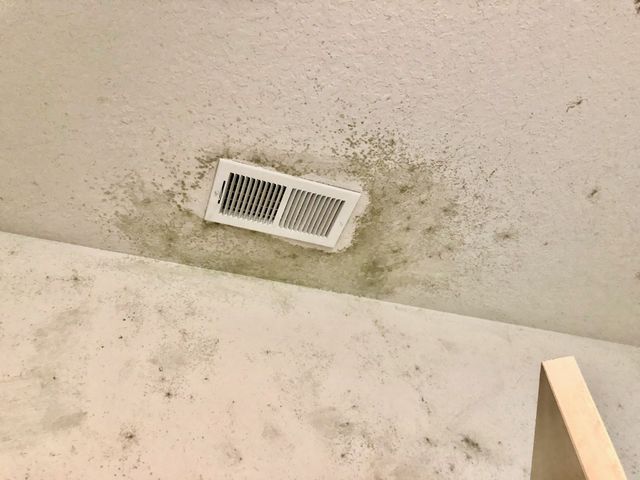
Visible signs can include mold spots on bathroom ceilings, staining near AC vents, bubbling paint, or discoloration along baseboards and window frames.
Some units feel persistently clammy or never seem to cool evenly. That often points to humidity or HVAC issues affecting the entire property, not just one room.
In turnover situations, mold is frequently discovered during move-out inspections after furniture is removed and hidden areas are exposed.
Hidden or Overlooked Mold Sources in Rentals
HVAC systems are a leading source in Sykes Creek rentals. Condensation in air handlers, clogged drain lines, or ductwork running through humid attics can support mold that spreads through the system.
Closets on exterior walls are another common problem area. Limited airflow allows humidity to linger, especially when doors stay closed for long periods.
Behind walls and under flooring, past leaks or condensation can feed mold long after repairs were made. These areas often remain damp without showing surface damage right away.
Cabinet bases under sinks and around laundry hookups are also frequent trouble spots due to slow leaks and condensation.
Why DIY Mold Cleanup Usually Fails in Rental Homes
Surface cleaning may temporarily improve appearance, but it rarely solves the problem in rental properties. Mold often grows beyond what’s visible, especially when humidity is the primary driver.
Household cleaners and bleach don’t correct moisture conditions. Without addressing airflow, ventilation, and humidity control, mold tends to return—sometimes in different areas.
DIY cleanup can also spread spores, leading to new complaints in rooms that were previously unaffected. In multi-tenant or frequently occupied rentals, this can escalate quickly.
Most importantly, DIY efforts rarely identify the root cause, which is essential in preventing repeat issues between tenants.
Professional Mold Inspection and Testing Explained
A professional inspection focuses on both visible mold and the conditions that allow it to grow. Visual evaluation is paired with moisture detection tools to identify damp areas in walls, ceilings, HVAC systems, and flooring.
In some cases, air or surface sampling helps clarify whether mold is active and how widespread it may be. Results are explained clearly so owners understand what’s present and why.
Local inspectors familiar with Sykes Creek rentals recognize patterns related to humidity, slab construction, and tenant use—allowing faster, more accurate diagnosis.
Proper Mold Removal and Remediation Process
Effective remediation starts with moisture control. Leaks, condensation, ventilation issues, or HVAC problems must be corrected before removal work begins.
Containment is used to prevent spore spread during cleaning or material removal. Affected drywall, insulation, flooring, or duct components are cleaned or replaced depending on severity.
The goal is not just removing mold, but restoring normal moisture conditions so it doesn’t return between tenants. Companies like Mold Removal Merritt Island focus on durable solutions suited to coastal rental properties rather than cosmetic fixes.
How to Prevent Mold in Sykes Creek Rental Properties
Consistent climate control is critical. AC systems should remain operational even during vacancies to keep humidity in check.
Routine inspections between tenants help catch early signs—especially in bathrooms, closets, under sinks, and around HVAC equipment.
Ventilation matters. Bathroom and kitchen exhaust fans should function properly, and tenants should be educated on their use.
After storms, prompt property checks can prevent moisture intrusion from turning into mold growth.
Why Local Rental Experience Matters
Rental properties near Sykes Creek face different challenges than inland homes. Local experience means understanding how humidity, tenant turnover, and building design interact in coastal rentals.
Professionals familiar with Merritt Island rentals can identify moisture pathways faster and recommend practical solutions that reduce repeat issues and protect long-term property value.
A Calm, Practical Next Step
If you’re managing rental properties in Sykes Creek and noticing recurring mold complaints, musty odors, or humidity problems, a professional evaluation can provide clarity. Not every situation requires extensive remediation, but early assessment helps prevent repeat tenant issues and costly downtime.
For Merritt Island property owners, addressing mold in rental homes with a local, experience-based approach is one of the most effective ways to maintain healthy units and protect long-term investments in a coastal environment.
