
Mold in Apartments in South Merritt Island: What Merritt Island Property Owners Should Know
Apartment properties in South Merritt Island sit in a uniquely moisture-heavy environment. With nearby waterways, steady coastal breezes, and long cooling seasons, humidity management is a daily reality—not an occasional concern. For owners and property managers on Merritt Island, mold issues in apartments tend to develop quietly and spread faster than expected because of shared walls, ceilings, and building systems.
South Merritt Island properties near the Banana River and Indian River face higher ambient moisture, frequent storms, and salt air exposure that accelerates wear on building materials. Understanding how mold behaves in apartment buildings—and how it differs from single-family homes—helps prevent recurring issues, tenant complaints, and long-term property damage.
What the Mold Issue Is in Apartment Buildings
In apartments, mold often develops where moisture becomes trapped and airflow is limited. This includes wall cavities between units, ceilings below bathrooms or mechanical rooms, around HVAC components, and inside closets on exterior walls.
Mold doesn’t require major flooding. Consistent humidity, minor condensation, or small leaks are enough to support growth on drywall paper, insulation, wood framing, and dust. Because apartment buildings share structural assemblies, moisture introduced in one unit can affect adjacent spaces without being immediately visible.
This shared environment allows mold to move laterally and vertically, making early detection especially important in multi-unit properties.
Why This Happens So Often in South Merritt Island
South Merritt Island experiences persistent humidity throughout the year. Even when temperatures are moderate, moisture levels remain high—particularly overnight and during rainy periods.
Many apartment buildings rely on similar layouts and shared HVAC pathways. Ductwork routed through attics, chases, or ceiling plenums can accumulate condensation, especially when insulation is compromised or airflow is uneven.
Plumbing density is another factor. With kitchens, bathrooms, and laundry connections stacked vertically, slow leaks or condensation can impact multiple units before anyone notices a problem.
Storms and hurricanes amplify these risks. Wind-driven rain, brief flooding, or power interruptions that shut down air conditioning can push indoor humidity high enough to trigger mold growth in hidden spaces.
Common Signs Property Owners and Managers Notice
Musty odors are often the first complaint, particularly when tenants return after time away or during humid weather. These smells may be stronger near vents, closets, or bathrooms and can come and go.
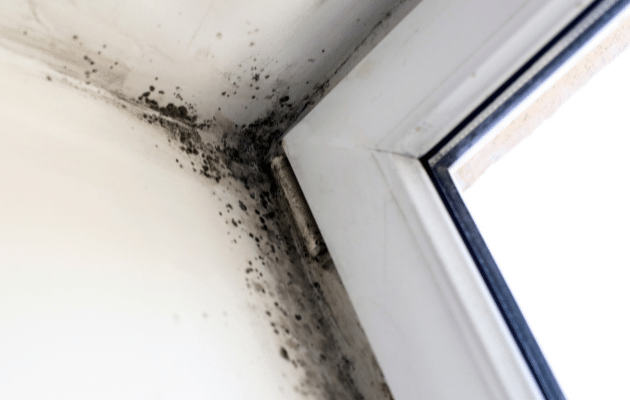
Visual signs can include staining around ceiling registers, bubbling paint, or discoloration near baseboards and exterior walls. Condensation at windows or sliding doors is another frequent indicator.
Some units may feel persistently clammy or fail to cool evenly. In apartment settings, this often points to a building-wide moisture or ventilation issue rather than a single isolated problem.
Hidden or Overlooked Mold Sources in Apartments
Bathrooms and kitchens are common trouble spots, but many apartment mold issues originate elsewhere. HVAC air handlers, drain pans, and ductwork—especially those serving multiple units—are frequent sources.
Ceiling cavities below bathrooms or mechanical rooms often trap moisture from minor leaks or condensation. Wall cavities shared between units can hold damp insulation long after a leak is repaired.
Closets on exterior walls are frequently overlooked. Limited airflow allows humidity to build up, making them ideal environments for mold growth.
Balcony doors and windows also deserve attention. Salt air and weather exposure degrade seals faster in coastal areas, allowing moisture intrusion that feeds mold behind walls.
Why DIY Mold Cleanup Usually Fails in Apartments
Surface cleaning may temporarily improve appearance, but it rarely solves the underlying problem in apartment buildings. Moisture sources are often shared or hidden, placing them beyond the reach of unit-level fixes.
Bleach and household cleaners do not correct condensation, ventilation imbalance, or moisture migration through shared assemblies. Improper cleaning can also spread spores into hallways or neighboring units.
Without containment and proper assessment, DIY efforts may increase complaints by allowing mold to appear elsewhere in the building.
Professional Mold Inspection and Testing Explained
A professional apartment inspection looks at both the individual unit and the broader building context. Visual evaluation is combined with moisture detection tools to identify damp areas behind walls, above ceilings, and around HVAC components.
Thermal imaging helps pinpoint condensation patterns and hidden moisture without unnecessary demolition. When appropriate, air or surface sampling can clarify whether mold is active and how widespread it may be.
Findings are explained clearly so property owners and managers understand where the issue originates and whether shared systems or common areas are involved.
Local professionals familiar with South Merritt Island apartment construction recognize common moisture pathways unique to coastal multi-unit buildings.
Proper Mold Removal and Remediation Process
Effective remediation starts with moisture control. Plumbing issues, HVAC condensation, ventilation problems, or exterior intrusion must be addressed before removal work begins.
Containment is critical in apartment buildings to prevent spore spread between units. Affected materials such as drywall, insulation, or duct components are cleaned or replaced depending on severity.
When shared systems are involved, remediation plans account for access, coordination, and timing to ensure solutions are durable. Companies like Mold Removal Merritt Island focus on approaches suited to coastal apartment properties rather than temporary cosmetic fixes.
How to Prevent Mold in South Merritt Island Apartments
Consistent humidity management is essential. Maintaining year-round climate control—even in vacant units—helps prevent moisture buildup.
Regular HVAC maintenance reduces condensation and improves airflow balance. Drain lines, coils, and duct insulation should be inspected routinely.
Ventilation matters. Bathroom and kitchen exhausts should vent outdoors and operate properly. Closet airflow can be improved with simple design adjustments.
After storms, timely inspections help identify intrusion before mold develops. Early response is one of the most effective prevention tools in apartment buildings.
Why Local Apartment Experience Matters
Apartment mold issues differ from those in single-family homes because moisture travels through shared walls, ceilings, and systems. Local experience means understanding South Merritt Island building designs, coastal exposure, and common failure points.
Professionals familiar with island apartments can diagnose issues faster, reduce unnecessary disruption, and recommend solutions that hold up in high-humidity conditions.
A Calm, Practical Next Step
If you’re seeing recurring mold complaints, musty odors, or persistent humidity in South Merritt Island apartments, a professional evaluation can bring clarity. Not every situation requires major remediation, but early assessment prevents small problems from spreading across multiple units.
For Merritt Island property owners and managers, addressing apartment mold with a coastal-aware, building-level approach protects both tenant comfort and long-term property condition.
