
Mold in HVAC Systems in Brevard County: What Merritt Island Property Owners Should Know
Mold in HVAC systems is one of the most common — and most misunderstood — mold issues affecting homes in Brevard County. Because air conditioning systems run most of the year in coastal Florida, they play a major role in how moisture moves through a home. When that moisture is not managed properly, HVAC systems can become a primary location for mold growth.
For Merritt Island property owners, HVAC-related mold problems often develop quietly. There may be no visible leaks, no standing water, and no obvious signs at first. Instead, mold grows inside air handlers, around vents, or within duct systems where moisture and airflow combine. Understanding why HVAC mold is so common in this area helps homeowners address issues early and prevent recurring problems.
Why HVAC Systems Are Vulnerable in Brevard County
Brevard County’s climate creates near-constant demand for air conditioning. Warm temperatures, high humidity, and coastal air mean HVAC systems operate far more hours per year than in many other regions.
Air conditioners remove humidity from the air as they cool. That moisture is collected as condensation and routed away through drain lines. When any part of this process fails — even slightly — moisture can escape into surrounding materials.
In a humid environment, that moisture does not dry easily, creating ideal conditions for mold growth inside HVAC components.
Mold Does Not Require a Major HVAC Failure
One of the biggest misconceptions is that HVAC mold only occurs after a major system failure or flooding. In reality, most HVAC mold in Brevard County develops without any dramatic event.
Small issues such as slow-draining condensate lines, minor insulation gaps, poorly sealed air handlers, or inconsistent airflow can introduce enough moisture to support mold growth. Because these problems are subtle, they often go unnoticed for long periods.
By the time odors or visible mold appear, growth may already be established inside the system.
Common Areas Where Mold Develops in HVAC Systems
HVAC mold tends to form in predictable locations based on where moisture collects and airflow changes.
Common problem areas include:
- Inside air handlers
- On evaporator coils and drain pans
- Around condensate drain lines
- Inside return plenums
- On duct insulation
- Near supply and return vents
These areas experience frequent moisture exposure and limited drying, especially in coastal homes.
Air Handlers and Mold Growth
The air handler is one of the most common locations for mold growth. It houses components that routinely get wet during normal operation.
If drain pans crack, overflow, or are improperly sloped, water can collect and remain stagnant. Condensate lines that partially clog can back up moisture into the unit. Over time, mold can grow on internal surfaces and nearby insulation.
Because the air handler circulates air throughout the home, mold in this area can affect multiple rooms.
Ductwork and Hidden Mold
Duct systems can also harbor mold, especially when insulation becomes damp. In Brevard County, humid attic air often surrounds ductwork, increasing the risk of condensation.
If ducts are poorly insulated or damaged, moisture can form on their surfaces. Mold may grow on insulation inside or outside the ducts, remaining hidden from view.
Because ductwork is concealed, mold in these areas often goes unnoticed until odors or airflow issues develop.
Supply and Return Vents as Warning Signs
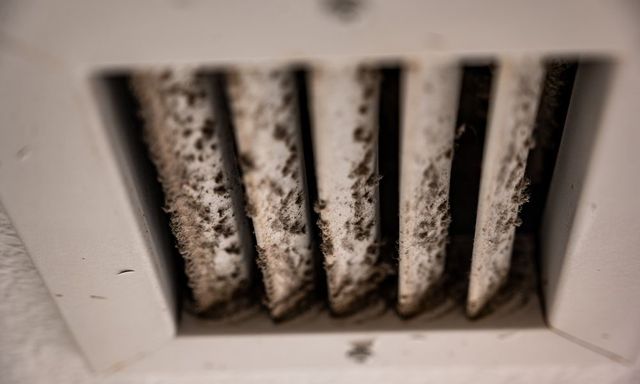
Mold around supply or return vents is often a visible clue that moisture issues exist elsewhere in the system. Dark staining or discoloration near vents may indicate condensation, humidity imbalance, or duct-related moisture problems.
Cleaning the vent alone does not resolve the issue. The source of moisture must be identified within the HVAC system or surrounding building materials.
Vent mold is usually a symptom, not the root problem.
The Role of High Humidity
High indoor humidity is a major contributor to HVAC mold. When humidity levels remain elevated, HVAC components stay damp longer after each cooling cycle.
In Brevard County, outdoor humidity often stays high even at night. This reduces the system’s ability to dry itself between cycles. As a result, moisture accumulates inside air handlers, ducts, and nearby materials.
Managing indoor humidity is essential to preventing HVAC mold.
Slab Foundations and HVAC Moisture
Many homes in Merritt Island and throughout Brevard County are built on slab foundations. Ground moisture can migrate upward through concrete as vapor, increasing indoor humidity.
This additional moisture load puts extra strain on HVAC systems. When systems are already dealing with high outdoor humidity, slab-related moisture can tip conditions into mold-supporting territory.
HVAC mold often reflects a combination of system issues and broader moisture behavior in the home.
Why HVAC Mold Often Goes Unnoticed
HVAC mold is frequently hidden behind panels, inside ducts, or within insulation. Homeowners may not see mold directly, especially if they rarely access mechanical areas.
Instead, they may notice musty odors, inconsistent airflow, increased humidity, or recurring surface mold near vents. These indirect signs often lead to confusion because the source is not obvious.
Proper evaluation focuses on the system as a whole, not just visible areas.
Why DIY HVAC Mold Cleaning Usually Fails
DIY attempts to clean HVAC mold often focus on wiping visible areas or spraying cleaners into vents. While this may improve appearance temporarily, it rarely addresses the underlying moisture problem.
DIY cleanup usually fails because:
- Internal components remain damp
- Mold inside ducts is not accessed
- Drain issues are not corrected
- Insulation remains contaminated
- No drying or humidity control is implemented
In Brevard County’s climate, mold almost always returns if moisture is not addressed.
How HVAC Mold Is Properly Evaluated
Proper evaluation of HVAC mold starts with understanding how moisture is entering and remaining in the system. This includes inspecting drain pans and lines, checking insulation integrity, evaluating airflow and humidity control, and reviewing system runtime patterns.
The goal is to identify why the system is staying wet, not just where mold is visible.
This approach prevents repeat problems and unnecessary cleaning.
Properly Addressing Mold in HVAC Systems
Effective HVAC mold remediation focuses on moisture correction first. This may involve repairing or cleaning drain lines, correcting drainage issues, improving insulation, adjusting airflow, or addressing humidity control.
When mold is present, remediation may include removing contaminated insulation, cleaning non-porous components appropriately, and ensuring all affected areas are thoroughly dried.
Without moisture correction, HVAC mold removal is temporary.
Containment During HVAC Mold Work
Containment is important when addressing HVAC mold, especially if components are being opened or insulation removed. Disturbing mold without containment can spread particles through the home.
Proper containment isolates the work area and protects living spaces during remediation. This is especially important in occupied homes.
Drying and Dehumidification
Drying is a critical step after HVAC mold remediation. Coastal humidity makes natural drying unreliable.
Dehumidification and controlled airflow help remove lingering moisture from system components and surrounding materials. Drying continues until conditions no longer support mold growth.
Skipping this step often leads to recurrence.
Long-Term Impact of Ignoring HVAC Mold
If HVAC mold is left unaddressed, moisture can continue damaging system components and nearby building materials. Insulation performance may decline, energy efficiency can suffer, and mold issues may spread to other parts of the home.
In rental properties, HVAC mold often leads to repeated tenant complaints. Early intervention reduces long-term costs and disruption.
Preventing HVAC Mold in Brevard County Homes
Prevention focuses on consistent moisture management. Practical steps include:
- Maintaining condensate drain systems
- Monitoring indoor humidity
- Ensuring proper duct insulation
- Sealing air handler cabinets
- Addressing slab-related moisture
- Inspecting systems regularly
Routine attention is especially important in coastal environments.
Why Local Experience Matters
HVAC mold in Brevard County is influenced by coastal humidity, slab foundations, salt air exposure, and year-round system use. These factors behave differently than in inland climates.
Local experience helps identify why systems stay wet and which solutions actually work here. Mold Removal Merritt Island understands how HVAC systems behave in Brevard County homes and approaches mold issues with strategies grounded in real local conditions.
A Practical Takeaway for Property Owners
Mold in HVAC systems is one of the most common mold issues in Brevard County homes, and one of the easiest to overlook. It rarely develops overnight and is almost always tied to moisture imbalance rather than poor maintenance alone.
By focusing on moisture control, proper drainage, insulation, and thorough drying, HVAC mold can be resolved and prevented. Surface cleaning alone rarely provides lasting results.
For Merritt Island property owners dealing with HVAC mold concerns or unexplained indoor moisture issues, professional evaluation provides clarity and direction. Mold Removal Merritt Island helps property owners address HVAC mold by focusing on the true cause — moisture — using approaches designed for the coastal conditions that define Brevard County.
