
Residential Mold Remediation in Sykes Creek: What Merritt Island Property Owners Should Know
Residential mold remediation in Sykes Creek is shaped by one defining factor: moisture that never fully leaves. Homes in this area sit close to waterways, experience persistent coastal humidity, and rely heavily on air conditioning year-round. These conditions make mold a common issue, even in well-maintained homes with no obvious leaks or flooding.
For Merritt Island property owners, mold remediation is not just about removing visible growth. It is about correcting the moisture conditions that allowed mold to develop in the first place. Understanding how residential mold remediation works — and why it must be handled differently in Sykes Creek — helps homeowners avoid repeat problems and unnecessary disruption.
Why Homes in Sykes Creek Are Prone to Mold Problems
Sykes Creek is surrounded by water and low-lying terrain. This keeps ambient humidity high and raises groundwater levels, especially after rain. Moisture pressure affects homes from every direction: through the air, through the slab, and through building materials.
Many homes in Sykes Creek are built on slab foundations, have older HVAC systems, or include additions that affect airflow. Even without leaks, moisture can accumulate slowly in walls, attics, closets, and flooring systems.
Over time, these conditions allow mold to grow quietly until it becomes noticeable.
When Residential Mold Remediation Is Necessary
Not every mold issue requires full remediation, but certain situations clearly do. Residential mold remediation is typically needed when:
- Mold is visible on drywall, ceilings, or flooring
- Mold returns after repeated cleaning
- Musty odors persist despite ventilation
- Mold is found near HVAC systems
- Moisture has affected building materials
- Storms or water events impacted the home
In coastal environments like Sykes Creek, waiting often allows mold to spread further into hidden areas.
Mold Remediation Starts With Moisture Control
Effective mold remediation always begins by identifying and correcting moisture sources. Removing mold without addressing moisture guarantees it will return.
In Sykes Creek homes, common moisture contributors include:
- High indoor humidity
- HVAC condensation problems
- Attic humidity and poor ventilation
- Ground moisture migrating through slabs
- Past leaks that never fully dried
Remediation focuses on stabilizing these conditions before and during mold removal.
Containment: A Critical Step in Residential Remediation
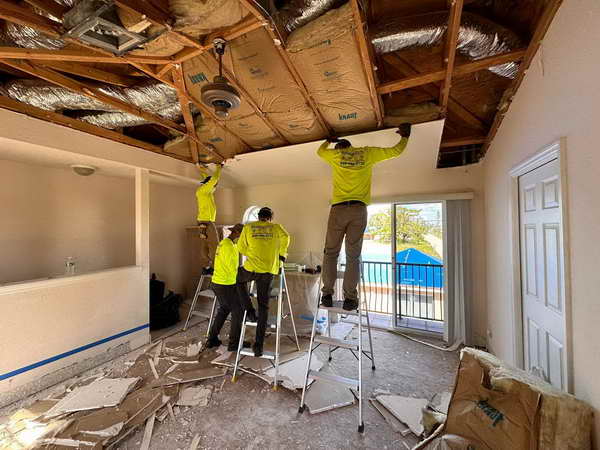
Containment is one of the most important parts of residential mold remediation. Disturbing mold without containment can spread spores throughout the home.
Containment isolates the affected area using barriers and controlled airflow. This protects the rest of the home, furnishings, and HVAC system from contamination.
In occupied homes, containment allows remediation to proceed safely without turning a localized issue into a whole-house problem.
Safe Removal of Mold-Affected Materials
Once contained, mold-affected materials are removed or treated depending on severity. Porous materials such as drywall, insulation, ceiling tiles, and some flooring often need to be removed if contamination is significant.
Non-porous materials may be cleaned using appropriate methods. The goal is to eliminate mold growth at the source, not just improve appearance.
Removal is done carefully to prevent spores from spreading beyond the containment area.
HVAC Systems and Mold Remediation
HVAC systems play a major role in residential mold remediation. Because they circulate air throughout the home, mold near HVAC components can affect multiple rooms.
Remediation may involve:
- Addressing mold near air handlers or vents
- Correcting clogged drain lines or damaged pans
- Improving duct insulation
- Adjusting airflow and humidity control
Ignoring HVAC-related moisture often leads to mold returning even after thorough remediation elsewhere.
Slab Foundations and Floor-Level Mold
Ground moisture is a frequent contributor to mold in Sykes Creek homes. After heavy rain or during high water table conditions, moisture can migrate upward through slab foundations.
This leads to mold near baseboards, under flooring, and in closets. Residential mold remediation often includes addressing these floor-level moisture conditions to prevent recurrence.
Managing slab-related moisture is essential for long-term success.
Drying and Dehumidification Are Not Optional
After mold removal, drying is critical. In coastal environments, natural drying is rarely enough.
Professional dehumidification and air movement help remove moisture from walls, floors, and ceilings. Drying continues until moisture readings confirm that conditions are stable.
Skipping or rushing this step increases the likelihood of mold returning.
Cleaning and Post-Remediation Steps
Once remediation is complete, affected areas are cleaned thoroughly to remove residual dust and mold particles. This helps restore indoor conditions and prepares the area for repairs or rebuilding.
In some cases, post-remediation evaluation is performed to confirm that moisture and mold conditions have been addressed properly.
Clear documentation helps homeowners understand what was done and why.
Why DIY Mold Removal Usually Fails
DIY mold removal often focuses on visible growth without addressing hidden moisture. Scrubbing or spraying mold may improve appearance temporarily, but it rarely solves the underlying problem.
Using water-based cleaners can add moisture to already damp materials. Painting over mold can trap moisture behind walls. Without containment, spores can spread.
In Sykes Creek homes, DIY efforts often lead to mold returning in the same or new locations.
Living in the Home During Remediation
In many cases, homeowners can remain in the home during residential mold remediation. Proper containment and planning help limit disruption.
Some situations may require temporary relocation from specific rooms, but full evacuation is rarely necessary when remediation is handled correctly.
Clear communication and phased work help minimize inconvenience.
Long-Term Impact on the Home
Unresolved mold issues can damage drywall, insulation, flooring systems, and framing over time. Repeated moisture exposure weakens materials and increases repair costs.
Proper remediation protects not only indoor conditions but also the long-term structure and value of the home.
For rental properties, early remediation helps avoid tenant complaints and extended vacancies.
Preventing Mold After Remediation
Successful remediation reduces current mold, but prevention remains important. Ongoing strategies include:
- Monitoring indoor humidity
- Maintaining HVAC drain systems
- Inspecting attics and slab-edge areas
- Improving ventilation in closets and bathrooms
- Checking conditions after storms
Prevention focuses on keeping moisture below mold-supporting levels.
Why Local Experience Matters
Residential mold remediation in Sykes Creek requires understanding of local conditions. Coastal humidity, slab foundations, salt air exposure, and storm patterns all affect how moisture behaves in homes.
Local experience helps identify problem areas quickly and apply solutions that actually work in this environment. Generic approaches often fail to address the real causes.
Mold Removal Merritt Island works with homeowners to remediate mold using strategies grounded in real Sykes Creek conditions rather than assumptions.
A Practical Takeaway for Property Owners
Residential mold remediation in Sykes Creek is not just about removing mold — it is about restoring balance between the home and its environment. Mold is a moisture problem first, and remediation succeeds only when moisture is controlled.
Early action, proper containment, and thorough drying reduce disruption and prevent recurrence. Delays and shortcuts almost always increase costs later.
For Sykes Creek property owners facing mold concerns or repeated issues, professional remediation provides clarity and long-term stability. Mold Removal Merritt Island understands how mold behaves in coastal homes and helps homeowners move from recurring problems to durable, moisture-aware solutions.
