
Mold in Airbnb Properties in Brevard County: What Merritt Island Property Owners Should Know
Short-term rentals like Airbnb properties have become a major part of the housing landscape across Brevard County. From Merritt Island to areas near the Banana River, Indian River, and Sykes Creek, many property owners rely on short-term rentals as income-producing investments. While these properties offer strong earning potential, they also face a higher risk of mold problems than many owner-occupied homes.
Mold in Airbnb properties is not usually caused by neglect. Instead, it’s driven by coastal humidity, fluctuating occupancy, inconsistent HVAC use, and storm-related moisture. Understanding how mold develops in short-term rentals — and why it behaves differently than in full-time residences — helps property owners protect both their property value and their rental reputation.
Why Airbnb Properties Face Higher Mold Risk in Brevard County
Brevard County’s coastal environment creates constant moisture pressure. High humidity, warm temperatures, salt air exposure, and frequent storms all contribute to slow drying and elevated indoor moisture.
Airbnb properties experience unique usage patterns. Guests come and go, HVAC settings change frequently, and homes may sit vacant between stays. During vacancy periods, humidity can rise quickly, especially if air conditioning is turned off or set too high.
These conditions allow mold to develop quietly, often out of sight, until a guest notices an odor or visible growth.
Vacancy Periods and Mold Development
One of the biggest mold risk factors in Airbnb properties is downtime between guests. When a home is unoccupied, airflow is reduced and daily activities that help regulate humidity are absent.
In Brevard County, even a few days of vacancy during humid weather can allow moisture to build up in closets, bathrooms, wall cavities, and HVAC systems. Mold can begin growing behind walls or under flooring without obvious signs.
By the time the next guest arrives, the problem may already be established.
HVAC Settings and Humidity Control Issues
Many Airbnb owners adjust thermostat settings to reduce energy costs between stays. While understandable, this often backfires in coastal Florida.
Air conditioning systems don’t just cool the air — they remove moisture. When systems are turned off or set too high, humidity rises quickly. When the AC is turned back on for guests, condensation increases, sometimes feeding existing mold growth.
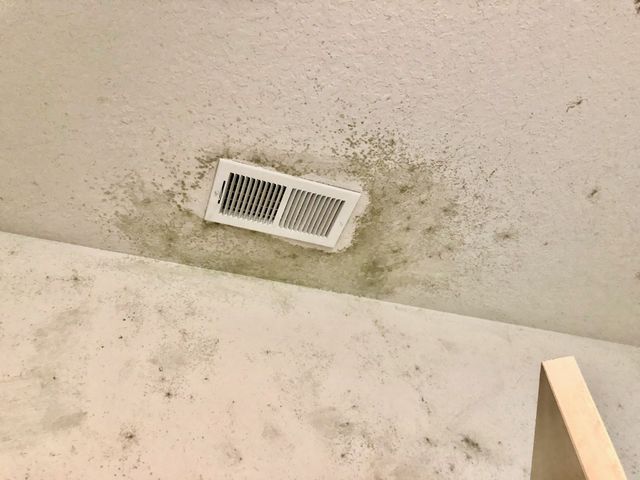
Mold near air handlers, vents, and ductwork is especially common in Brevard County Airbnb properties due to inconsistent HVAC operation.
Guest Turnover and Moisture Spikes
Each guest stay introduces new moisture into the home. Showers, cooking, laundry, and frequent door openings all increase indoor humidity.
If ventilation is inadequate or humidity is already elevated, these moisture spikes push conditions into mold-friendly territory. Bathrooms, laundry rooms, and kitchens are common problem areas.
In short-term rentals, repeated moisture spikes without consistent control accelerate mold growth.
Hidden Mold Between Guest Stays
Housekeeping teams focus on visible cleanliness, but mold often grows where it can’t be seen. In Airbnb properties, hidden mold commonly develops:
- Behind drywall
- Under sinks and vanities
- Beneath flooring
- Inside attics
- Around HVAC components
Because these areas aren’t part of routine cleaning, mold can grow unnoticed for extended periods. By the time visible signs appear, the issue is often larger than expected.
Guest Complaints and Review Risks
Mold problems in Airbnb properties often surface through guest complaints. Musty odors, damp conditions, or visible mold can quickly lead to negative reviews.
In competitive short-term rental markets, even one review mentioning mold can significantly impact booking rates. Guests may associate mold with poor maintenance, regardless of the underlying cause.
Preventing mold is not just a maintenance issue — it’s a reputation issue.
Storms and Post-Storm Mold Surges
Storms are a major mold trigger in Brevard County. Wind-driven rain, roof stress, and ground saturation can introduce moisture into walls, attics, and slabs.
Airbnb properties are especially vulnerable after storms if they sit vacant. Moisture may linger for days or weeks, allowing mold to grow before anyone notices.
Post-storm inspections are critical for short-term rentals to catch moisture early and prevent surprise issues during guest stays.
DIY Cleanup Often Makes Things Worse
Some Airbnb owners attempt quick DIY mold cleanup to avoid downtime. While surface cleaning may temporarily improve appearance, it rarely solves the real problem.
Cleaning without moisture correction allows mold to return quickly. In some cases, scrubbing or spraying without containment spreads mold particles to other areas of the home.
Repeated DIY efforts often lead to more extensive damage and longer rental interruptions later.
Why Mold Keeps Returning in Short-Term Rentals
Recurring mold is common in Airbnb properties because underlying conditions are rarely addressed fully. High humidity, HVAC issues, slab moisture, and hidden growth all contribute to repeat problems.
Without stabilizing indoor moisture during vacancy and correcting problem areas, mold will continue to return — often in the same locations.
This cycle frustrates owners and increases maintenance costs over time.
Impact on Property Value and Investment Performance
Mold doesn’t just affect guest experience; it impacts property value. Ongoing mold issues can damage materials, increase repair costs, and create a history of complaints.
For owners planning to sell or refinance, mold findings during inspections can reduce perceived value. Proper remediation and documentation help protect long-term equity.
Airbnb properties are investments, and mold is a risk that requires active management.
Professional Mold Evaluation for Airbnb Properties
Professional mold evaluation focuses on understanding moisture behavior rather than just visible growth. Inspections assess HVAC performance, attic ventilation, slab moisture, and hidden areas.
For short-term rentals, professional evaluation helps identify why mold keeps appearing and what changes are needed to stabilize conditions between guests.
Mold Removal Merritt Island works with Brevard County property owners to evaluate mold issues in Airbnb properties using local climate knowledge rather than generic assumptions.
Proper Mold Remediation in Short-Term Rentals
When remediation is needed, it must be done thoroughly to prevent repeat disruptions. Proper remediation includes:
- Identifying and correcting moisture sources
- Containing affected areas
- Removing contaminated materials when necessary
- Thorough drying and dehumidification
- Preventive measures to reduce recurrence
For Airbnb owners, effective remediation minimizes downtime and protects guest satisfaction.
Preventing Mold Between Bookings
Prevention is the most effective strategy for short-term rental owners. Practical steps include:
- Keeping HVAC systems running at humidity-controlling settings
- Using dehumidifiers during vacancy
- Ensuring bathroom and laundry ventilation works properly
- Inspecting HVAC drain lines regularly
- Checking attics, closets, and exterior walls periodically
These steps help maintain stable indoor conditions even when the property is unoccupied.
Cleaning vs Moisture Control
Cleaning alone does not prevent mold. Housekeeping removes surface dirt, but moisture control stops mold growth.
Airbnb owners should view cleaning and moisture management as separate responsibilities. Both are necessary, but only moisture control prevents mold from returning.
Documentation and Management Oversight
Clear documentation of inspections, remediation, and preventive measures helps track recurring issues and demonstrate responsible property management.
For owners working with property managers, documentation provides accountability and consistency across guest turnovers.
Why Local Experience Matters
Mold behavior in Brevard County is shaped by coastal humidity, slab foundations, salt air exposure, and storm frequency. Professionals familiar with Merritt Island and surrounding areas understand how these factors affect Airbnb properties specifically.
Local experience leads to faster identification, more accurate solutions, and fewer repeat problems.
A Practical Takeaway for Airbnb Property Owners
Mold in Airbnb properties is a predictable challenge in Brevard County, not a personal failure. The key is proactive moisture control, regular inspection, and addressing problems early.
By managing humidity during vacancy, inspecting after storms, and responding quickly to early signs, property owners can prevent mold from disrupting bookings and damaging property value.
When mold issues arise or keep returning, professional evaluation provides clarity and direction. Mold Removal Merritt Island understands the unique challenges of Airbnb properties in Brevard County and helps owners protect their investment with solutions grounded in real local conditions.
